

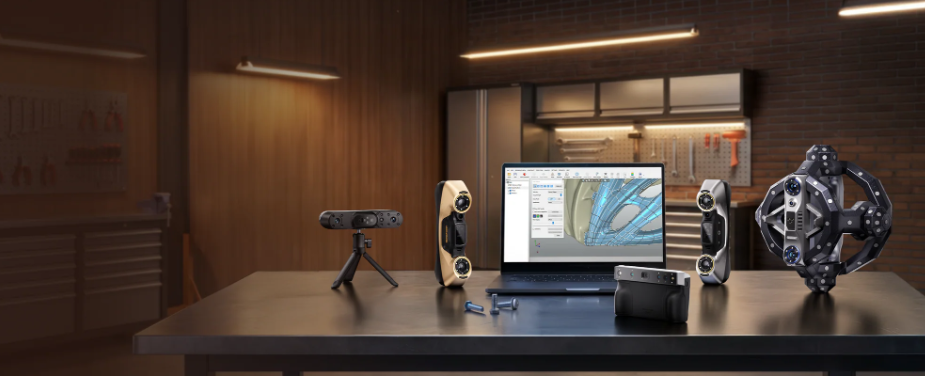
In today’s digital world, precision plays a major role in design, engineering, and manufacturing. Whether creating a prototype, reproducing a machine part, or developing a custom product, accurate measurements are essential. This is why the 3d laser scanner has become one of the most valuable tools for modern creators and professionals.
Instead of relying on manual measurements or time-consuming modeling processes, users can now scan real-world objects and instantly convert them into highly detailed digital models. This technology helps designers, engineers, and creators work faster, reduce errors, and improve the overall quality of their projects.
As scanning technology continues to evolve in 2026, 3D laser scanners are opening new possibilities across industries by making precision more accessible than ever before.
What Is a 3D Laser Scanner?
A 3D laser scanner is a device that uses laser technology to capture the exact geometry of an object. The scanner projects laser light onto the surface and measures how the light reflects back.
By collecting thousands of data points across the object, the scanner creates a highly detailed digital representation called a point cloud. Specialized software then converts this information into a 3D model that can be edited, analyzed, or prepared for production.
Unlike traditional measuring tools that only capture a few dimensions, laser scanning records complete surface details, including curves, textures, and complex shapes.
Why Precision Matters
In design and engineering, even small measurement mistakes can create major problems. A part that is slightly inaccurate may not fit correctly, function properly, or meet production standards.
A 3d scanner helps solve these challenges by capturing highly accurate digital data directly from real-world objects. This level of precision improves workflows and reduces the need for repeated adjustments.
For designers and engineers, this means:
- Better fitting components
- More reliable prototypes
- Faster design revisions
- Reduced production errors
- Improved overall efficiency
Precision not only saves time but also reduces material waste and development costs.
Faster Workflows for Modern Projects
Traditional modeling methods can be slow, especially when dealing with detailed or irregular objects. Recreating complex shapes manually often requires hours of work in CAD software.
With a 3d laser scanner, the process becomes much faster. Users can scan an object in minutes and immediately begin refining the digital model.
This creates a more efficient workflow:
Scan → Edit → Test → Produce
Because scanning eliminates much of the manual design process, creators can focus more on innovation and improvement instead of repetitive modeling tasks.
Reverse Engineering Made Easier
Reverse engineering is one of the most common uses for 3D laser scanners. In many situations, original design files are unavailable or outdated. This can make reproducing or repairing parts extremely difficult.
By scanning an existing object, engineers can create an accurate digital model and use it to manufacture replacement parts or improve existing designs.
This is especially valuable for:
- Repairing industrial equipment
- Recreating discontinued parts
- Updating older designs
- Customizing existing products
Instead of relying on rough measurements, professionals can work with precise digital data that reflects the actual object.
Supporting Creativity and Design
3D laser scanning is not limited to engineering and manufacturing. Designers and artists are also using this technology to explore new creative possibilities.
Artists can digitize sculptures, handmade creations, or physical prototypes and transform them into editable digital models. Product designers can scan mockups and quickly test different design ideas.
This combination of physical creativity and digital flexibility allows creators to experiment more freely while maintaining accuracy throughout the process.
Revopoint: Making Precision More Accessible
Companies like Revopoint are helping bring advanced scanning technology to a wider audience. At Revopoint, users can explore a variety of portable and high-precision scanners designed for modern workflows.
Revopoint scanners are known for balancing performance, portability, and ease of use. Their devices are suitable for professionals, hobbyists, and businesses looking to improve digital workflows.
Key features include:
- High-resolution scanning for capturing fine details
- Real-time tracking for smoother scanning accuracy
- Lightweight portable designs for flexible use
- Compatibility with CAD software and 3D printing systems
These features make Revopoint scanners practical tools for both technical and creative applications.
Tips for Better Scanning Results
To get the best results from a laser scanner, users should follow a few simple practices:
- Ensure stable lighting conditions
- Keep the object steady during scanning
- Capture multiple angles for complete coverage
- Use software tools to refine the final model
These steps help improve accuracy and produce cleaner digital models.
Final Thoughts
Modern projects demand speed, flexibility, and precision, and this is exactly what a 3d laser scanner delivers. By turning real-world objects into highly detailed digital models, scanning technology helps designers, engineers, and creators work more efficiently and with greater confidence.
A reliable 3d scanner not only improves accuracy but also unlocks new creative and technical possibilities across industries. With advanced solutions from companies like Revopoint, high-precision scanning is now more accessible than ever, helping modern creators transform ideas into reality faster and smarter than before.