

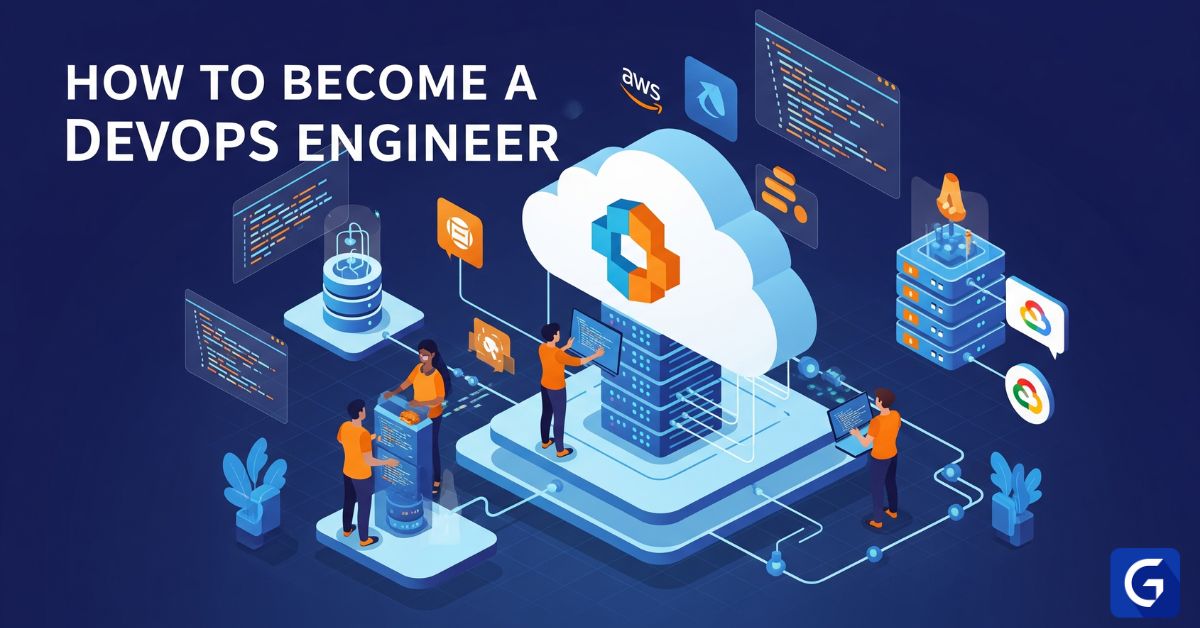
As part of the rapid-fire digital age we live in, businesses require speed, agility and confidence in software deployment and delivery. Silos between traditional development and operations groups often led to backlogs and costs. Enter DevOps—a cultural and technical movement that brings operations and development teams together to build, test, deploy, and monitor applications with speed.
As companies increasingly turn to DevOps processes to remain competitive in the marketplace, the need for those with DevOps skill sets continues its climb. Still, one of the most effective means for developers and engineers to cultivate this skill set is by taking a DevOps engineer course. As organisations adopt the cloud and automate processes, these courses both teach you skills in high demand and also open up career opportunities worldwide.
This post considers what a DevOps engineer course could do for your IT career, explains what it involves, and highlights why a combination of cloud computing courses with your DevOps studies can future-proof your skills.
Why DevOps Matters in 2025
Speed of Delivery
Faster than ever, companies must roll out new features, updates and fixes. DevOps methodologies such as CI and CD ensure a fast time to market without compromising quality.
Improved Collaboration
DevOps erases silos between dev, test and operations to create a culture of better communication and collaboration.
Automation-Driven Efficiency
By automatically performing tasks such as testing, monitoring and deployment—processes that can be error-prone and time-consuming manually—businesses save time for quality assurance and decrease potential human errors.
Cloud and Containerization
The use of cloud platforms and container technologies (Docker, Kubernetes) makes DevOps skills even more valuable, enabling scalable, resilient and secure environments.
The result: Companies are paying premium salaries for professionals who can design and manage DevOps pipelines, making this one of the most lucrative IT career paths.
What Is a DevOps Engineer?
A DevOps Engineer is an IT professional who works with software developers, system operators, and other production IT staff to oversee code releases and deployments.
Their role involves:
- Creating CI/CD pipelines to deliver software more quickly
- Automating infrastructure and deployment processes
- Working cross-functionally to enhance workflow
- Scaling using the power of the cloud and containers
As organisations focus on agile delivery, DevOps engineers are now the poster professionals for digital transformation.
Why Should I Take DevOps Engineer Classes?
Although many IT professionals pick up DevOps tools on the job, there are advantages to formal training:
- Curriculum Structured Learning Path: Covers the complete DevOps lifecycle to build, deploy and monitor applications
- Real World Training: Field lab environments and project-based learning provide hands-on experience with Jenkins, Docker, Kubernetes, Git, Ansible and more
- Certification in the Industry: Adds credibility and increases job prospects
- Career Fast-Track: A structured approach helps you climb the career ladder faster
- Cloud Integration: Many courses incorporate cloud practices to align your skills with industry demand
Core Competencies You Will Learn in a DevOps Engineer Course
A solid DevOps engineer course will prepare you with technical, process, and collaboration skills, including:
Version Control and Collaboration
- Version control with Git and GitHub
- Handling branches, pull requests, and collaboration workflows
CI/CD (Continuous Integration and Continuous Deployment)
- Jenkins, GitLab CI, CircleCI to automate build and deployment
- Establishing release pipelines for speed and stability
Infrastructure as Code (IaC)
- Automating infrastructure with Terraform, Ansible, Chef, etc.
- Managing servers and configurations programmatically
Containerization and Orchestration
- Docker for packaging applications
- Kubernetes for managing containerised environments at scale
Monitoring and Logging
- Tools like Prometheus, Grafana, and the ELK stack for performance monitoring
- Real-time detection and mitigation
Cloud Platforms
- AWS, Azure, or Google Cloud for DevOps pipeline incorporation
- Managing large-scale infrastructure and cloud-native applications
Soft Skills
- Teamwork and communication between development and operations
- Problem-solving and adaptability in fast-paced environments
DevOps Engineer Course vs Cloud Computing Courses
Many professionals ask: “Should I do a DevOps engineer course or cloud computing courses?”
The truth is, they complement each other:
- Cloud computing courses: Cover architecture, storage, networking, and compute for AWS, Azure, and GCP—great for managing infrastructure.
- DevOps engineer courses: Focus on automation pipelines, CI/CD workflows, and container management—skills for agile deployment.
Together, they create a unified skillset that advances both current and future projects in the cloud.
Career Prospects Once You Finish a DevOps Engineer Course
Completing a DevOps engineer course can open doors to roles such as:
- DevOps Engineer: Constructing pipelines, deploying automation, and supporting cloud environments
- Site Reliability Engineer (SRE): Ensuring applications remain reliable and scalable
- Build and Release Engineer: Specialising in release management and CI/CD automation
- Cloud DevOps Engineer: Integrating DevOps practices into cloud platforms
- Automation Engineer: Scripting and automating processes
Salary Outlook for DevOps Engineers
DevOps is among the highest-paying IT careers. Salaries vary by geography and experience, but consistently remain high:
- United States: $110,000–$140,000 annually; senior positions pay more than $150,000
- India: ₹10–18 LPA for mid-level roles; seniors earn ₹20–30 LPA
- Europe: €70,000–€100,000 annually, depending on location
Professionals combining DevOps skills with cloud expertise are especially in demand and often move quickly into senior roles.
Industries Hiring DevOps Engineers
DevOps roles are relevant across industries, with particularly strong adoption in:
- Tech & IT Services: Developing scalable applications and platforms
- Finance & Banking: Enabling secure, high-performance transaction systems
- Healthcare: Supporting secure deployment of healthcare applications
- Retail & E-commerce: Maintaining uptime during peak traffic
- Media & Entertainment: Streaming management and content delivery
Selecting the Best DevOps Engineer Course
When choosing a program, evaluate the following:
- Curriculum Coverage: CI/CD, IaC, Docker, Kubernetes, and cloud platforms
- Hands-On Labs: Practical experience with real DevOps tools
- Industry Acknowledgement: Certifications recognised by the industry
- Flexibility: Online, self-paced, or blended, depending on your availability
- Placement Assistance: Career services like resume building and job placement support
The Future of DevOps in the AI-and-Cloud Era
DevOps will continue to evolve alongside AI, ML, and cloud computing:
- AIOps: AI-driven monitoring and troubleshooting for greater efficiency
- Cloud-Native DevOps: With Kubernetes and microservices, DevOps becomes essential for scaling
- DevSecOps: Security integrated directly into CI/CD pipelines
- Hybrid and Multi-Cloud: High demand for professionals skilled in multi-cloud DevOps
DevOps is no longer optional—it’s fundamental to IT and software delivery in the modern era.
Conclusion
A DevOps engineer course offers everything you need to accelerate your IT career in 2025. From learning automation tools and cloud platforms to constructing CI/CD pipelines, these courses prepare you for some of the most lucrative roles in tech.
- Cloud computing courses give you infrastructure skills
- DevOps training teaches automation, collaboration, and delivery pipelines
Combined, they make you highly competitive in the job market.