

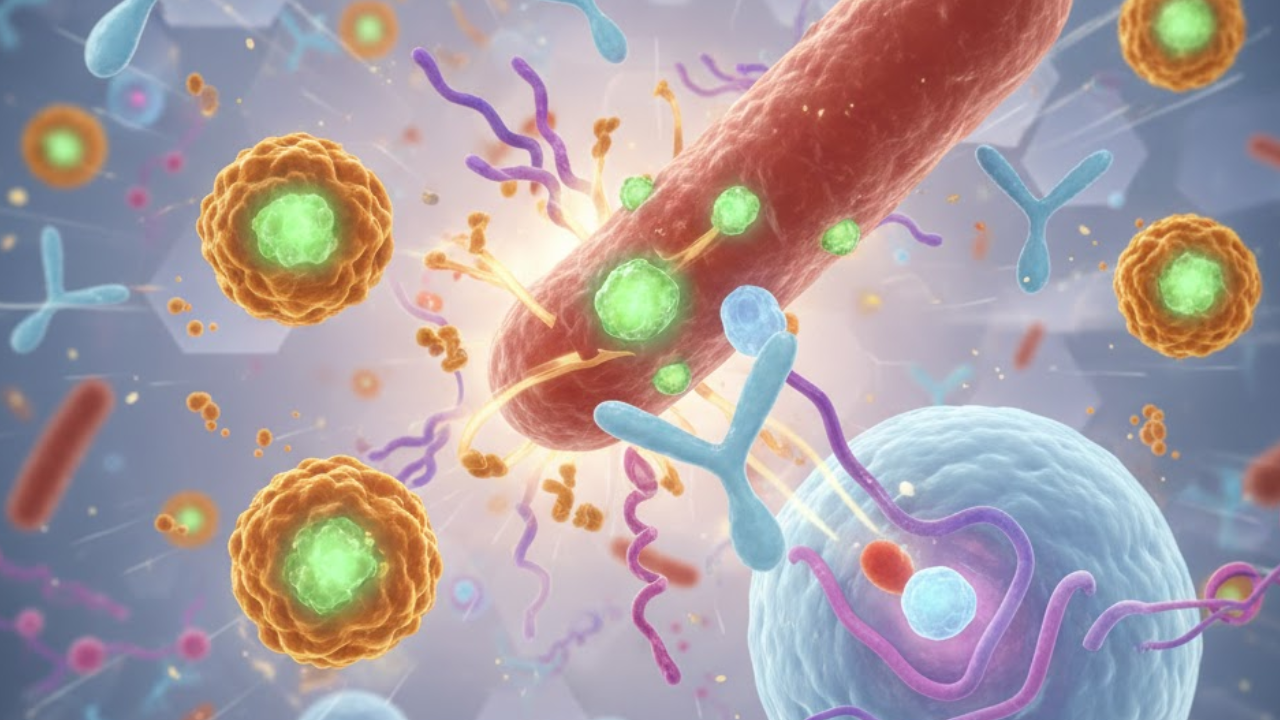
Over the centuries, vaccine science has evolved through milestones such as:
- Louis Pasteur’s development of the rabies vaccine
- Creation of attenuated and inactivated vaccines
Advances in molecular biology and recombinant DNA technology further revolutionized the vaccine design. Today, high-quality functional proteins—sometimes referred to in research as “active transport proteins” due to their precise movement and folding during production–are key parts in many vaccines. These are functional proteins that have their correct 3D structure and can trigger biological responses.
Let’s learn more about these proteins and their role in vaccine development.
1. Act as Targets for the Immune System
Vaccines use active proteins (antigens) from weakened, dead, or partial pathogens to train the immune system. These proteins act as targets that the body recognizes as “non-self”.
When the immune system encounters these proteins:
- Antibodies bind to the antigens.
- T-cell receptors (TCRs) recognize antigens presented by MHC molecules or by infected cells.
- Cytokines coordinate the immune response and recruit other immune cells.
- Complement proteins help destroy or neutralize pathogens.
2. Enhance Immune Responses
Active proteins enhance immune response by performing multiple roles, such as:
- Complement proteins mark pathogens, trigger inflammation, and directly kill harmful microbes.
- Cytokines act as messengers to guide and activate other immune cells
- Proteins like MHC present antigens to T cells to recognize and attack invaders.
3. Improve Antigem Presentation
These proteins enhance antigen presentation. It means how the immune system shows foreign or abnormal proteins to T cells so they can launch an attack.
Here is how it works:
- Active proteins help antigen-presenting cells (APCs) like dendritic cells and macrophages.
- Some proteins activate specific immune pathways, such as the cGAS-STING pathway, which triggers the release of cytokines and type-1 interferons.
The T cells are more effectively stimulated, which leads to stronger, faster, and more precise immune responses.
4. Act as Natural Adjuvants
They behave like adjuvants. Adjuvants are substances used in vaccines to strengthen and prolong the immune response. Some active proteins act as adjuvants by directly stimulating the immune system.
Here is how this works:
- Recognize by innate immune receptors: Active proteins enter the body. They are detected by innate immune receptors such as TLRs and NLRs. These receptors recognize active proteins as “foreign,” which triggers the body’s first immune response.
- Activate immune signaling pathways: Once these receptors bind to the protein, they activate signaling pathways inside the immune cells. This releases the important immune molecules (cytokines and chemokines). These molecules act like messengers:
- Call more immune cells to the site
- Turn on inflammation
- Strengthen antigen presentation: The immune cells that detect these proteins and then present them to T-cells are part of the adaptive immune system. This process helps the body remember and respond faster the next time it sees the same antigen.
A good example of an active protein that demonstrates how proteins can stimulate and amplify immune responses is PRF1. It is a protein that works as natural killer (NK) and cytotoxic T cells. PRF1 helps these cells destroy infected or abnormal cells and reinforce vaccine-induced immunity.
5. Ensure Stability and Function
The vaccine needs to work effectively. So, the active proteins it contains must stay stable and functionally active.
Vaccine effectiveness is determined by how well the immune system recognizes the active proteins. Active proteins must keep their native 3D conformation (also called “folding”). This structure determines how the immune system identifies the protein. That is why it is important to choose a high-quality active proteins that meet rigorous standards of modern biotechnology.
6. Combine Multiple Functions in One Protein
Some proteins are designed to perform multiple roles at once. Here are two roles:
- Antigenic function: They present specific parts of a pathogen, called epitopes to B cells and T cells.
- Immune-boosting function: they stimulate innate immune receptors such as Toll-like receptors (TLRs) to trigger cytokine release.
Bottom Line
Active proteins are central to modern vaccine development because they perform multiple important roles, such as:
- Recognize germs and fight them
- Show pieces of the germ to your immune cells
- Boost your immune system
- Stay strong and keep their shape
- Do more than one job at once
So, carefully choose the right active proteins to help make vaccines that are safe and give long-lasting protection.