

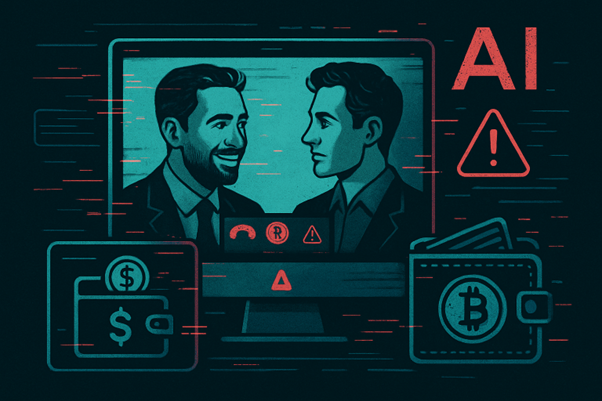
The digital finance world is transforming at lightning speed. Unfortunately, so are its threats. In 2025, nothing exemplifies the new era of cybercrime against crypto holders like the explosion of AI-generated deepfake scams. These frauds weaponize breakthroughs in generative artificial intelligence to deceive even the most vigilant investors, devastate crypto exchanges, and compromise financial trust globally.
The Age of Synthetic Crime: What Are Deepfakes?
A “deepfake” is synthetic media generated by neural networks—usually GANs (Generative Adversarial Networks)—in which audio, images, or video convincingly imitate a real person’s likeness, speech, and mannerisms. Fueled by the proliferation of open-source tools, cheap cloud computing, and powerful new diffusion models, deepfakes are no longer rare tech curiosities. They’re now a mainstream weapon for scammers in the financial sector and, especially, the crypto community.
2025: Deepfake Scams Shatter Crypto Security
The statistics are staggering. According to recent estimates, the number of deepfake files shared online is projected to reach eight million by the end of 2025—a 900% annual increase compared to 2023. Identity fraud attempts using deepfakes surged by an incomprehensible 3,000% last year. Of the deepfake-related fraud detected, about 88% hit the cryptocurrency sector hardest. This “perfect storm” of volume, realism, and accessibility is driving generative AI-facilitated fraud losses toward $40 billion annually by 2027 in the U.S. alone.
Anatomy of an AI-Powered Crypto Scam
Today’s crypto scammers run sophisticated playbooks. Here’s how deepfakes play a central role:
- Fake Executive Authorizations: Using publicly available photos, videos, and audio interviews, scammers train AI models to clone the voice, face, and mannerisms of crypto executives or exchange managers. Victims receive urgent video calls or voicemails requesting wire transfers or signing off on security changes—sometimes in the middle of a busy trading period. Earlier this year, a Hong Kong finance worker lost $39 million after being duped by deepfake “colleagues” on a company call.
- Social Media Investment Hoaxes: Celebrity endorsements are being faked en masse. AI-driven platforms churn out hyper-real videos of well-known public figures—think Elon Musk, Vitalik Buterin, or Binance executives—promoting bogus tokens or crypto “giveaway events.” These scams pervade Instagram, Telegram, and TikTok, enticing users into sending money or personal keys to malicious wallets.
- Phishing and ID Theft: Gone are the days of typo-ridden phishing emails. Modern attacks use AI to write personalized, grammatically perfect messages, often accompanied by forged documents, videos, or live-chat interactions that pass even the most advanced liveness checks. ID verification failures linked to deepfake fraud are now occurring in 1 out of every 20 cases, with crypto exchanges as primary targets.
- Romance and Sextortion Scams: Even online relationships have been weaponized. AI chatbots, powered by deepfake avatars and cloned voices, build emotional rapport before requesting crypto payments. Others generate explicit deepfake images for blackmail, tying the victim’s reputation and finances together.
Why Crypto Is the Ground Zero for Deepfake Scams
Crypto platforms, decentralized by nature, rely heavily on remote verification. Liveness checks, biometric scans, and customer onboarding usually happen online, making it far easier for criminals to manipulate identities with synthetic media. The market’s global reach compounds the risk: exchanges and users often operate across borders, with varying regulation and fraud reporting standards.
Throw in the lucrative nature of crypto—a space built on anonymity, rapid transactions, and often-irreversible transfers—and it’s easy to see why scammers concentrate their efforts here.
What Makes These Scams So Effective?
- Production Quality: High-resolution deepfakes are nearly indistinguishable from reality, especially in brief calls or chat exchanges. Human spotters only identify fake video correctly about 24.5% of the time.
- Speed and Scalability: Generative AI tools churn out hundreds of fake videos or voices daily. Scammers automate campaigns, scaling up attacks faster than defenders can adapt.
- Social Engineering: By impersonating trusted figures, deepfake scams trigger panic and urgency. Targets are less likely to question requests—from urgent fund transfers to revealing security codes—if they believe the request comes from legitimate leadership.
The Real-World Toll: Victim Stories and Business Losses
Crypto holders aren’t the only casualties. According to the Journal, AI-generated CEO and executive impersonations in the first quarter of 2025 alone exceeded $200 million in reported losses. Firms, large and small, see average losses of $500,000 per deepfake incident; larger enterprises face costs up to $680,000—not counting reputational damage, lost customer trust, or regulatory penalties.
One in four adults has already experienced an AI voice scam, and one in ten has been targeted directly, a testament to deepfakes’ reach and effectiveness.
Scam Typologies Enabled by Deepfakes
Deepfake technology underpins diverse and increasingly sophisticated scam typologies:
- Authorization Scams: High-stakes tactics to trick employees into wiring corporate funds.
- Investment and Giveaway Scams: Fake endorsements and video promos for bogus projects.
- Phishing and “Ice Phishing”: AI-crafted messages that bypass spam filters and trick even seasoned crypto traders.
- Pig Butchering: Building trust long-term before orchestrating significant crypto theft.
- Ponzi Schemes and Sextortion: AI-generated assets used as evidence to entice or blackmail victims.
How Scammers Build Deepfakes—And Why Anyone Can Do It
What’s terrifying isn’t just the surge in deepfake usage, but its ease. Open-source frameworks like DeepFaceLab (used for over 95% of deepfake videos) can be trained by anyone with basic technical knowledge. Scammers seize on publicly available online material: earnings calls, media interviews, and promotional YouTube videos all become training data. Newer AI models hone both voice and facial expressions, making it child’s play for criminals to launch convincing attacks.
How Crypto Users Can Spot and Defend Against Deepfake Scams
For the average crypto enthusiast, defending against deepfake scams in 2025 demands vigilance, skepticism, and cutting-edge protection tools.
1. Challenge Urgent Requests for Money or Security Changes
Always double-check identity. If anyone requests a crypto transfer, private key, or account modification “urgently,” pause and verify offline. Call the person or business back using a known, secure number—not the channel provided in the suspicious video or email.
2. Analyze Video and Audio Carefully
Look for signs: unnatural blinking, odd background artifacts, mismatched lip sync, robotic speech inflections. If anything feels “off,” validate with trusted colleagues before taking action.
3. Use Multi-Factor Authentication—But Don’t Rely Only on Biometrics
Deepfakes can bypass facial scans and basic liveness checks. Use multi-factor authentication (MFA) wherever possible, including time-based one-time passcodes and device-level confirmations.
4. Stay Updated With Security Trends
Follow scam watch platforms and crypto recovery resources, like Bitcoinscamwatch.org, for regular alerts and best practices. Awareness campaigns and scam reporting services can help users keep pace with evolving tactics.
5. Report and Seek Help Immediately
If scammed, collect all screenshots, emails, and transaction details. Submit these via secure reporting forms to expert investigation teams for action. Quick reporting can help investigators freeze accounts and gather crucial evidence for possible fund recovery.
Industry-Wide Defense: What Exchanges and Businesses Must Do
Platforms and exchanges, meanwhile, need to:
- Invest in advanced deepfake detection and real-time monitoring tools.
- Move toward layered authentication, combining device fingerprinting, behavioral analysis, and manual secondary checks.
- Train staff to handle suspicious requests and incident escalation.
- Stay agile: regularly review detection algorithms and update policies as new threats emerge.
The Future of Deepfake Threats—and How to Stay Ahead
By 2026, Gartner predicts 30% of enterprises will move beyond standalone identity verification tools in favor of multi-layered, adaptive security. For crypto users and platforms, resisting the onslaught of deepfake scams means blending technology, education, and responsive action.
Everyone involved in the crypto sector—from everyday investors to multinational exchanges—must treat deepfakes as the new normal for cyber risk. Recognizing the threat, adopting robust defenses, and forming strong partnerships with scam recovery experts are no longer optional, but essential.
If you suspect you’ve been targeted by an AI-based scam, don’t wait. Report it to Bitcoinscamwatch.org and get help from a team dedicated to fighting back against the next generation of digital fraud