

Cats are famously private creatures, and nowhere is that more true than at the litter box. Yet what happens in that quiet corner of the house tells one of the clearest stories about your cat’s health. Changes in frequency, posture, or urine volume can signal urinary blockages, kidney issues, or digestive trouble long before a cat shows any outward symptom. That is exactly why smart pet technology has evolved to meet cats where they already are, and why a growing number of cat parents are turning to a dedicated monitoring solution for the one room even the most observant human tends to miss. This practical walkthrough is built to help you understand what a modern camera for the litter area actually does, which features genuinely matter, and how to select the right model for a multi-cat home, a senior feline, or a nervous kitten still learning routines.
Understanding What a Litter Box Camera Actually Does
Before comparing brands or reading specification sheets, it helps to understand the category itself. A litter box camera is a specialized monitoring device designed to sit beside or above a cat’s toileting area and capture footage of every visit. Unlike a general room camera, it is tuned for a very specific angle, low-light conditions, and short-duration events. The result is footage that focuses on posture, duration, and behavior rather than random household activity. Because the camera watches a location cats visit multiple times a day, it becomes a passive but continuous health log without ever requiring you to lift a hand.
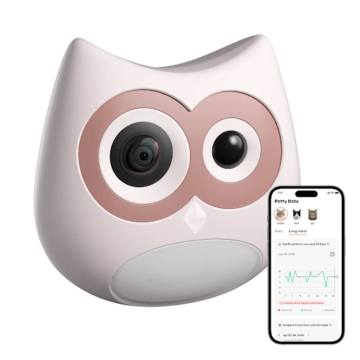
Most quality devices in this category now pair with a smartphone app that stores clips, tags each visit, and lets you scroll through the day’s activity like a timeline. The best of them also apply simple AI classification, sorting visits into urination and defecation, flagging unusually long or short trips, and alerting you when something looks off. Think of it less as a security camera and more as a wellness diary written by your litter box camera while you are at work or asleep.
Why Cat Parents Are Adopting This Technology
The reasons cat owners invest in this kind of monitoring are almost always practical. Cats hide illness instinctively, a survival behavior inherited from wild ancestors. By the time a cat shows lethargy, weight loss, or visible discomfort, an underlying condition may already be advanced. Urinary blockages in male cats, for instance, can turn life-threatening within twenty-four to forty-eight hours. Being able to notice the very first sign, a slightly longer visit or a second, unexplained trip in an hour, can be the difference between a routine vet visit and an emergency.

There is also a quieter benefit that gets overlooked. Cameras of this type give owners peace of mind during travel, work trips, or long office hours. Instead of guessing whether your sitter refilled the box or whether your indoor senior is still eating and drinking normally, you can simply open the app and see a clean visit log. For homes with newly adopted cats, the same footage helps you confirm that the newcomer has found the box, is using it comfortably, and is not being intercepted by another resident cat.
Step One: Match the Camera to Your Setup
The first step in choosing a device is honest measurement. Look at where your litter area actually lives. Is it inside a covered box, tucked into a bathroom, sitting in a closet, or standing in the open? Some cameras are designed to mount on top of covered enclosures, others attach to a wall, and a few use a weighted base that sits on the floor next to the tray. If your box is enclosed, prioritize a wide-angle lens that can capture the entire interior from a short distance. If it is open, height and viewing angle matter more than lens width.
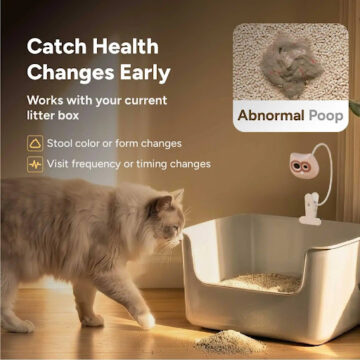
Also check power requirements. A rechargeable model gives you freedom to place the camera anywhere, but you will need to charge it every few days. A plug-in model needs to sit close to an outlet, which may not match your ideal location. Measure the cable length, note the outlet position, and picture the actual daily flow before committing.
Step Two: Prioritize Night Vision and Low-Light Performance
Cats are crepuscular, meaning most of their activity happens at dawn, dusk, and through the night. That single fact makes night vision the single most important feature to evaluate. Look for infrared night vision that produces clear, detailed footage in complete darkness rather than the grainy silhouettes older cameras deliver. The device should switch automatically as ambient light drops, and the infrared light itself should be invisible or non-disruptive to the cat, since a glowing red LED at box height can discourage use.
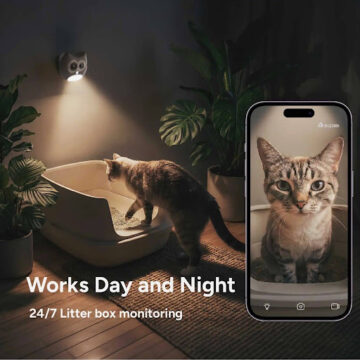
Ask yourself whether the footage will let you count seconds. Health-relevant details, such as how long a cat strains or how often the cat re-enters the box, only surface when nighttime footage is legible. If the sample clips you find online look like watercolor blobs at 2 a.m., keep shopping.
Step Three: Confirm Multi-Cat Recognition
If you share your home with more than one cat, generic motion capture is not enough. You need a device that can distinguish between individuals. Modern systems use AI-based recognition trained on visual markers such as coat pattern, size, and gait to attribute each visit to the correct cat. Without this, you will simply know that someone used the box, which is not useful when your ten-year-old tabby is on a special diet and your kitten is not.

During your evaluation, look for cameras that let you register each cat with a short set-up video or a few reference photos. The recognition should improve over time as the system observes more visits. This feature turns raw footage into a real per-cat health record, which is what actually helps your veterinarian if something looks off.
Step Four: Evaluate the App, Alerts, and Data
Hardware is only half of the experience. The companion app is where you will actually spend your time, so evaluate it seriously. A strong app shows a chronological timeline of visits, tagged by cat and by activity type, along with visit duration and time of day. It should also give you weekly and monthly trend views so subtle changes surface before they become obvious.
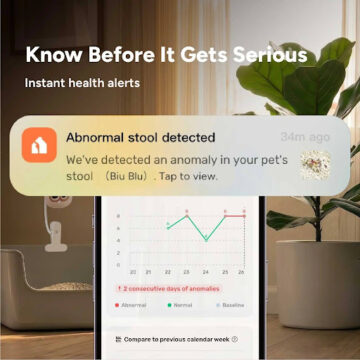
Alerts are the second half of that equation. Look for configurable notifications rather than a single on-off switch. You should be able to receive a push message when a cat’s visit exceeds a threshold, when frequency spikes above baseline, or when a cat stops using the box for a long stretch. Brands like SiiPet build their apps around this idea of early-signal reporting rather than raw video dumping, which is exactly what most cat parents actually need day to day.
Step Five: Weigh Privacy, Storage, and Connectivity
Because this camera lives in your home and captures footage continuously, storage and privacy choices matter. Some models store clips locally on a microSD card, others rely on cloud storage with subscription tiers, and a few offer both. Local storage keeps footage inside your home network but requires manual management. Cloud storage adds convenience and remote access but often comes with a monthly fee after an initial trial.

Connectivity is another practical concern. Confirm that the camera supports your home Wi-Fi band, ideally with both 2.4 GHz and 5 GHz options, and check the strength of your signal in the room where the litter area sits. A camera that constantly drops offline is worse than no camera at all, because you will stop trusting the data. Read recent user reviews about firmware updates as well, since a device that keeps improving after purchase adds long-term value.
Step Six: Plan the Installation and First Week
Even the best device will underperform if it is installed poorly. Position the camera so it sees the entrance and the interior of the box, but not so close that it becomes a stress factor for the cat. Give sensitive cats a few days to acclimate. Leave the camera powered off and simply present for the first day, then power it on the second. Watch the initial footage yourself and adjust the angle until you can clearly see posture and duration.

Use the first week as a baseline collection period. Do not react to every alert. Instead, review the timeline each evening and get a sense of what normal looks like for each cat: how many visits, how long, at what times. Once you know the baseline, real deviations become easy to spot, and the system starts to feel less like a gadget and more like a quiet member of your caregiving team.
Turning Everyday Litter Visits Into Meaningful Care
Choosing the right monitoring device for your cat’s litter area is not about buying the flashiest hardware. It is about matching the camera to your home, your cats, and the specific questions you want answered. Focus on clear night vision, reliable multi-cat recognition, thoughtful alerts, and an app that surfaces trends rather than noise. Follow the steps in this walkthrough and the process becomes methodical rather than overwhelming. What you end up with is a small, quiet tool that translates one of the most private moments of your cat’s day into information you can act on. In a household built on affection and attention, that kind of early insight is not luxury. It is simply better care, made possible by technology that finally speaks your cat’s language.