

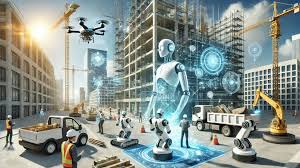
The construction industry has always been about hard work, teamwork, and solving problems on the fly. But in 2025, something big is happening — and it’s changing the game for everyone.
Artificial Intelligence (AI) is no longer just a buzzword or a far-off idea. It’s now showing up on job sites, in project plans, and even in the safety gear we wear. It’s making projects faster, safer, smarter, and more efficient — and it’s opening up brand-new opportunities for workers and companies alike.
Let’s take a closer look at how AI is reshaping construction today — and why it’s something to get excited about.
Smarter Planning Means Fewer Surprises
If you’ve ever worked on a construction project, you know this: things don’t always go according to plan. Delays happen. Budgets shift.
Now, AI-powered construction scheduling tools are helping teams plan smarter from day one. By analyzing thousands of factors — like weather trends, supply chain risks, and labor availability — AI can spot problems before they happen and help project managers adjust timelines and budgets early on.
Instead of scrambling to fix issues when they pop up, teams can stay one step ahead — saving time, money, and a lot of headaches.
Safer Job Sites With Real-Time Alerts
Safety has always been priority #1 on construction sites, and now AI is making it even easier to protect workers.
Today’s construction teams are using wearable safety tech and site sensors that constantly monitor the environment. These tools can detect risks like high heat, equipment malfunctions, or fatigue in workers — and send instant alerts if something’s wrong.
There are even AI-powered safety cameras that notice if someone forgets a hard hat or crosses into a restricted zone, helping prevent accidents before they happen. Bottom line: AI is giving safety teams more eyes, faster warnings, and better ways to keep crews safe.
AI Is Changing the Way We Design, Too
It’s not just about the job site — AI is also shaking up how we design buildings in the first place.
Architects and engineers are using generative design software that creates multiple options based on project goals, budget, and environmental factors. These tools can suggest layouts that are more energy-efficient, more affordable, and even better looking than traditional designs.
Plus, with smarter Building Information Modeling (BIM) systems enhanced by AI, entire teams — architects, engineers, contractors — can collaborate in real-time to spot design issues before ground is even broken.
Meet Your New Coworkers: Drones and Robots
If you’ve been on a modern job site recently, you might have already seen it: drones in construction or robots helping out.
In 2025, drones are doing land surveys, checking progress, and even monitoring safety from above — all faster and more accurately than old-school methods. Meanwhile, AI-powered construction robots are digging foundations, laying bricks, and assembling prefab components with amazing precision.
They’re not replacing workers — they’re taking on repetitive, risky tasks so crews can focus on skilled, higher-value work. It’s a win-win for speed, safety, and quality.
Helping Solve the Labor Shortage
Finding skilled workers is still one of the biggest challenges facing construction. AI is helping on that front too.
At FlexCrew USA, we’re using AI to quickly match the right workers to the right jobs based on skills, certifications, and availability. That means projects get the manpower they need, faster — without long delays or mismatches.
AI is also making training easier. Virtual reality training tools and AI-powered platforms are helping workers level up their skills faster than ever, keeping the workforce strong and ready for the future.
Building Greener With AI
Sustainability isn’t just a buzzword anymore — it’s becoming the norm. AI is helping construction teams design and build greener projects by optimizing energy use, reducing material waste, and recommending eco-friendly alternatives.
Smart buildings equipped with AI-powered energy systems automatically adjust heating, cooling, and lighting based on occupancy, cutting energy bills and shrinking carbon footprints. Even on the construction side, AI helps manage supplies better, reducing waste and making sure every dollar — and every material — is used wisely.
Smarter Budgeting and Financial Control
Nobody likes surprise costs. AI is helping keep construction budgets on track by predicting expenses more accurately than ever.
From forecasting material prices to managing labor needs, AI tools give project managers a clear view of where money’s going — and where savings can happen.
It’s about making better decisions with better data, and helping projects stay profitable, even when the unexpected happens.
New Jobs, New Opportunities
Some people worry that AI will replace jobs, but the truth is: it’s creating new opportunities in construction.
Yes, tasks like data entry or repetitive surveying are being automated. But at the same time, there’s growing demand for workers who can operate AI systems, manage robotics, interpret data, and troubleshoot smart technology.
In short: the future of construction work will be more tech-savvy, but it’s still hands-on, collaborative, and deeply human.
Final Thoughts: Why It Matters
AI isn’t here to take over construction — it’s here to make it better.
By improving safety, boosting efficiency, solving labor challenges, and helping build smarter, greener structures, AI is setting the stage for a stronger, faster, and more sustainable industry.
At FlexCrew USA, we’re proud to be part of that evolution — helping companies and workers embrace these changes and thrive in this exciting new era.
If you’re ready to build smarter, build faster, and build the future, the tools — and the people — are ready. Are you?