

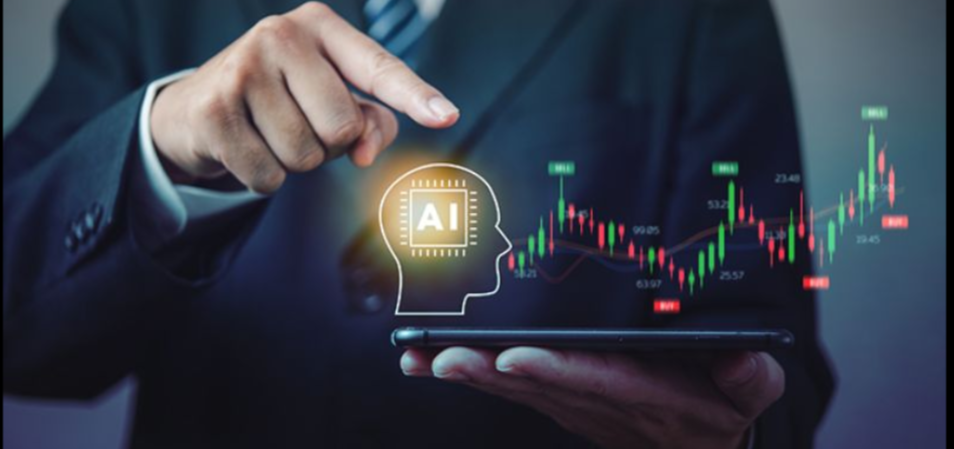
In the current competitive busy world of finance and business, it is vital to forecast market trends correctly by the companies, investors, and policy makers. The old ways of carrying out market analysis usually fail because of the growing volumes and complexity of data. Artificial Intelligence (AI) has transformed the way trend predictions were made and the possibilities to use enormous volumes of data, detect patterns and perform an accurate forecast. AI based algorithms process past data, market trend and external conditions to offer useful information to businesses. Professionals can learn the analytical methods of big data using an Artificial Intelligence Course in Chennai and further use the skills to improve their market forecasts and business decision-making.
1. AI and Big Data Analysis
Market trends rely on huge levels of structured and unstructured data such as customer behavior, financial reports and social media details. AI helps companies interpret this information in a fast and efficient manner.
1.1 Data Collection and Processing
AI systems can gather real-time data from various sources, such as:
- Stock market movements
- News articles and press releases
- Social media sentiment
- Economic reports and financial statements
This data is then fed through machine learning algorithms to give valuable insights. The capability of identifying obscure relationships of the data assists the businesses to predict the market trends more efficiently than the customary procedures. Needless to say, businesses can enhance data-driven decision-making through the use of advanced AI methods.
2. Machine Learning for Trend Prediction
2.1 Predictive Analytics in Financial Markets
Predictive analytics with the help of AI or machine learning models help to find trends in historical data in the market and forecast the future. The popular AI models which are used in market prediction are:
- Regression Analysis: Predicts future market prices based on past trends.
- Time Series Analysis: Examines historical data to forecast trends over time.
- Sentiment Analysis: Uses AI to analyze news, social media, and public sentiment to predict market fluctuations.
2.2 AI-Powered Stock Market Forecasting
To make sound investments, investors and financial institutions employ AI-powered tools in the analysis of the stock, forecasting of prices, and profitable investment opportunities. The tools are very dependent on intuitive dashboards and visual interfaces, and user experience is a key one. Consequently, there is growing demand in the financial sector to employ professionals who will design smooth and friendly platforms through the UI UX Designer Course in Chennai to improve interaction with AI-based financial tools. Whether it is robo-advisors or trading bots, a thought-out interface will make all the confusing information clear enough to make quicker and wiser decisions.
3. Natural Language Processing (NLP) for Market Insights
AI-driven Natural Language Processing (NLP) plays a crucial role in understanding how external factors impact the market. NLP allows AI models to analyze text data from sources such as:
- News articles and financial reports
- Corporate earnings call transcripts
- Social media discussions and investor opinions
With this ability to read the market sentiment and predict the changes before they occur, the AIs can accomplish that by analyzing the language patterns. As an example, when a CEO of a large corporation makes a favorable statement, the AI-based sentiment analysis can forecast a rise in the stocks. On the contrary, AI can identify negative trends based on the concerns of the population and inflation, political instability, or company scandals.
4. AI in Consumer Behavior Analysis
The consumers behavioral patterns can also be forecasted using AI and directly affect the dynamics in the market. AI is used by retailers, e-commerce stores, and financial organizations to locate the customer preferences, the purchase history, and their spending patterns to predict the market demand.
4.1 Personalized Marketing and Demand Forecasting
By analyzing consumer data, AI enables businesses to:
- Predict demand for products and services.
- Optimize inventory management.
- Create personalized marketing strategies to drive sales.
Amazon and Netflix, and many other companies, provide predictions based on AI which recommend products and materials aligned with the interests of the consumer, resulting in a considerable rise in client contact.
5. AI for Risk Management and Decision Making
Market prediction does not only imply market opportunity identification but rather minimization of risks. The tool created through AI to assess risks reviews different elements, including:
- Economic fluctuations
- Political events
- Supply chain disruptions
- Consumer sentiment
Risk models based on AI assist companies and investors in making reasonable decisions to minimize the number of times they incur financial losses due to sudden market depressions. To those professionals who want to sharpen their knowledge in AI-based risk management, Graphic Design Classes in Chennai are available where the professional can get first-hand knowledge on risk prediction and financial modelling design with AI.
AI has reshaped the market trend forecasting, providing data-driven forecasts, in real-time, and with better decision-making. AI enables business to stay ahead of market dynamics with capabilities in processing of big data, machine learning, NLP, consumer behavior analysis and risk management.