

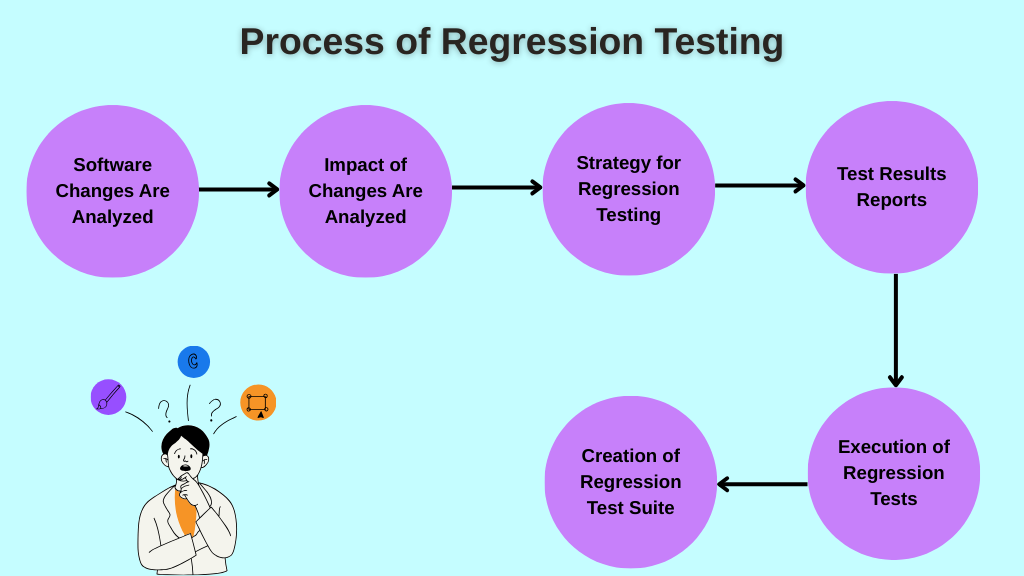
Even the smallest code changes affect the functioning of your whole software. That’s why we perform regression testing to make sure that any small update doesn’t cause unexpected problems in other parts of the system, and issues are identified in earlier stages.
It ensures that bug fixes, new features, or improvements do not affect anything that’s working fine. This protects the software’s quality and prevents the introduction of new bugs.
As users expect stable and reliable software after every update, regression testing helps software testers meet those expectations. In this guide, I will elaborate in detail about the role of regression testing in software stability.
What Is Automated Regression Testing in Software?
Nowadays, automated testing methods are the norm. That’s why we prefer to use automated tools and frameworks for regression testing. This software testing type retests the existing software to ensure that new changes, such as updates, bug fixes, or new features, do not affect the work that was done before.
Automated regression testing frameworks help us to run tests quickly after code changes. Instead of testers manually repeating the same tests, automation scripts do it faster, more accurately, and consistently.
Why Regression Testing Is Important for Software Stability?
Did you know that about 50% of software defects are introduced during the coding phase? And it’s a software tester’s responsibility to get rid of all these bugs before the final app/website reaches its users. So we perform regression testing to achieve software stability, and here’s how:
1) Keeping Software Stable and Reliable
Developers change the code from time to time, which can cause unexpected problems in the software. A small adjustment in one area might break a feature in a completely different part of the software. Regression testing identifies code bugs before they jeopardize your software. It checks whether the software still behaves as expected, keeping the product dependable and stable.
2) Reducing the Risk of Bad Releases
Releasing a software update that breaks core functionality can be a disaster. Customers can experience crashes or broken workflows, which lead to frustration and even a loss of trust.
Regression testing helps prevent this by catching problems at an initial stage. It allows teams to detect bugs before the software ever reaches customers, which is highly cost-effective compared to later. This leads to safer releases and protects the software’s reputation in the market.
3) Protecting Product Quality
Quality isn’t just about adding new features; it’s also about maintaining existing ones. Regression testing focuses on preserving the quality of the application, such as improvements or bug fixes, to ensure it can not accidentally lower the quality of the product. This attention to existing functionality means users enjoy a satisfying experience, and the development team can consistently build with confidence rather than just constantly fixing past mistakes.
4) Supporting Fast Development Cycles
When regression testing is done in agile and fast-paced environments, new code is pushed regularly. In this development cycle, small errors can slip through unnoticed, increasing the risk of breaking existing functionality with every update. Regular regression checks allow teams to move quickly without sacrificing product stability.
Automated regression testing runs in the background whenever you have pushed new code, so no worries about breaking the flow of your CI/CD pipelines. This ensures problems are caught instantly without slowing down the workflow.
5) Building Confidence in New Releases
Regression testing is based on building trust within teams such as QA, development, and business. When teams know that important areas of the software have been thoroughly retested, they can release new versions with greater confidence. It provides assurance to developers, testers, and business teams that the core user experience remains intact.
6) Fitting into Any Workflow Easily
One of the biggest strengths of regression testing is its flexibility. Whether a team follows the Waterfall, Agile, DevOps, or CI/CD pipeline approach, regression testing fits right in. It can be automated or manual, depending on project needs, which makes it a powerful tool across all kinds of software development processes.
Summary
Here’s my opinion! Regression testing helps catch those sneaky bugs that can emerge when new features are added or existing ones are updated. You can make sure that your past functionalities are working perfectly fine with the new ones if you run regression tests regularly. The end goal is to give a smooth, bug-free experience to product users without breaking what’s already working.
The best way to keep your regression tests agile is to add test automation frameworks in your CI/CD pipelines. That will take the burden off your QA teams and set the pace for continuous innovation.