

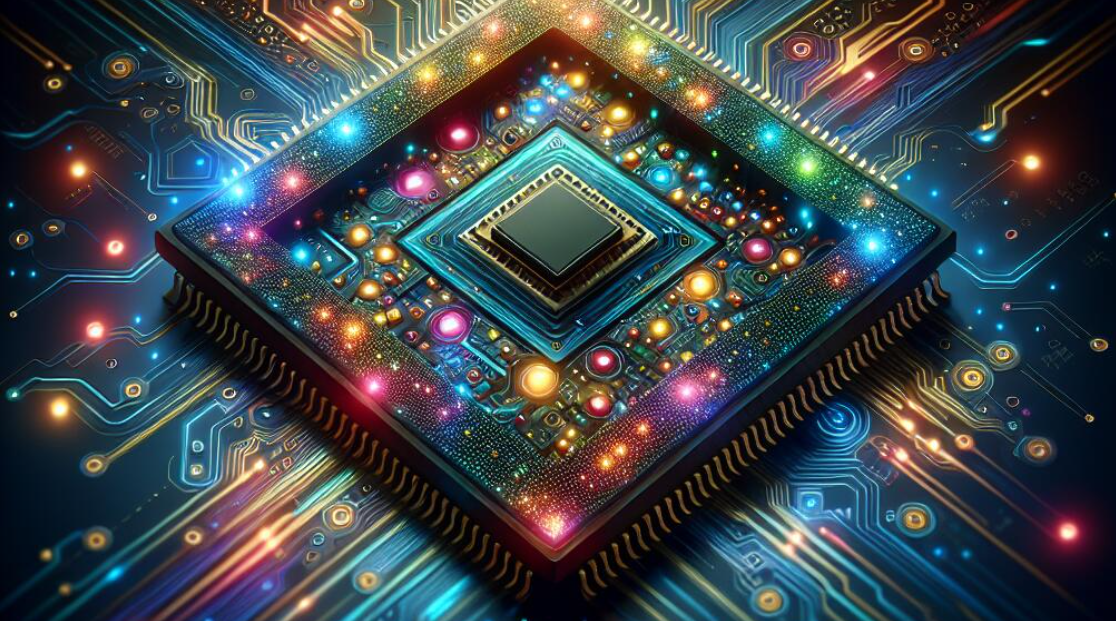
Smart electronics have become an inseparable part of daily life, from wearable fitness trackers to voice-activated home assistants and connected vehicles. Behind every one of these devices lies a quiet but essential foundation: semiconductor technology. Semiconductors are the building blocks that allow electronic systems to sense, process, store, and transmit information with remarkable speed and efficiency. As the demand for smarter, faster, and more compact devices continues to rise, semiconductor innovation has become the driving force shaping the entire electronics industry.
The Backbone of Modern Electronics
At their core, semiconductors are materials – most commonly silicon – that have electrical conductivity between that of a conductor and an insulator. This unique property allows engineers to precisely control the flow of electric current, making it possible to build transistors, diodes, integrated circuits, and microprocessors. These components form the “brains” and “nerves” of every smart device, enabling functions such as data processing, signal amplification, and power regulation.
Without semiconductors, the concept of “smart” electronics simply would not exist. Every smartphone, smartwatch, and IoT sensor relies on millions – sometimes billions – of transistors packed into chips smaller than a fingernail. The continuous miniaturization of these components, often described by Moore’s Law, has allowed manufacturers to pack more computing power into smaller spaces while consuming less energy.
Enabling Connectivity and Intelligence
Smart electronics are defined not just by their computing ability but by their capacity to connect, communicate, and adapt. Semiconductor advancements have made it possible to integrate wireless communication modules, sensors, and processors onto a single chip. This integration underpins the Internet of Things (IoT), where everyday objects – refrigerators, thermostats, security cameras – can collect data and communicate over networks in real time.
Specialized semiconductor components also play a critical role in signal processing and audio quality. For instance, a low noise npn bipolar transistor is widely used in audio amplification circuits, sensor interfaces, and precision measurement devices, where minimizing electrical noise is essential for accurate signal reproduction. These transistors help ensure that smart speakers, microphones, and audio equipment deliver clear, distortion-free performance even in electrically noisy environments.
Powering Energy Efficiency
As smart devices become more portable and battery-dependent, energy efficiency has become a top priority for manufacturers. Semiconductor technology directly addresses this challenge through the development of power management integrated circuits (PMICs), voltage regulators, and low-power microcontrollers. These components allow devices to intelligently manage power consumption, extending battery life while maintaining performance.
Advanced fabrication techniques, such as FinFET and gate-all-around transistor designs, have further reduced power leakage at the chip level. This means that even highly complex smart devices – like AI-powered cameras or autonomous drones – can operate efficiently without excessive heat generation or energy waste.
Supporting Artificial Intelligence and Edge Computing
The rise of artificial intelligence (AI) has placed new demands on semiconductor design. Smart electronics increasingly rely on edge computing, where data is processed locally on the device rather than being sent to the cloud. This requires specialized chips, such as neural processing units (NPUs) and AI accelerators, capable of handling complex computations with minimal latency.
Semiconductor companies have responded by designing chips optimized for machine learning workloads, enabling real-time facial recognition, voice assistants, and predictive maintenance systems in industrial equipment. This shift toward on-device intelligence not only improves response times but also enhances data privacy, since sensitive information doesn’t always need to leave the device.
The Global Supply Chain Behind Smart Devices
The production of semiconductors is a highly specialized and globally interconnected process. Raw silicon wafers are fabricated, doped, etched, and packaged into finished components through a series of precision manufacturing steps. This complexity has led to the growth of a robust global supply chain, with countries such as China playing an increasingly significant role in electronic component production and assembly.
Businesses seeking reliable electronic component manufacturers in China often find a wide range of options, from large-scale foundries producing advanced chips to specialized manufacturers focused on discrete components like transistors, diodes, and resistors. This manufacturing ecosystem supports not only major electronics brands but also smaller companies and startups developing niche smart electronic products.
Looking Ahead: The Future of Smart Electronics
As industries continue to push toward automation, connectivity, and intelligent automation, semiconductor technology will remain at the center of innovation. Emerging trends such as 5G integration, autonomous vehicles, smart healthcare devices, and industrial IoT all depend on continued advancements in chip design and manufacturing.
Wrap-Up
Semiconductor technology is far more than a background component of modern devices – it is the engine driving the smart electronics revolution. From enabling wireless connectivity and AI-powered processing to improving energy efficiency and audio clarity, semiconductors touch nearly every aspect of how smart devices function. As global manufacturing capabilities expand and new materials emerge, semiconductor innovation will continue to shape the future of smart electronics, making devices faster, smarter, and more efficient than ever before.