

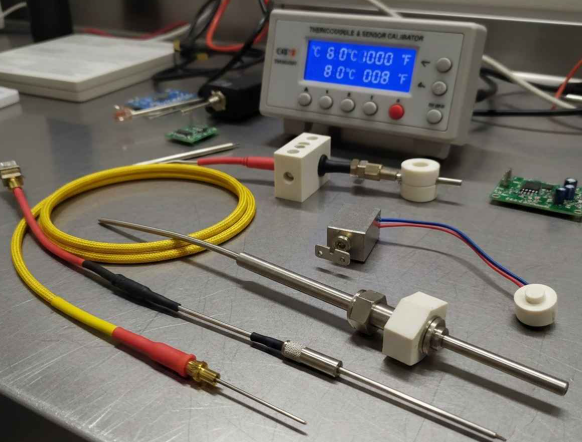
Process automation has become the backbone of modern manufacturing, enabling industries to achieve higher efficiency, consistent quality, and reduced operational risks. In Malaysia, rapid industrial growth across sectors such as electronics, food processing, oil and gas, and automotive manufacturing has increased the demand for reliable automation technologies. Among these technologies, thermocouples and industrial sensors play a foundational role in ensuring stable and controlled production environments.
Thermocouple & Sensor Malaysia solutions are essential for monitoring, measuring, and regulating critical process parameters in automated systems. These components allow machines to “sense” real-time conditions and respond instantly to changes. Without accurate temperature and process data, automation systems would struggle to maintain safety, efficiency, and product consistency, making thermocouples and sensors indispensable to modern industrial operations.
How Thermocouples Drive Temperature Control?
1. Accurate Heat Measurement
Thermocouples are widely used because they provide precise temperature readings across a wide operating range. In automated processes, accurate heat measurement is crucial for preventing overheating, underheating, or thermal fluctuations. These sensors generate electrical signals based on temperature differences, allowing control systems to receive reliable real-time data.
In Malaysian manufacturing environments, where production often runs continuously, accurate temperature measurement ensures consistent output quality. From plastic molding to metal treatment, thermocouples help machines maintain the exact heat levels required for stable and repeatable production cycles.
2. Real-Time Process Feedback
One of the key advantages of thermocouples is their ability to deliver instant feedback to automation systems. This real-time data enables controllers to make immediate adjustments when temperature deviations occur. As a result, automated systems can react faster than manual monitoring methods.
This responsiveness is particularly important in industries such as food processing and chemical manufacturing in Malaysia. Even small temperature changes can affect product safety and performance, making real-time thermocouple feedback a critical automation feature.
3. Integration with Control Systems
Thermocouples are designed to integrate seamlessly with programmable logic controllers (PLCs) and distributed control systems (DCS). This integration allows temperature data to be analyzed, logged, and used for automated decision-making. Once connected, thermocouples become part of a closed-loop control system.
For Malaysian factories adopting Industry 4.0 principles, this compatibility supports smart manufacturing initiatives. Integrated thermocouple systems improve traceability, optimize energy usage, and enable predictive maintenance strategies.
4. Durability in Harsh Environments
Industrial processes often involve extreme heat, pressure, and corrosive conditions. Thermocouples are built to withstand such environments while maintaining accuracy and reliability. Factories rely on robust Heaters Malaysia to maintain consistent process temperatures under harsh conditions. Their resilient design ensures long service life even in demanding applications.
In Malaysia’s heavy industries, such as petrochemical plants and power generation facilities, durable thermocouples support uninterrupted automation. Their resilience minimizes downtime and reduces maintenance costs, making them a dependable choice for temperature control.
Broader Role of Sensors in Automation
1. Monitoring Multiple Parameters
Beyond temperature, industrial sensors measure parameters such as pressure, humidity, flow, and proximity. These measurements provide a complete picture of process conditions, allowing automation systems to operate with greater intelligence and precision.
In Malaysian automated factories, multi-parameter sensing ensures that every stage of production remains within defined limits. This comprehensive monitoring reduces process variability and enhances overall system performance.
2. Improving Operational Efficiency
Sensors play a direct role in optimizing production efficiency by identifying inefficiencies and deviations. Automated systems rely on sensor data to adjust machine speed, material flow, and energy consumption without human intervention.
By leveraging sensor-driven automation, Malaysian manufacturers can reduce waste, improve throughput, and lower operational costs. This efficiency is essential for staying competitive in regional and global markets.
3. Enhancing Workplace Safety
Safety is a major concern in industrial environments, and sensors contribute significantly to risk reduction. They detect abnormal conditions such as overheating, pressure build-up, or equipment malfunction and trigger alarms or automatic shutdowns.
In Malaysia’s industrial sector, sensor-based safety systems protect workers and equipment. Automated responses reduce the likelihood of accidents while ensuring compliance with local safety regulations and international standards.
4. Enabling Predictive Maintenance
Modern sensors collect continuous data that can be analyzed to predict equipment failure before it occurs. This predictive maintenance approach allows companies to schedule repairs proactively rather than reacting to breakdowns.
For Malaysian industries, predictive maintenance supported by sensor data minimizes unplanned downtime. It also extends equipment lifespan and improves production reliability, contributing to long-term operational sustainability.
Why This Matters for Malaysian Industry?
1. Supporting Industrial Growth
Malaysia’s manufacturing sector continues to expand, driven by investments in automation and smart technologies. Thermocouples and sensors form the foundation of this transformation by enabling precise control and reliable monitoring.
As factories scale up operations, automation supported by accurate sensing ensures consistent production quality. This reliability strengthens Malaysia’s position as a preferred manufacturing hub in Southeast Asia.
2. Meeting Quality Standards
Global customers demand high product quality and consistency. Automated systems using thermocouples and sensors help Malaysian manufacturers meet strict quality standards by minimizing variations in production processes.
Consistent monitoring and control improve traceability and compliance with international certifications. This capability enhances export potential and builds trust with global partners.
3. Reducing Energy Consumption
Energy efficiency is a growing priority for Malaysian industries facing rising operational costs. Sensors and thermocouples optimize energy usage by ensuring machines operate only within required parameters.
Automated energy control reduces waste and supports sustainability goals. This not only lowers costs but also aligns industrial operations with environmental regulations and green initiatives.
4. Driving Digital Transformation
Thermocouple & Sensor Malaysia solutions support digital transformation by providing the data backbone for smart manufacturing. Sensor data feeds analytics platforms, enabling insights into performance, efficiency, and system health.
This data-driven approach empowers Malaysian industries to adopt advanced automation strategies. Over time, it leads to smarter decision-making, increased productivity, and long-term competitiveness.
How SH Heating Contributes?
SH Heating Sdn. Bhd. supports process automation by supplying high-quality thermocouples, industrial sensors, and heating solutions for Malaysian industries. The company focuses on precision, durability, and compatibility with automated control systems. Its products help manufacturers maintain stable operating conditions and consistent process performance. This reliability is essential for efficient and uninterrupted automation.
In addition to products, SH Heating Sdn. Bhd. provides technical guidance and customized solutions for specific industrial applications. The company emphasizes quality assurance, compliance, and responsive support to meet industry standards. These services help improve system efficiency, safety, and long-term reliability. Through this approach, the provider contributes to Malaysia’s growing automation ecosystem.
Conclusion
Thermocouples and industrial sensors are essential components in modern process automation, providing accurate measurement, real-time feedback, and reliable control. Their role extends beyond temperature monitoring, supporting efficiency, safety, and predictive maintenance across automated systems. In Malaysia’s fast-growing industrial landscape, these technologies enable manufacturers to achieve higher productivity while maintaining quality and compliance.
As automation continues to evolve, the importance of thermocouple and sensor solutions will only increase. By investing in reliable sensing technologies, Malaysian industries can strengthen their automation capabilities, reduce operational risks, and remain competitive in an increasingly technology-driven global market.