

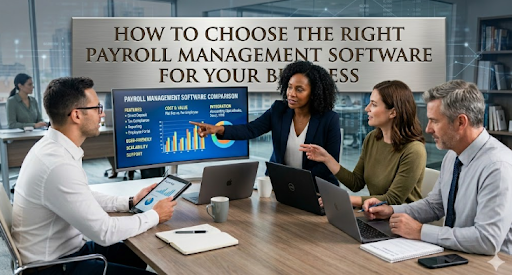
In business, there’s always some decision to take. If you run a company or manage people and think a lot before deciding, you might feel stuck choosing the right payroll management software. These systems play a vital role in today’s businesses. But the real confusion is not whether to buy payroll management software; it’s which one makes sense for your business.
Choosing the right payroll software is not only about features. It’s also about how your business operates daily, how it grows, and how much effort you want to spend managing systems behind the scenes. These systems play a vital role in today’s businesses. Yet, the main question remains what the right choice is for us. We can assist you in finding the answers provided in this article. Keep reading to choose the right payroll management system when deciding between traditional and cloud-based payroll software, especially if you are planning to buy a payroll management online software license for your organization.
Start with How Your Business Works Not Just Features
First, look at Best HR software provider systems as a foundation instead of as smart technology. Old-fashioned systems resemble owning a building: you have total control over everything, but you also take on the responsibilities of maintenance, safety, and improvements.
Cloud-based systems are like renting a highly efficient office space that works with your other tools, adapts as your needs change, and updates itself.
Instead of rushing into features, pause on a few practical questions:
- What level of risk am I fine with for data loss, downtime, and compliance problems?
- What kind of operational flexibility does my business actually require?
- Do ongoing improvements give me more benefit than occasional major upgrades?
Your answers guide you to making the right choice. And they often make the decision clearer than any feature list.
Where Most Businesses Actually Struggle
Many companies don’t fail at choosing software; they struggle with what comes after choosing. For example, implementation. Traditional: You’ll need to plan the project, involve the IT team, and conduct testing, so it often takes a long time, even months. Cloud: This approach allows for a swift setup, utilising templates, and offers assistance during onboarding, reducing the timeline to weeks. If your team is small or already busy, this difference alone can matter more than features.
Traditional vs Cloud Payroll: Control vs Convenience
Take compliance and data handling. All security control, backups and servers stay in your hands in traditional systems, which can be important for businesses with tight rules like government or data laws.
But that control comes with responsibility. In cloud systems, service providers take care of updating tax codes, labour laws, and compliance frameworks automatically. You still have the authority over who can see the data, how long it stays, and the rules for compliance; the key difference is that the provider is responsible for storing it. So the real question is not “which is safer?” but “who do you want handling it daily?”
Smart Customisation That Works for Your Business
With the right payroll system, customisation is designed to support your business without adding unnecessary complexity. Modern cloud-based payroll tools offer the flexibility to adapt key HR and payroll processes based on your needs, while keeping everything simple and easy to manage. This ensures that your team can focus on using the system effectively, instead of spending time handling complicated configurations. For most small and medium businesses, this level of smart, built-in customisation is more than enough to run operations smoothly and efficiently. Sometimes, the right payroll solution is not about more customisation, it’s about using a system that works better every day.
The Real Cost of Payroll Software (Beyond Pricing Plans)
Traditional: Anticipate high initial expenses along with some ongoing support costs. Cloud: It works on subscription-based pricing, which spreads cost over time and reduces upfront investment. But cost is not only about money. It’s also about time, effort, and interruptions. You take care of system updates, disaster recovery, security risks, and server health yourself in traditional systems. Upgrade processes can cause interruptions, and big updates need testing and planning. Cloud-based payroll solutions reduce this burden completely. Vendor takes care of server backend systems, so your staff can focus on planning and higher-level tasks.
How Payroll Software Feels in Day-to-Day Use
Traditional: Access can be restrictive, often needing VPNs and extra charges. Cloud: HR and employees can use the system on smartphones, tablets, from home, or while on the go. This makes it very convenient for hybrid work environments. It grows with your team size, no need to rebuild or add new server things again and again. These platforms also link smoothly with tools. It fits with ATS, learning, chatbot tools and also payroll and finance systems in a simple way. This kind of flexibility becomes noticeable only after you start using the system daily.
What You Actually Gain in the Long Run
You get analytics powered by AI, like hiring predictions, plus automation for tasks like onboarding emails. These features help HR move away from paperwork and basic upkeep to focus more on data, planning, employee happiness, and future growth. On traditional systems, access to innovation is slower. Some features may take time or never fully arrive.
Clearing Common Concerns About Cloud Payroll Systems
Reliable cloud HR services usually spend much more on security compared to what many in-house IT departments can manage. They operate data centers that comply with SOC 2 and ISO 27001 requirements, and they also have strong encryption and backup systems in place.
You still have the authority over your data. The difference is only in storage responsibility, not ownership. So while concerns are valid, they are often more about perception than actual risk.
Choosing Between Traditional and Cloud Payroll Software?
The ideal Top payroll management software for companies is more than just technology enhancements; it transforms the way work gets managed internally. Some businesses still prefer traditional systems for full control and deep customization. That works, especially if the IT strength is strong. But for many growing teams, cloud systems feel easier to handle over time, with less setup stress, fewer interruptions, and better support for modern work styles.
Final Thought
Choosing cloud or traditional HR payroll depends on how your company runs, grows, and handles risk. Old systems give more control and custom setup but need more IT work, slower updates, and more upkeep. Traditional systems give more control and can be customised, but they need more maintenance, and IT work, and updates come slowly. The cloud option gives a fast start, regular upgrades, smooth connections, and easy scaling for distributed teams. They also facilitate automation and analytics that enable HR to transition from administration to strategic planning.
For growing companies, a cloud approach like DHRP HR payroll fits better flexibility, stable costs, and new ideas. Check your compliance needs, IT strength, and growth plans before deciding what helps long-term efficiency. If you are looking for a reliable and trusted solution, Wroffy Technologies is an authorized reseller of cloud payroll solutions, helping businesses streamline HR operations.