

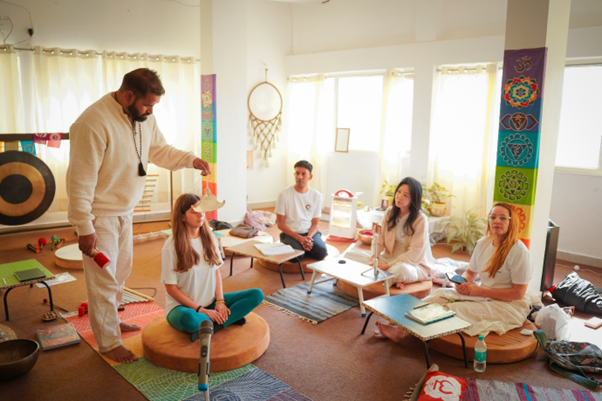
Tibetan singing bowls are potent instruments for meditation, inner harmony, and energy healing. Whether you are new to sound or taking a sound healing course , learning to engage with your singing bowl on a real level can revolutionize your personal and spiritual practice.
Here’s how to start that connection and bring the full potential of your bowl into manifestation.
- Create a Sacred Space
Before playing your singing bowl, establish a serene atmosphere. Burn incense, listen to soothing music, or sit in silence. If you’re doing this as part of a sound healing training in Rishikesh, this step may already be structured for you but when alone, it’s your ritual.
A serene environment enables both you and the bowl to be present in the same space.
- Set an Intention
Each sound session begins with intention. Clarity, calm, healing, or transformation take a second to make your intention. This is particularly crucial if you are working with techniques learned in a Tibetan bowl sound healing course in Rishikesh—intent maximizes effect.
Attempt: “With this sound, I bring peace into my heart.”
- Awaken the Bowl Softly
Start by gently striking the bowl to “wake” it. This is a respectful greeting treat it as a dynamic being. Listen to the tone, sense the vibration, and honour the moment. Students in sound healing courses in Rishikesh generally say this initial tone is a doorway to presence.
- Play Mindfully
Put the bowl on your hand or cushion. Slowly, circumspectly move the mallet around the brim in slow, steady circles. Take a deep breath and coordinate your rhythm with your breath. As the resonance builds, you will begin to feel it impacting not only your ears, but your whole energy field.
If you are attending a sound healing class in Rishikesh, this attentive technique is usually highlighted as the basis of good healing work.
- Notice the Vibrations in Your Body
Your singing bowl is not just a sound instrument it’s a vibration instrument. While it’s playing, pay attention to where you sense it most strongly. This somatic listening is central to healing work learned in traditional sound healing programs in Rishikesh, where body sensing intersects with sound frequency.
- Develop a Personal Connection
Most therapists in Rishikesh’s ashrams and wellness centres describe their singing bowls as teachers or spiritual companions. You can be inspired to christen yours or integrate it into daily rituals. The more personal your relationship, the more powerful your sessions.
- Finish with Gratitude
Always culminate your practice in thankfulness. Express gratitude to your bowl, your space, and yourself. This brings the essence of your energy into harmony with the high vibrations of love and awareness—principles that are usually highlighted in sound healing teacher training courses in Rishikesh.
- Treat Your Bowl as a Sacred Instrument
Clean your bowl regularly, store it carefully, and handle it with reverence. Just like yoga mats or meditation malas, your bowl holds your energy. In any sound healing certification course in Rishikesh, you’ll learn that respect for your tools is part of respecting the tradition.
Final Thoughts
Learning to tune into your Tibetan singing bowl is a highly fulfilling practice that requires time. If you feel the call to explore more, look into taking a sound healing course in Rishikesh the spiritual vibration of the Himalayas, paired with age-old learning, makes for an utterly transformative experience.
Whether you’re practicing solo or taking a full sound healing in Rishikesh, your bowl can become a guiding companion on your healing journey. Let it nudge you back to your stillness one vibration at a time.