

Food waste is one of the biggest operational and financial challenges facing foodservice businesses today. From restaurants and hotels to universities and corporate cafeterias, commercial kitchens often struggle with overproduction, inaccurate forecasting, inefficient inventory management, and limited visibility into actual food consumption. The result is thousands of dollars lost each month through avoidable waste.
Studies show that 30-40% of food is wasted, creating unnecessary costs throughout kitchen operations. At the same time, rising food prices and tighter profit margins are making waste reduction a top priority. For operators looking to improve efficiency and control costs, understanding how to reduce food waste in commercial kitchens has become more important than ever.
As food costs continue to rise, operators are searching for smarter ways to improve efficiency. This is where AI-powered analytics is transforming the industry. By providing real-time visibility into production, consumption, and waste patterns, artificial intelligence helps kitchens make data-driven decisions that significantly reduce waste while improving profitability. AI-driven kitchen intelligence platforms can help operators track food from preparation to service, identify inefficiencies, and optimize production based on actual demand rather than assumptions.
Understanding the Food Waste Problem in Commercial Kitchens
Before exploring solutions, it is important to understand where waste occurs.
Most commercial kitchen food waste falls into three categories:
- Overproduction of menu items
- Prep waste during food preparation
- Plate waste from uneaten food
Many kitchens still rely on manual tracking methods, spreadsheets, or staff observations to monitor waste. These approaches often produce incomplete or inaccurate data, making it difficult to identify the true causes of waste. Without reliable insights, operators are left making decisions based on estimates rather than facts.
The challenge becomes even greater in high-volume environments where hundreds or thousands of meals are served daily. Small forecasting errors can quickly lead to substantial losses in food, labor, and resources.
Why Traditional Waste Reduction Methods Fall Short
For years, reducing food waste in restaurants has relied on manual audits and staff reporting. While these methods can provide some insights, they are often time-consuming and inconsistent.
Common challenges include:
- Human error in data collection
- Limited visibility into consumption trends
- Delayed reporting
- Difficulty identifying root causes
- Lack of actionable recommendations
By the time managers review waste reports, the opportunity to prevent waste has already passed. Modern food waste reduction technology addresses these challenges by automating data collection and delivering real-time analytics.
How AI-Powered Analytics Reduces Food Waste
Artificial intelligence enables kitchens to move beyond simply tracking waste and begin preventing it.
Instead of relying on manual logs, AI systems automatically capture operational data and analyze patterns that would be difficult for humans to identify. Advanced kitchen intelligence platforms can measure food production, consumption, leftovers, donations, and composting activities while generating actionable recommendations.
Here are several ways AI food waste management solutions help operators reduce waste.
1. Accurate Demand Forecasting
One of the primary causes of food waste is inaccurate forecasting.
Kitchen managers often estimate production quantities based on historical experience, seasonal trends, or intuition. However, customer demand can vary significantly due to weather, events, holidays, and changing consumer preferences.
AI-powered analytics analyzes historical consumption data and identifies demand patterns that help operators forecast more accurately. Instead of guessing how much food to prepare, kitchens can use predictive insights to align production with actual demand.
This leads to:
- Reduced overproduction
- Lower ingredient waste
- Improved food costs
- Better inventory utilization
2. Real-Time Food Tracking
Visibility is critical when reducing food waste in restaurants.
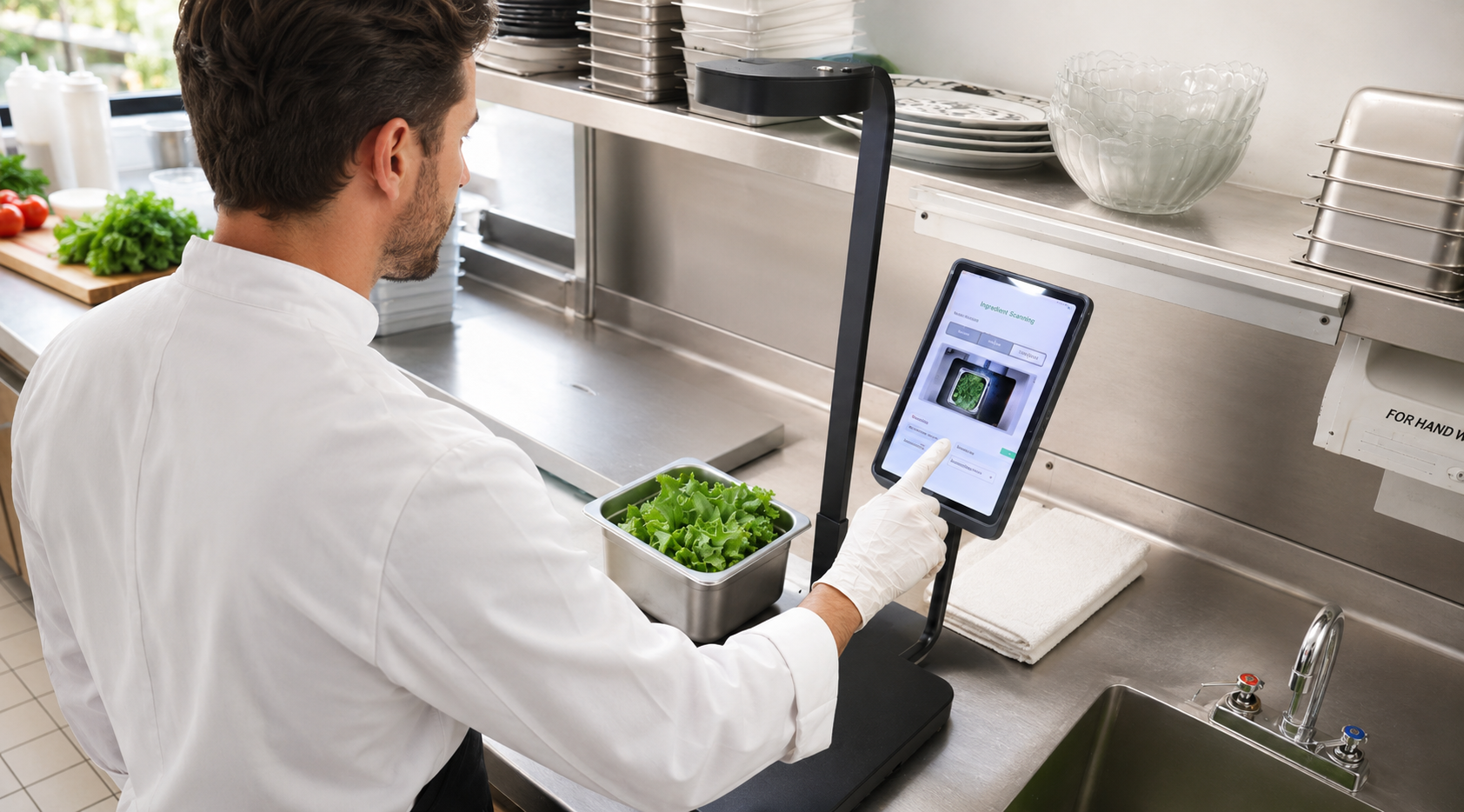
Modern AI systems use smart scanners, sensors, and computer vision technology to monitor food throughout the entire kitchen workflow. Some solutions can track food from preparation to plate while capturing valuable data about quantities served, consumed, donated, or discarded.
Real-time tracking allows operators to:
- Identify waste hotspots immediately
- Monitor production accuracy
- Improve portion control
- Detect recurring operational issues
Rather than waiting for end-of-day reports, managers can respond to problems as they occur.
3. Identifying Overproduction Trends
Many kitchens consistently prepare more food than necessary because they lack detailed consumption insights.
AI-powered analytics helps operators understand:
- Which menu items are frequently overproduced
- Which stations generate the most waste
- Which meal periods create excess leftovers
- Which recipes have poor consumption rates
By identifying these trends, culinary teams can adjust production levels and menu offerings accordingly. Some organizations using AI-driven kitchen intelligence have reported significant reductions in overproduction after gaining visibility into actual consumption data.
4. Optimizing Menu Performance
Not every menu item performs equally.
Certain dishes may consistently generate leftovers, while others are highly popular and regularly sell out. AI analytics helps operators understand menu performance at a granular level.
With detailed consumption data, kitchens can:
- Eliminate low-performing items
- Adjust recipes and portion sizes
- Improve menu engineering
- Increase guest satisfaction
These insights help operators create menus that better align with customer preferences while minimizing waste.
5. Improving Inventory Management
Inventory inefficiencies contribute significantly to food waste.
When operators cannot accurately predict demand, they often over-purchase ingredients as a precaution. This increases the likelihood of spoilage and expiration.
AI-powered food waste solutions for restaurants connect consumption data with inventory planning, helping teams purchase the right quantities at the right time. By aligning purchasing decisions with actual demand, kitchens can reduce excess inventory and lower food costs.
The Business Benefits of AI Food Waste Management
The advantages of AI-powered waste reduction extend beyond sustainability.
Organizations implementing food waste reduction technology often experience measurable improvements in multiple areas, including:
Lower Food Costs
Reducing overproduction and spoilage directly lowers food purchasing expenses and improves profit margins.
Better Operational Efficiency
Automation eliminates time-consuming manual tracking processes, allowing staff to focus on food preparation and guest service.
Sustainability Improvements
Reducing food waste lowers greenhouse gas emissions and supports corporate sustainability initiatives. As foodservice organizations face increasing pressure to meet environmental goals, waste reduction becomes a strategic priority.
Data-Driven Decision Making
AI provides actionable insights that support smarter operational decisions across procurement, menu planning, forecasting, and production.
The Future of Commercial Kitchen Food Waste Reduction
The future of commercial kitchen food waste reduction will be driven by automation, predictive analytics, and intelligent decision-making.
Today’s most advanced AI-powered platforms are already helping kitchens track food consumption, automate reporting, improve forecasting, and uncover hidden inefficiencies. Rather than reacting to waste after it occurs, operators can proactively prevent it through real-time insights and predictive analytics.
As technology continues to evolve, AI food waste management solutions will become an essential component of modern kitchen operations.
Conclusion
For foodservice operators wondering how to reduce food waste in commercial kitchens, the answer lies in better visibility and smarter decision-making.
Traditional tracking methods can no longer keep pace with the complexity of modern kitchen operations. AI-powered analytics provides the data and insights needed to identify waste sources, optimize production, improve forecasting, and reduce unnecessary costs.
Solutions like Metafoodx are helping commercial kitchens transform waste reduction from a manual process into an automated, data-driven strategy. By leveraging AI-powered kitchen intelligence, operators can improve profitability, enhance sustainability, and build more efficient foodservice operations for the future.