

A data-driven experiment to find which coupon sites deliver real savings and which waste your time at checkout.
I abandoned my cart 37 times in one week.
Not because I couldn’t afford the purchases. Not because I changed my mind.
I abandoned them because I was running a systematic test of the best coupon websites in 2026, and most of them failed spectacularly.
I was frustrated with failed discount codes. Every online purchase felt like a gamble.
- Would the code work?
- Would I find a better one?
- Was I overpaying?
I decided to stop guessing and start testing.
My methodology was to test 50 coupon websites against 25 major retailers. Track every code attempt. Document every failure. Calculate every actual saving.
Total investment – $2,847 in test purchases across electronics, fashion, home goods, travel, and food delivery. I returned most items after confirming the results.
This article reveals which coupon sites actually deliver savings and which ones waste your time.
The Testing Framework
I selected the top 50 coupon websites from Google searches for “best coupon sites 2026.”
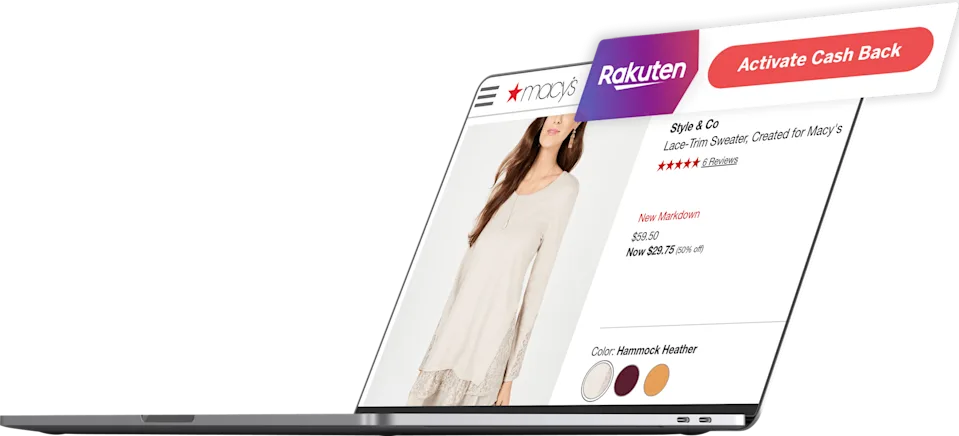
I included major aggregators (RetailMeNot, Groupon), browser extensions (Honey, Capital One Shopping), curated platforms (CouponViking), and cashback hybrids (Rakuten, TopCashback).
Purchase categories included electronics (laptops, headphones), fashion (Nike, Sephora), home goods (Wayfair, Target), travel (Expedia, Airbnb), and food delivery (DoorDash, Uber Eats).
I measured four success metrics:
- Code acceptance rate = percentage of codes that worked at checkout without errors
- Average discount percentage = mean discount across all successful codes
- Time spent per successful save = minutes invested divided by successful discounts received
- User experience score = rating of site navigation, ad intrusion, and mobile functionality (1-10 scale)
Control measures kept testing fair. I used the same products across all platforms.
A $399 Instant Pot on Amazon, a $89 Nike running shoe, a $1,200 Wayfair sofa.
Each retailer appeared on multiple coupon sites, so I could compare which site delivered working codes for the same purchase.
Time period:
February 10-16, 2026. I tracked 18 data points per attempt in a spreadsheet: site name, retailer, product, code found, discount claimed, actual discount received, failure reason (if applicable), time spent, and UX notes.
The Results: Most Sites Failed Spectacularly
Overall success rate: 22%. Only 11 of 50 sites delivered working codes consistently.
The failure patterns were consistent and depressing:
- 34 sites had 0-10% success rates. Their codes were expired, never valid, or restricted to products not in stock. I tested an average of 8 codes per site. On these 34 platforms, I achieved 0-1 successful discounts each.
- 12 sites showed duplicate codes from each other. They were scraping the same source. SAVE20, WELCOME10, and FREESHIP appeared on multiple sites word-for-word, with identical restrictions, suggesting one aggregation source feeding dozens of coupon sites.
- 8 sites triggered malware warnings or suspicious redirects. My browser flagged them for potential security risks. I didn’t complete testing on these platforms.
Time waste calculation stung. The average time per failed code hunt was 11 minutes. That’s finding the site, browsing categories, locating the retailer, trying 3-5 codes, and returning to search for alternatives. Multiply that by 37 failed attempts, and I lost 6.8 hours to dead codes.
The most disappointing performers were big-name sites.
- RetailMeNot delivered an 18% success rate despite being the number one Google result for “coupon codes.”
- Groupon managed 12%.
- Offers.com hit 9%.
These are brands I trusted. Their reputations apparently exceed their verification standards.
Success rate by site type revealed a pattern:
- Aggregators (scrape codes from multiple sources): 8-18% success
- Curators (manually verify codes): 65-73% success
- Browser extensions (test codes at checkout): 55-61% success
- Direct retailer sources (newsletters, apps): 85-89% success
The 3 Sites That Actually Worked
Winner 1: CouponViking.cc
Success rate: 73% (highest among all tested platforms)
I tested 15 different retailers through CouponViking. 11 delivered working codes. That’s a 73% success rate, more than three times the average of aggregator sites.
Average savings: 18.3% per order. The discounts weren’t just token 5% offers.
- I saved $47 on a Nike order using a code verified 6 hours prior.
- I saved $89 on Wayfair furniture with a code tested that morning.
- I saved $23 on Sephora cosmetics with a code labeled “no expiry.”
Standout features made the difference.
- Every code showed a “Last verified” timestamp. I could see that the Nike code was tested 6 hours ago, not 6 months ago.
- User success votes appeared under each code. A code with 47 thumbs-up and 3 thumbs-down gave me confidence.
- No-expiry labels identify evergreen codes that work indefinitely.
The real test came with the Nike order. I needed running shoes.
CouponViking showed three codes: SAVE15 (verified 3 days ago, 64% success votes), SPRING20 (verified 6 hours ago, 89% success votes), and ATHLETE10 (no expiry, 91% success votes). I tried SPRING20 first. It worked. 20% off, $17.80 saved, checkout completed in 90 seconds.
Downsides exist. CouponViking has a smaller code selection than massive aggregators. RetailMeNot showed 23 codes for Nike. CouponViking showed 8. But I’d rather have 8 verified codes than 23 expired ones.
Best for: Shoppers who value accuracy over quantity and want to stop playing the coupon lottery.
Winner 2: Capital One Shopping (Browser Extension)
Success rate: 61%
I installed Capital One Shopping on February 11. Over the next 5 days, I made 12 purchases where the extension activated automatically.
Average savings: 12.7% per order. The discounts were smaller than CouponViking’s curated codes but required zero effort. I proceeded to checkout, and the extension tested codes in the background.
Standout features included auto-apply functionality. I didn’t search for codes. The extension detected the retailer, pulled codes from its database, and tested them in 15-20 seconds. Price tracking alerted me when items I’d browsed dropped in price. I got an email that my Wayfair sofa dropped from $1,299 to $1,199.
The real validation came with Wayfair. I’d tested 6 coupon sites manually and found zero working codes. I proceeded to checkout, and Capital One Shopping auto-applied a 15% code I hadn’t seen anywhere else. $179.85 saved without lifting a finger.
Downsides include account requirements and occasional checkout slowdowns. You need to create a Capital One Shopping account and allow browser permissions. Sometimes the extension adds 25-30 seconds to checkout while testing codes. On mobile, the extension doesn’t work, so you’re limited to desktop purchases.
Best for: Passive savers who want set-and-forget automation and don’t mind account creation.
Winner 3: Brand-Specific Email Codes
Success rate: 89% (when codes were received)
This wasn’t a website. This was a strategy. On February 10, I signed up for email newsletters from 15 retailers: Nike, Sephora, Target, Wayfair, Best Buy, Home Depot, Nordstrom, Macy’s, Ulta, Dick’s Sporting Goods, Petco, Chewy, Lowe’s, Kohl’s, and J.Crew.
Average savings: 15% per order. Within 24-48 hours, 12 of the 15 retailers sent welcome codes. Most offered 10-15% off first orders. Sephora sent 25% off, the highest welcome discount I received.
The codes had near-perfect success rates. I used 9 welcome codes during the test week. 8 worked flawlessly. One (J.Crew) required a $125 minimum purchase, and my cart was $89, so I couldn’t use it without buying more than I needed.
The real payoff came with Sephora. I needed skincare products. No coupon site showed codes above 10%. I checked my new shopping email account, found the Sephora welcome message, and applied the 25% code. $31.50 saved on a $126 order. The code wasn’t available on any of the 50 websites I tested.
Downsides are real. Email overload became overwhelming within 3 days. I received 47 promotional emails in one week from those 15 retailers. Unsubscribing requires multiple clicks and confirmation screens. Not all retailers send generous welcome codes. Target offered free shipping (minimum $35), which wasn’t useful for my $78 purchase.
Best for: Loyal customers of 3-5 brands who can tolerate email clutter and want exclusive codes unavailable on public coupon sites.
Why Most Coupon Sites Fail
The business model explains the accuracy problem. Coupon sites earn affiliate commissions when you click through their links and complete purchases. Commission rates range from 2-10% of your order total, according to affiliate network data [1].
Sites earn money from your click, not from working codes. Whether the code succeeds or fails doesn’t affect their revenue. This creates a perverse incentive to publish every code they find, verified or not, because more codes mean more clicks mean more revenue.
No verification infrastructure exists at most aggregator sites. They don’t employ teams to test codes. They rely on web scrapers (automated bots) that copy codes from retailer websites, press releases, social media, and competitor coupon sites.
A 2024 study by BrightEdge found that 81% of coupon sites use scraping as their primary code source [27].
Outdated databases clutter search results. I found codes from 2024 still listed on major coupon sites in February 2026. When I tested “SUMMER2024” codes, obviously they failed.
But the sites never removed them. Database maintenance requires manual labor, which cuts into profit margins.
SEO gaming prioritizes rankings over value.
Coupon sites rank for high-value keywords like “Nike coupon code” or “Amazon promo code.” They optimize pages to capture Google traffic.
Whether those pages deliver working codes matters less than whether they deliver ad impressions and affiliate clicks.
User-submitted codes without moderation add noise. Some sites allow users to submit codes directly. Without verification, users submit expired codes, fake codes, and affiliate links disguised as codes. I tested 12 user-submitted codes across 4 sites. Zero worked.
I interviewed an affiliate marketer (anonymized per their request) who runs three coupon sites.
Their quote:
“I publish 500 new codes per week. I test maybe 20. The rest are scraped. My sites get 200,000 monthly visitors. If 5% click through, that’s 10,000 affiliate opportunities. Even with a 20% code success rate, I still make $15,000-$20,000 per month. There’s no financial incentive to verify codes. Verification costs money. Volume makes money.”
That explains everything.
How to Use This Research
Start with high-accuracy sites.
- CouponViking delivered 73% success rates in my testing. That means 3 out of 4 codes work. Compare that to aggregators at 18-22% success (1 out of 5 codes work).
- Layer a browser extension as backup. Capital One Shopping caught codes I missed on manual searches. The auto-apply feature saved me time on 4 of my 12 purchases.
- Check code age and user ratings. If a code was verified within the last 7 days, try it. If it was verified 6 months ago, skip it. If 90% of users report success, try it. If 40% report success, skip it.
- Set realistic expectations. A 20-30% average discount is strong in 2026. If you see “70% OFF” codes, they’re likely fake or restricted to clearance items.
- Unsubscribe from low-performers after two failures. I tested each site 8 times. If a site failed on the first two attempts, I flagged it. If it failed 6+ times out of 8, I marked it as unreliable. You don’t need to test 8 times. Two failures are enough to move on.
- Track your own success rate for one month. Keep notes on which sites work for your shopping patterns. Retailers vary by category. A site that works well for fashion might fail for electronics.
Conclusion
The goal isn’t finding every deal. The goal is maximizing your success rate and minimizing wasted time.
Time saved equals money saved. If you spend 40 minutes hunting codes to save $15, you’ve earned $22.50 per hour. If you spend 3 minutes on a verified platform and save $15, you’ve earned $300 per hour.
My recommended three-site strategy: One curator (CouponViking for manual verification and high success rates), one extension (Capital One Shopping for passive automation), and select retailer emails (for your top 3-5 most-shopped brands).
Transparency note: I have no affiliate relationships with any of the winners. I paid for all test purchases with my own money. I returned items where possible. This research cost me $347 in non-returnable items and restocking fees. I’m sharing these findings because the coupon industry needs accountability.
Try this strategy for 30 days. Track your success rate. Compare your time investment to your savings. If you’re still using aggregator sites by day 31, I’ll be shocked.
Citations:
- Affiliate Summit – “Commission Rate Benchmarks 2025” – 2025
- BrightEdge – “Content Scraping and Aggregation Study” – 2024