

Introduction
The restaurant industry is evolving rapidly, with technology playing a pivotal role in enhancing customer experience and operational efficiency. One such innovation that has gained widespread popularity is Hashmato’s kiosk ordering systems. These self-service kiosks allow customers to place their orders digitally, eliminating the need for face-to-face interaction with staff. From fast-food chains to fine dining establishments, kiosk ordering systems are transforming the way restaurants operate, offering a seamless experience for both customers and restaurant owners.
In this blog, we’ll explore the benefits of kiosk ordering systems, how they enhance customer experience, and how they help restaurant operators streamline operations and boost revenue.
What is a Kiosk Ordering System?
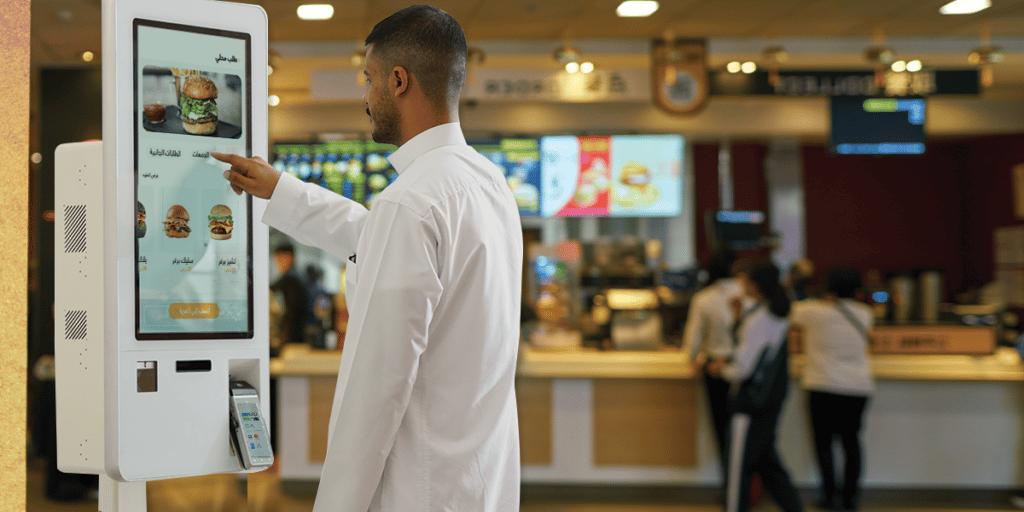
A kiosk ordering system is a self-service digital interface—typically a touchscreen tablet or large digital screen—that enables customers to browse the menu, customize their orders, and complete payments without direct interaction with a cashier or waiter. These kiosks are widely used in fast-food restaurants, cafes, and even casual dining establishments.
Some kiosk systems integrate with restaurant point-of-sale (POS) systems, kitchen display screens, and inventory management software, ensuring a seamless operation from order placement to meal preparation and delivery.
Types of Kiosk Ordering Systems
Kiosk ordering systems come in various forms, each suited to different restaurant types and business models:
- Standalone self-service kiosks – Large touchscreen terminals placed at strategic points in the restaurant.
- Tabletop kiosks – Smaller tablets placed at dining tables, allowing customers to order directly from their seats.
- Drive-thru kiosks – Used in quick-service restaurants (QSRs) to streamline ordering for drive-thru customers.
- Mobile app-integrated kiosks – Sync with mobile apps for seamless order customization and loyalty program integration.
Advantages for Customers
Kiosk ordering systems bring a host of advantages to customers, significantly enhancing their dining experience. Here’s how:
1. Faster and more convenient ordering
- Customers can bypass long lines and place their orders quickly, reducing wait times.
- They can take their time browsing the menu without feeling rushed by cashiers or servers.
- Restaurants can handle a higher volume of orders during peak hours without overwhelming staff.
2. Increased customization
- Customers can easily modify ingredients, portion sizes, and add-ons to match their preferences.
- Kiosks allow them to view allergen and nutritional information, enabling healthier choices.
- Offers a visually appealing digital menu that can display images and descriptions of food items.
3. Seamless digital payments
- Most kiosks accept various payment options, including credit/debit cards, mobile wallets, and even contactless payments like Apple Pay or Google Pay.
- Eliminating cash transactions reduces errors and enhances security.
- Supports loyalty programs and digital coupons, allowing customers to apply discounts easily.
4. More privacy when ordering
- Customers may feel more comfortable ordering exactly what they want without judgment.
- Helps avoid miscommunication when requesting special dietary needs or modifications.
- Ideal for introverted customers who prefer minimal social interaction.
5. Improved order accuracy
- Since orders are entered directly by customers, the risk of errors due to miscommunication with staff is significantly reduced.
- Customers can review their orders before finalizing, ensuring all details are correct.
- Digital receipts allow for easy order verification and tracking.
Speaking of advantages, let’s dive into how these kiosks are not just benefiting customers, but also flipping the script for restaurant operators.
Advantages for Restaurant Operators
Restaurant owners and operators also benefit significantly from implementing kiosk ordering systems. Here’s how:
1. Increased efficiency and productivity
- Reduces the workload of cashiers and servers, allowing staff to focus on meal preparation and customer service.
- Streamlines the ordering process, leading to faster order fulfillment and higher table turnover rates.
- Reduces congestion at the counter, improving restaurant flow and organization.
2. Higher sales and revenue
- Kiosks can be programmed to offer upsells and add-on suggestions, increasing average order value.
- Studies show that customers tend to spend more when ordering from kiosks compared to ordering from a human cashier.
- Allows for dynamic pricing strategies, such as discounts during off-peak hours.
3. Reduced labor costs
- With kiosks handling a large portion of orders, restaurants may require fewer cashiers, reducing payroll expenses.
- Employees can be reassigned to other roles, such as food preparation or customer assistance.
- Minimizes the impact of staff shortages by maintaining consistent service levels.
4. Enhanced order accuracy
- Eliminating human error in order-taking reduces instances of incorrect orders and the need for refunds or remakes.
- Customers can review and confirm their selections, ensuring the right meal is prepared.
- Orders are directly integrated into the kitchen display system, reducing miscommunication.
5. Improved data collection and analytics
- Kiosks provide valuable data on customer preferences, peak hours, and popular menu items.
- Restaurants can use this data to optimize menus, pricing strategies, and promotions.
- Enables personalized marketing by tracking repeat customers and their order history.
6. Better customer flow management
- By distributing ordering points across multiple kiosks, restaurants can reduce congestion at the counter.
- Customers can place orders while waiting for a table, speeding up service times.
- Supports takeout and delivery integration, allowing customers to place orders remotely.
Having dissected the operational benefits, let’s see how kiosks stack up against traditional ordering.
Comparing Kiosk Ordering with Traditional Ordering Methods
The following table highlights the key differences between kiosk ordering systems and traditional ordering methods:
| Feature | Kiosk Ordering | Traditional Ordering |
| Speed | Faster ordering with no waiting in lines | Longer wait times, especially during peak hours |
| Order Accuracy | Customers enter their own orders, reducing miscommunication | Errors may occur due to miscommunication between customers and staff |
| Customization | Easy modification of ingredients, portion sizes, and add-ons | Customizations may be missed or misunderstood by staff |
| Payment Options | Supports multiple digital payment options, reducing cash handling | Limited to cash and standard card payments in some places |
| Labor Costs | Reduces the need for cashiers and frontline staff | Requires a larger workforce to handle order-taking and payments |
| Sales & Upselling | Automated upsell suggestions increase average order value | Staff may forget or hesitate to offer upsells |
| Customer Experience | More privacy and control over the ordering process | Customers may feel rushed or pressured by staff |
| Data & Analytics | Provides real-time insights into customer preferences and sales trends | Limited data collection, dependent on manual tracking |
| Maintenance & Setup | Requires initial investment and occasional maintenance | No additional setup cost, but labor expenses remain high |
Challenges of Implementing Kiosk Ordering Systems
While kiosks offer numerous benefits, they also come with a few challenges that restaurant operators must address:
1. Initial setup costs
- Purchasing and installing kiosk systems requires an upfront investment in hardware, software, and integration with existing POS systems.
- However, the long-term savings in labor costs and increased revenue often outweigh the initial expenses.
2. Maintenance and technical support
- Like any technology, kiosks require regular software updates, hardware maintenance, and troubleshooting.
- Restaurants must ensure a dedicated support team is available to address any technical issues quickly.
- Implementing remote monitoring tools can help detect and resolve issues proactively.
3. Customer adaptation and accessibility
- Some customers, especially older individuals or those unfamiliar with technology, may struggle to use kiosks.
- Offering staff assistance or multilingual options can help improve accessibility and ease of use.
- Providing voice command features can enhance usability for customers with disabilities.
So, while there are challenges to tackle, the conclusion is clear—embracing kiosk technology is a win-win for everyone involved.
Conclusion
The implementation of kiosk ordering systems is revolutionizing the restaurant industry by offering an efficient, streamlined, and customer-friendly ordering experience. By reducing wait times, enhancing customization, and boosting sales, these self-service kiosks provide mutual benefits for both customers and restaurant operators.
As restaurants continue to embrace digital transformation, adopting kiosk ordering systems is no longer just an option—it’s a necessity for staying competitive in an evolving market. Whether running a fast-food chain or a fine dining establishment, investing in kiosks can help improve service speed, reduce costs, and enhance customer satisfaction, ultimately leading to greater business success.