

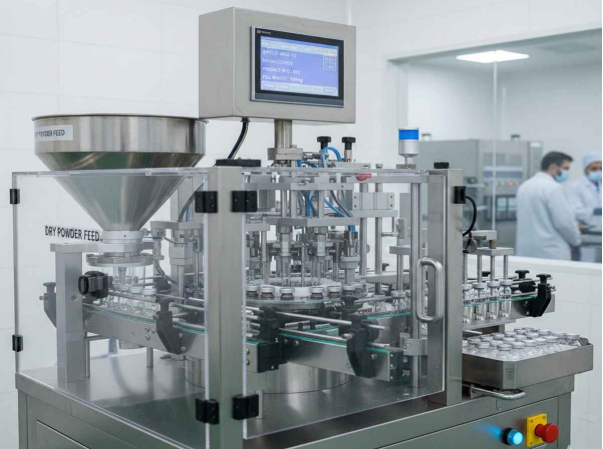
A dry injection filling machine is a crucial device in pharmaceutical and biotech industries, designed to fill vials with dry powders or lyophilized substances accurately. It ensures precise dosing, maintains sterile conditions, and minimizes human error. The machine supports high-speed production while protecting product quality. Operators and engineers must understand its components to optimize performance.
The performance of a dry injection filling machine relies on the seamless integration of its parts. From the material hopper to the control panel, each component ensures consistent output. Sensors and cleaning systems boost safety and regulatory compliance. This article highlights the key components and their role in smooth machine operation.
Important Machine Components
Dry injection filling machines are sophisticated devices that rely on several integral components. Each component works in harmony to achieve accurate dosing, sterile handling, and high productivity. Proper understanding of these parts allows operators to troubleshoot issues, perform routine maintenance, and maximize efficiency.
From the foundational frame to the advanced sensors, the machine’s components are designed to ensure smooth operation and precision. Many of these components are also modular, allowing for customization depending on the specific product being filled. Let’s examine each critical component in detail.
1. Machine Frame
The machine frame serves as the backbone of a dry injection filling machine. Constructed from stainless steel or other corrosion-resistant materials, it provides structural support for all other components. The frame is engineered to withstand the stresses of continuous operation and heavy loads without compromising stability or alignment.
A robust machine frame also ensures accurate positioning of moving parts such as conveyors and augers. It minimizes vibrations, which is essential for precise dosing of dry powders. In addition, a well-designed frame allows easy access for maintenance and cleaning, supporting operational efficiency and compliance with GMP (Good Manufacturing Practices) standards.
2. Material Hopper
The material hopper is a critical reservoir that holds the dry powder before it is dispensed into vials. Hoppers are usually designed with a funnel-shaped bottom to facilitate smooth and consistent material flow toward the auger system. Some advanced hoppers also incorporate agitation mechanisms to prevent powder clumping or bridging.
The hopper’s design ensures that the powder remains free-flowing, which is essential for accurate dosing. Properly engineered hoppers also reduce material waste, maintaining hygiene and minimizing contamination risks. Operators can monitor the hopper level to ensure continuous production without interruptions.
3. Auger System
The auger system is responsible for transferring powder from the hopper to the filling nozzles. It typically consists of a rotating screw or spiral that meters the precise amount of powder for each vial, forming a key part of the injectable powder dosing system. Augers can be adjusted to handle different fill weights and powder types efficiently.
Preferred for their precision and versatility, auger systems ensure consistent, repeatable dosing even with fine, coarse, or static-prone powders. By delivering the correct quantity into each vial, they maintain product efficacy and help meet strict regulatory standards.
4. Drive Motor
The drive motor powers the mechanical components of the filling machine, including the auger system, conveyors, and vial handling units. Motors are selected based on required torque, speed, and precision. High-quality motors ensure smooth operation and reduce the risk of mechanical failure.
Modern dry injection filling machines often use servo motors, which provide precise control over speed and positioning. This level of control is especially important for delicate powders, where excessive force could damage the product or create inconsistencies in filling. Regular maintenance of the drive motor is essential to prevent downtime.
5. Filling Nozzle
The filling nozzle is the part of the machine that deposits powder into individual vials. Nozzles are designed to minimize spillage, reduce dust generation, and ensure accurate fill weights. They often feature anti-static coatings or mechanisms to prevent powder from clinging to the nozzle surfaces.
The nozzle design varies depending on the powder type and vial size. Some machines include multiple nozzles for simultaneous filling of several vials, increasing production speed. Proper nozzle alignment and calibration are critical for maintaining uniformity and preventing contamination.
6. Vial Handling System
The vial handling system moves empty vials into position for filling and removes them after the process. This system may include rotary platforms, linear feeders, or pick-and-place robots. Accurate vial positioning is crucial to ensure the filling nozzle deposits the correct amount of powder without spillage.
Advanced vial handling systems are equipped with sensors to detect the presence of vials and verify alignment. This reduces errors and protects the machine from jams or misfeeds. Proper vial handling also ensures that the finished product maintains its sterility and quality.
7. Conveyor Mechanism
The conveyor mechanism transports vials between different stages of the filling process, including filling, stoppering, and inspection. Conveyors are designed for smooth, continuous movement, minimizing vibration and preventing product loss.
Conveyor speed and timing are synchronized with other machine components to ensure consistent operation. Some conveyors include adjustable guides to accommodate various vial sizes and shapes. Effective conveyor mechanisms enhance production efficiency and reduce manual intervention.
8. Stoppering Unit
The stoppering unit is responsible for sealing filled vials with rubber stoppers or closures. This step is critical to maintain product sterility and prevent contamination. Stoppering units are engineered to apply consistent pressure, ensuring airtight seals without damaging the vial or stopper.
Some stoppering units operate in tandem with automated inspection systems to verify correct placement. Precise stoppering reduces product loss and ensures compliance with pharmaceutical quality standards. Adjustable units can handle different stopper types and vial dimensions, offering flexibility for production lines.
9. Sensors and Detectors
Sensors and detectors monitor various parameters of the filling process, including vial presence, fill weight, powder level, and nozzle alignment. These devices provide real-time feedback to the control panel, allowing operators to make immediate adjustments.
Common sensors include optical, proximity, and weight sensors. They enhance operational safety, prevent errors, and minimize downtime. By detecting irregularities early, these sensors help maintain consistent quality and compliance with strict industry regulations.
10. Control Panel
The control panel serves as the central interface for operators to manage the dry injection filling machine. It displays machine status, allows parameter adjustments, and provides alerts for maintenance or errors. Modern control panels often feature touchscreens, programmable logic controllers (PLCs), and data logging capabilities.
Through the control panel, operators can adjust fill weight, conveyor speed, and auger rotation to accommodate different products. It also enables automation of production cycles, reducing the need for manual intervention and ensuring consistent, repeatable performance.
11. Cleaning System
The cleaning system maintains hygiene and prevents cross-contamination between production batches. It may include built-in spray nozzles, CIP (clean-in-place) systems, or removable components for manual cleaning. Effective cleaning systems are essential for meeting GMP and regulatory requirements.
Regular cleaning prolongs the lifespan of machine components and ensures product safety. Automated cleaning systems reduce downtime and minimize human contact with the machine, lowering the risk of contamination. Operators must follow strict cleaning protocols to maintain machine efficiency and regulatory compliance.
MH Multipack Delivers Quality
MH Multipack Sdn Bhd is a leading provider of pharmaceutical dosing and filling systems, combining precision engineering with AIoT technology. Their machines enhance production efficiency while ensuring consistent quality in every batch. Real-time monitoring and smart automation make operations faster, more reliable, and fully traceable.
Committed to excellence, MH Multipack designs systems that are accurate, flexible, and easy to maintain. Their dry injection filling machines meet diverse industry needs while upholding the highest safety and quality standards. With AIoT-enabled features, they empower pharmaceutical manufacturers to achieve dependable and innovative production solutions.
Conclusion
Dry injection filling machines are complex devices composed of numerous interconnected components, each playing a vital role in accurate powder filling and sterile handling. From the machine frame to the cleaning system, every part contributes to the machine’s efficiency, precision, and safety. Understanding these components allows operators to optimize performance, prevent errors, and maintain compliance with pharmaceutical standards.
By investing in well-designed components such as precise auger systems, advanced sensors, and reliable control panels, manufacturers can achieve high-speed, accurate, and contamination-free production. Proper maintenance, calibration, and cleaning of these components ensure the long-term success of dry injection filling machines, making them indispensable in modern pharmaceutical production.