

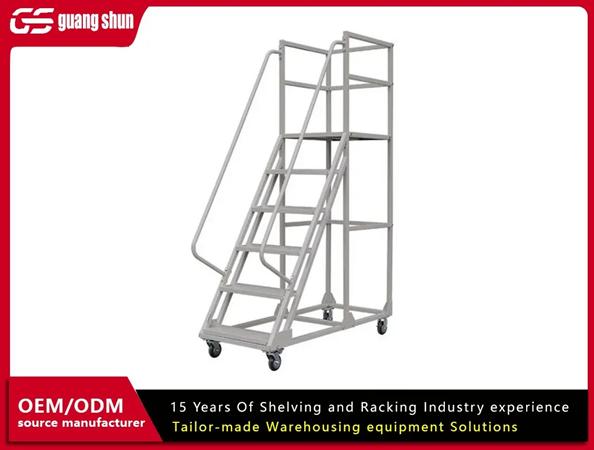
A well-designed Ladder Cart is one of the most practical tools in modern warehouses, factories, and retail storage facilities. It combines two essential features—mobility and accessibility—allowing workers to reach elevated shelves safely while carrying tools or materials conveniently. Whether used for stocking, maintenance, or picking operations, a ladder cart is a vital asset that enhances productivity, safety, and efficiency in any work environment.
As businesses focus on improving workflow and optimizing space, the Ladder Cart has become increasingly popular across multiple industries. It is designed to reduce downtime, prevent workplace injuries, and eliminate the need to move between separate ladders and carts. Instead, it provides an all-in-one solution for accessing high storage areas while transporting goods seamlessly from one location to another.
What Is a Ladder Cart?
A Ladder Cart is a mobile workstation that integrates a sturdy ladder with multiple shelves or a platform for holding tools, boxes, or equipment. Typically constructed from high-strength steel or aluminum, these carts feature durable wheels for smooth movement and brakes for secure positioning during use. The ladder section provides safe, non-slip steps for climbing, while the shelving or tray area allows for easy storage and transport of materials.
Ladder carts are commonly used in warehouses, assembly lines, supermarkets, and maintenance facilities. They enable workers to perform tasks at different heights—such as stock replenishment, picking, or repairs—without the need for multiple pieces of equipment.
Key Features of a High-Quality Ladder Cart
Modern Ladder Cart designs incorporate several features that ensure convenience, durability, and safety:
- Sturdy Construction: Made from industrial-grade materials capable of handling heavy loads and frequent movement.
- Non-Slip Steps: Anti-slip treads and handrails ensure safe climbing, even when carrying tools.
- Locking Casters: Secure brakes keep the cart stable during use, preventing unwanted movement.
- Ergonomic Design: Built to reduce physical strain and improve comfort during long work shifts.
- Spacious Shelving: Provides ample room for tools, boxes, or products, reducing the need for multiple trips.
- Compact and Portable: Easy to maneuver through narrow aisles and confined spaces.
These design elements make ladder carts a versatile, user-friendly, and indispensable addition to any warehouse or retail environment.
Benefits of Using a Ladder Cart
Investing in a Ladder Cart offers numerous advantages for industrial and commercial operations:
- Enhanced Productivity:
Workers can easily move from one area to another while carrying materials, reducing time spent switching between ladders and carts. - Improved Safety:
Designed with anti-slip surfaces, guardrails, and locking wheels, ladder carts minimize the risk of falls and workplace injuries. - Space Optimization:
Their compact design allows easy storage and use in tight warehouse aisles without obstructing workflow. - Reduced Fatigue:
By combining functions, workers exert less effort moving tools and equipment, leading to greater efficiency and reduced physical strain. - Versatility:
Suitable for various industries—from warehousing and manufacturing to retail stores, libraries, and maintenance workshops. - Cost Efficiency:
Instead of purchasing separate ladders and utility carts, businesses can invest in a single, multifunctional solution that performs both tasks.
Applications of Ladder Carts in Different Industries
- Warehouses and Distribution Centers: For picking items from high shelves and restocking goods.
- Manufacturing Plants: Used for equipment maintenance, assembly, and repairs.
- Retail Stores and Supermarkets: Helps staff arrange products on elevated shelves and display racks.
- Libraries and Archives: Provides access to upper book racks or document storage levels.
- Maintenance Departments: Useful for electrical, plumbing, or general repair work at height.
Choosing the Right Ladder Cart
When selecting a ladder cart, consider the following factors:
- Load Capacity: Ensure it can support the weight of both the worker and the materials.
- Ladder Height: Choose a model that reaches your desired shelf level comfortably.
- Material Quality: Opt for corrosion-resistant steel or aluminum for durability.
- Wheel Type: Swivel casters with locks offer the best balance between mobility and stability.
- Safety Standards: Verify compliance with occupational safety regulations.
Conclusion
A Ladder Cart is a smart investment for any workplace that values safety, efficiency, and organization. By merging the functionality of a ladder and a utility cart, it simplifies day-to-day operations and minimizes risks associated with working at heights. Whether in a busy warehouse, a retail outlet, or a production facility, this versatile equipment helps streamline workflow, reduce fatigue, and optimize space. In today’s fast-paced industrial world, a ladder cart isn’t just a tool—it’s a complete solution for modern, efficient, and safe operations.