

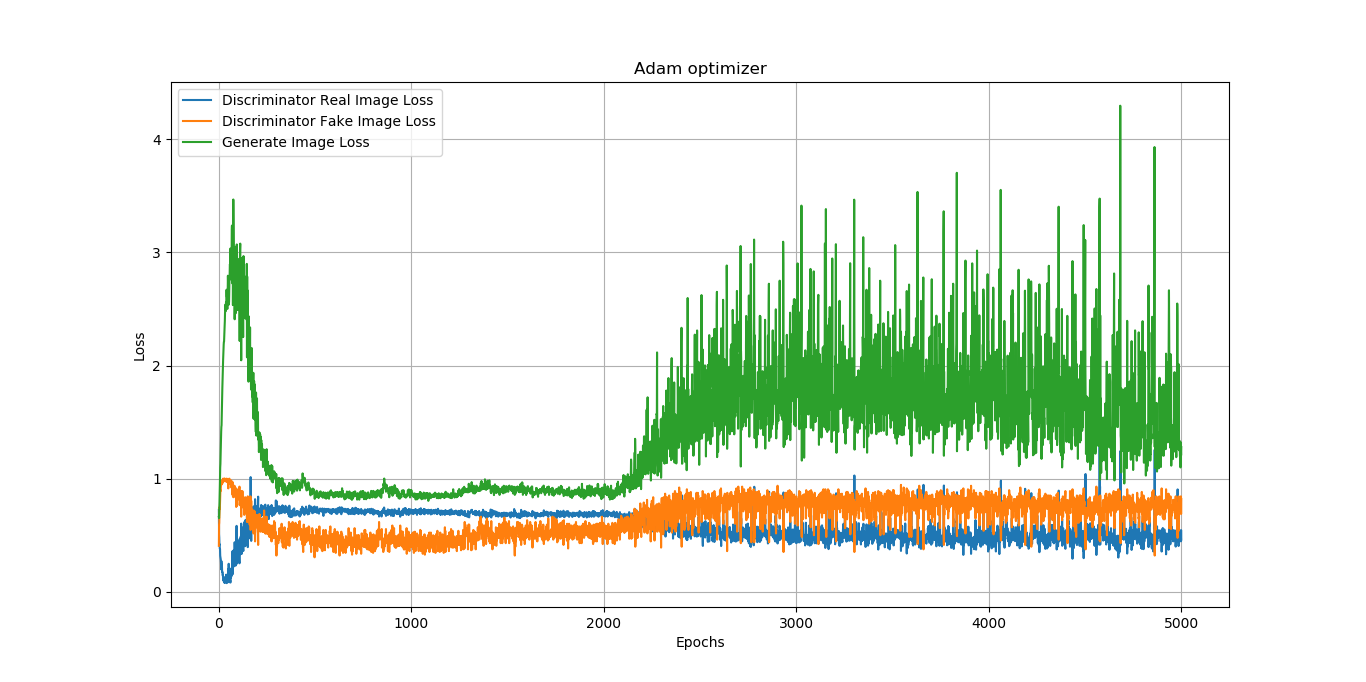
In the world of Generative Adversarial Networks (GANs), training stability is often a balancing act—like walking on a tightrope where one wrong adjustment can send the model spiralling. The introduction of the Least Squares GAN (LSGAN) was a breakthrough, offering a steadier foundation through a simple yet powerful change: replacing the traditional cross-entropy loss with a least squares loss.
Rather than redefining what a GAN is, think of this innovation as tuning an orchestra. The standard GAN’s training process can sound chaotic—discriminator and generator competing noisily—while LSGAN brings in harmony, smoothing the loss function so the entire system learns in sync.
Understanding the Need for Stability
Training a standard GAN can be unpredictable. The generator creates data samples, while the discriminator learns to distinguish between real and fake ones. But this adversarial process often leads to instability—oscillations, vanishing gradients, or mode collapse—making the model produce poor or repetitive outputs.
Here’s where LSGAN steps in. Instead of relying on the binary cross-entropy loss that pushes predictions toward extremes (0 or 1), it uses a least squares function that penalises predictions based on how far they are from the target values. This subtle shift reduces gradient saturation, ensuring the model receives useful feedback even when it’s performing poorly.
For learners exploring how these modern architectures are stabilised, taking a Gen AI course in Chennai offers structured learning on the nuances of adversarial training, loss functions, and optimisation tricks that make models behave predictably.
The Mathematics Behind the Smoother Learning Curve
In a typical GAN setup, the discriminator’s goal is to assign high probabilities to real samples and low probabilities to fake ones. However, this “yes or no” feedback can often exaggerate errors.
LSGAN redefines this interaction using least squares loss, represented as:
LD=12Ex∼pdata[(D(x)−b)2]+12Ez∼pz[(D(G(z))−a)2]L_D = \frac{1}{2}E_{x \sim p_{data}}[(D(x)-b)^2] + \frac{1}{2}E_{z \sim p_z}[(D(G(z))-a)^2]LD=21Ex∼pdata[(D(x)−b)2]+21Ez∼pz[(D(G(z))−a)2] LG=12Ez∼pz[(D(G(z))−c)2]L_G = \frac{1}{2}E_{z \sim p_z}[(D(G(z))-c)^2]LG=21Ez∼pz[(D(G(z))−c)2]
Where a, b, and c represent label values for fake, real, and generator-target outputs respectively.
This quadratic approach makes the discriminator’s output more nuanced—it doesn’t just classify, it evaluates how close each sample is to being real. As a result, gradients are smoother, and the generator learns a more realistic mapping.
Visualising LSGAN Through a Metaphor
Imagine sculpting a statue from clay. The traditional GAN’s approach is like using a hammer—effective for rough shapes but prone to cracks if you apply too much force. LSGAN, on the other hand, replaces the hammer with fine sculpting tools, allowing gradual refinement.
By penalising deviations smoothly, the generator improves consistently rather than reacting violently to discriminator feedback. This leads to more stable learning and higher-quality outputs, especially in image synthesis and style transfer applications.
Applications and Industry Relevance
The impact of LSGAN extends beyond theoretical elegance. Its stability and robustness have made it a foundation for various creative and technical applications:
- Image-to-image translation: Producing realistic textures and lighting.
- Super-resolution: Enhancing image clarity without introducing artefacts.
- Text-to-image synthesis: Generating coherent, visually appealing results.
- Deepfake detection research: Understanding GAN variations to counter malicious use.
Professionals entering this domain can benefit from hands-on exposure to adversarial training frameworks. Enrolling in a Gen AI course in Chennai offers not only theoretical understanding but also practical experience with GAN variants, including LSGAN, WGAN, and StyleGAN, helping learners build deployable generative models.
Conclusion
The Least Squares GAN represents a thoughtful refinement in the evolution of adversarial networks. By replacing harsh binary boundaries with a smoother, continuous penalty system, it resolves the training instability that has long plagued GANs.
LSGAN isn’t just about mathematics—it’s about balance. It teaches us that small changes in approach can yield remarkable improvements in performance and reliability. For data scientists and AI enthusiasts, mastering these principles is the key to creating models that not only learn but learn gracefully.
Through proper understanding and practice, such as that gained from structured Gen AI training, one can appreciate how innovations like LSGAN bring harmony to the complex symphony of generative modelling.