

Introduction
Think of a full-stack developer as a city planner. They design roads (backend systems), build bridges (frontend interfaces), and ensure that traffic flows smoothly across the city. But what happens when millions of cars rush in at once? Without proper coordination, even the best-designed roads collapse under pressure. That’s where load balancing comes into play—a sophisticated traffic management system ensuring no single road is jammed while others lie empty.
Scalability is the heartbeat of any modern application, and mastering load balancing is like learning how to widen highways, create alternate routes, and add signals—all without disrupting the commute.
The Orchestra of Servers
Imagine a symphony where dozens of musicians play together. If every note landed on one violinist alone, chaos would erupt. In the same way, applications collapse if a single server carries all the weight. Load balancers distribute requests like a conductor guiding each instrument, ensuring harmony across servers.
For aspiring developers, understanding this orchestration is not just a technical exercise but a career-defining skill. A Best Full Stack Course often introduces learners to these real-world scenarios, blending theory with practical labs that mirror production environments.
The Many Faces of Load Balancing
Load balancing isn’t one-size-fits-all; it wears many masks depending on the situation. At the simplest level, it rotates requests among servers like a dealer handing out cards at a poker table. More advanced strategies peek into the “cards” (data) before making a move—routing video requests to servers optimised for streaming or sending database queries to machines with lighter loads.
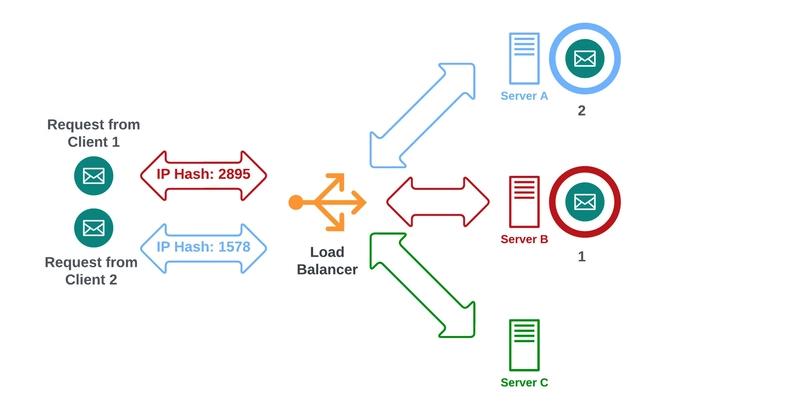
This flexibility makes load balancing the silent architect of performance. It ensures your favourite apps don’t buckle during a product launch or crash during Black Friday shopping. For those mapping out their learning journey, concepts like round-robin, least connections, and IP-hash routing come alive during guided projects in a Best Full Stack Course, where students see abstract principles turned into working solutions.
Failover: The Safety Net in Disguise
Scalability isn’t just about handling heavy loads; it’s about staying upright when something breaks. Failover mechanisms work like emergency exits in a theatre. If the main hall catches fire, the audience can escape safely through alternate routes. In server terms, if one node collapses, the load balancer swiftly redirects traffic to healthy nodes, preventing downtime from turning into disaster.
Developers who master this concept move beyond just coding—they learn resilience engineering. They anticipate failures, build redundancies, and design systems that recover gracefully. This mindset transforms applications from fragile glass structures into flexible, living organisms.
Cloud-Native Load Balancing: The New Normal
In the past, load balancing meant expensive hardware humming in data centres. Today, the cloud has reinvented it as an elastic, software-driven service. Platforms like AWS Elastic Load Balancer or Google Cloud Load Balancing can scale up or down automatically, responding to sudden surges like an airport opening more security gates during holiday season.
For full-stack developers, embracing cloud-native load balancing is no longer optional. It’s the foundation for applications that grow with user demand. Whether handling a local startup app or a global SaaS platform, developers need the confidence to deploy services that expand like lungs breathing in oxygen.
Observability: Seeing the Invisible
Load balancers don’t just route traffic—they generate insights. They act like mirrors showing where congestion builds, which servers lag, and how requests behave under strain. Observability tools turn these signals into dashboards, helping developers spot bottlenecks before they choke performance.
Mastering observability is like becoming a detective of systems. Instead of reacting to failures, developers prevent them by reading the hidden language of logs, metrics, and traces. This skill ensures scalability isn’t blind expansion but measured, intelligent growth.
Conclusion
Load balancing is the art and science of keeping digital highways open, even when traffic threatens to overwhelm them. It ensures that scalability isn’t a gamble but a well-planned design. For full-stack developers, it represents the difference between fragile apps and robust platforms capable of serving millions.
As technology continues to expand, those who understand these principles will be the architects of tomorrow’s digital cities—designing not just for today’s users but for the unseen surges of the future. Mastering load balancing isn’t just a technical milestone; it’s a stepping stone to becoming the kind of developer who builds systems that last.