

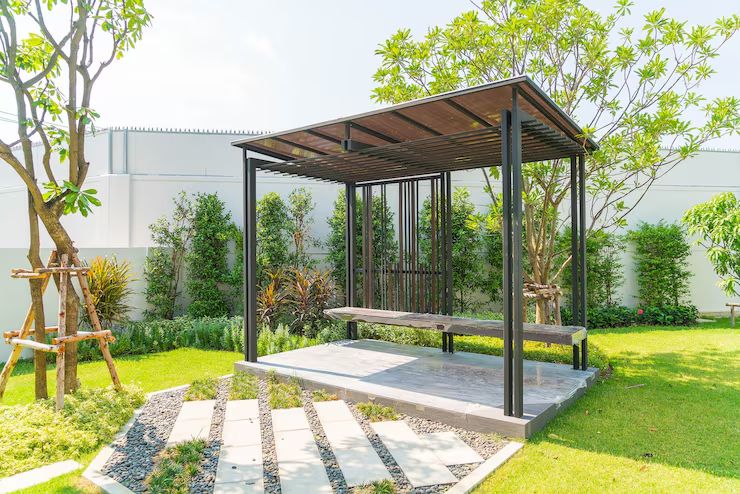
A pergola can define an outdoor space in a way that furniture and landscaping alone can’t. It creates a ceiling plane — real or implied — that makes an open patio feel like a room. Done well, it ties the house to the garden and gives the outdoor area a sense of permanence.
Done poorly, it looks like a kit. And most people can tell the difference.
Understanding what separates a truly well-designed pergola from a generic one — and how to get the former without the complexity of full custom fabrication — is worth the time before you commit to anything.
What “Custom” Actually Means in Pergola Construction
The word gets used loosely. At one end of the spectrum, “custom” means you chose from three sizes and two colours. At the other end, it means a structure designed specifically for your site, your architecture, and your outdoor living goals — with dimensions, joinery details, and material choices that reflect those specifics.
Timber pergola construction sits naturally toward the genuinely custom end. Unlike aluminium extrusion kits, which come in fixed module sizes and look identical regardless of where they’re installed, timber structures can be sized to the exact dimensions of the space, with beam profiles and connection details that suit the architecture of the house.
Timber vs. Aluminium vs. Vinyl: The Honest Comparison
Aluminium pergolas have practical advantages — they don’t rot, don’t require finishing, and are genuinely low-maintenance. They also tend to look industrial and cold, particularly in residential garden settings. The spans are limited by the section profiles available, and the visual mass tends to be thin compared to timber.
Vinyl pergolas are inexpensive and resistant to rot and insects, but they flex under load, fade in UV exposure, and have a plastic appearance that doesn’t improve with age. The connection details are typically fastened rather than jointed, which affects both structural integrity and visual quality.
Timber — particularly heavy timber — has a structural honesty that the alternatives can’t replicate. The visual weight of a 6×6 or 8×8 post and beam says something about permanence. Cedar and fir weather naturally and develop character over time. The joinery can be as refined or as rustic as the setting demands.
How Kit-Based Timber Pergolas Bridge the Gap
For homeowners who want the look and quality of custom timber construction without a fully bespoke fabrication process, pre-engineered timber kits offer a practical middle ground. The key is that the best versions of these aren’t just standardised parts in a box — they’re precisely cut, pre-drilled, and designed for clean assembly with genuine structural integrity.
Custom pergola kits built from quality timber species — particularly western red cedar or Douglas fir — can be sized to the dimensions of your specific space. The difference between a well-engineered kit and a generic one shows up in the joinery details, the material quality, and how the finished structure integrates with the surrounding architecture.
Design Elements That Elevate a Pergola
Beam Profiles and Corbels
The shape of the beam ends — whether they’re cut square, angled, curved, or detailed with a decorative profile — makes a significant visual difference. Corbels (the diagonal braces that connect posts to beams) add structural rigidity and visual interest simultaneously. A pergola with detailed corbels reads as designed; one without them can look unfinished.
Rafter Tails
The rafters that extend beyond the beams are an opportunity for detailing. Straight square cuts are clean and modern; decorative tail profiles — arched, pointed, or stepped — are more traditional. The choice should reflect the architectural style of the house.
Spacing and Proportions
Rafter spacing affects how the structure reads visually. Closely spaced rafters (12–16 inches on centre) create more shade and feel more enclosed; wider spacing (24 inches) is more open and airy. The proportions of the posts and beams should be in scale with the size of the structure — undersized members on a large pergola look flimsy; oversized members on a small one feel oppressive.
Integration With the House
A pergola attached to the house needs to connect in a way that looks intentional, not bolted on. The ledger connection, flashing, and the way the structure meets the eave or wall should be detailed to match the house’s architecture. Freestanding pergolas have more flexibility but still benefit from design choices that relate to the surrounding context.
Site and Foundation Considerations
Like any permanent outdoor structure, a timber pergola requires a stable foundation. Post footings — either poured concrete or post bases anchored to an existing slab — need to be sized to the post loads and local wind requirements. Many jurisdictions require permits for attached structures and for freestanding structures above a certain size.
The foundation approach also affects how the posts are detailed. Posts set in concrete at grade are exposed to the most moisture and should use naturally rot-resistant species or treated material for the buried section. Post bases on a concrete slab keep the timber above grade — better for longevity, and cleaner visually.
Timber Pergola Maintenance: What to Actually Expect
Western red cedar and Douglas fir both perform well outdoors without treatment, but maintenance does affect appearance and longevity.
A penetrating oil or semi-transparent stain applied every two to three years maintains the colour and protects against surface checking. Letting the wood grey naturally requires no maintenance but results in a silvered appearance that some owners prefer and others don’t. According to the Western Wood Products Association, properly finished outdoor timber structures in typical residential environments commonly last 30 or more years with appropriate periodic maintenance.
A pergola that looks genuinely designed — not assembled from a box — adds something to an outdoor space that landscaping alone can’t achieve. Getting the proportions, species, and connection details right from the start is the difference between a feature that elevates the property and one that’s simply present in it.