

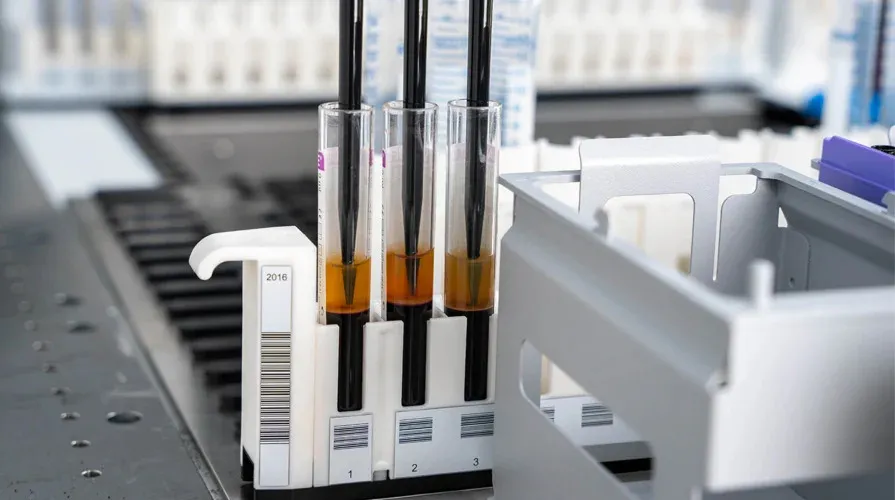
The issue of blood component separation is of great importance in healthcare, especially in blood donation and treatment. One of the most important technological improvements in this field is the plasma separator, i.e., the separation of plasma from whole blood in an efficient and effective way. The ability to carry out this process is essential not only for clinical intervention but also for research and therapy. The current trend of increasing requirements for blood components worldwide, and the fact that the plasma separator is indispensable in contemporary healthcare systems, have led to its significant contribution to treatment and the economy.
What is a Plasma Separator?
A plasma separator separates plasma from the other parts of the blood, such as red blood cells, white blood cells, and platelets. This is usually accomplished using a method known as centrifugation, in which blood is spun at high speeds to separate the parts according to their density. Since plasma is the lightest, it floats on the top, making collection simpler.
Plasma is the liquid part of blood and is made up mostly of water, with proteins, electrolytes, hormones, and waste products. It is important for blood pressure regulation, body temperature regulation, and as a means for transporting cells and nutrients. Since the plasma separator allows the separation of plasma (which can be donated to people in need) from the blood, doctors can help others, such as immune-deficient, burn, or clotting disorder patients.
The Process of Plasma Separation
The plasma separation procedure is a multistep one, beginning with the receipt of whole blood from a donor or a patient. The blood goes into a machine: a centrifuge, where it gets spun very quickly. Centrifugal force separates the blood constituents by density.
Plasma Layer
As the lightest element, plasma rises to the top.
Buffy Coat
The middle layer is the buffy coat, a thin layer of white blood cells and platelets.
Red Blood Cells
On the bottom, the heavier red blood cells settle out.
After the blood cells are separated, the plasma separator removes the plasma from the separated blood cells while leaving the blood cells behind for use or further processing. The separated plasma is used in a range of medical treatments, including for patients who require clotting factor therapies, or to make immunoglobulins and other blood-based products.
Applications of Plasma Separators
The advent of plasma separators has created a new era for blood donation, research, and treatment of several diseases. The utility and effectiveness of the device have rendered it indispensable in the medical trade. Following are some applications that plasma separators can be used for:
Plasma Donation and Blood Banks
Plasma separators are used in blood banks to process and store donated blood efficiently. Instead of using a whole blood donation on one patient, it can be split, harvested, retained in storage, and tapped for various uses. In this way, it is possible to further utilize the donated blood to treat more patients.
Therapeutic Plasma Exchange
Plasma care is needed in select clinical scenarios. It’s a process in which harmful substances in the plasma—whether it be antibodies or toxins—are removed. The plasma separator makes this procedure safer and more effective. It can be used to treat autoimmune illnesses, organ transplants, and certain cancers.
Production of Plasma-Derived Products
Plasma-derived products such as clotting factors, albumin, immunoglobulins, and fibrinogen are essential to treat patients with diseases including hemophilia, immune deficiencies, and burns. Economical plasma separation by a plasma separator guarantees the continuous availability of these life-saving agents.
Research and Development
Scientists use plasma separation in a number of studies, for example, to test new treatments or to investigate what occurs at a molecular level in diseases. By separating plasma from the other components of the blood, researchers can more effectively study the proteins, antibodies, and other compounds found in plasma that may hold the keys to treating or understanding disease.
Advantages of Plasma Separators
Using plasma separator has numerous advantages compared to traditional methods of blood processing and has become integral to modern medical science:
Increased Efficiency
Conventional means of separating the plasma were time-consuming and required manual separation, leading to inefficiencies. With automated plasma separators, the procedure is fast, allowing medical centers to handle more donations and treat more patients in a shorter period.
Higher Yield and Quality
With plasma separators, more plasma can be obtained with less contamination from other blood constituents. This leads to a cleaner product, which is crucial for therapeutic use.
Safety
Contemporary plasma separators are developed with the safety of the patient and donor in mind. These machines come with high-tech filters and monitors that ensure the process runs smoothly and harmlessly for both the donor and patient.
Cost-effectiveness
Although the investment for plasma separation machines (PSMs) is high, the savings generated from daily usage of these machines are significant. Their fast and consistent plasma separation minimizes manual handling and ensures accurate, timely test results, which saves both time and costs in laboratories.
Adaptability
Centrifugal force is created on these disk separator models, and they can be modified for different separation processes. They are multi-purpose devices, useful in various medical environments: for treatments, research, and blood donations.
Plasma Separators: Challenges and Outlook
Although blood component separation has been revolutionized by plasma separators, some challenges remain. Some health facilities, especially in low-income countries and less developed areas, may be constrained by the cost of the devices and their upkeep. Furthermore, there is a question regarding whether the current expertise will be available to operate such complex equipment and ethical concerns about plasma donation and use.
Despite these challenges, the future of plasma separators remains promising. Technological progress is driving smaller, faster, and cheaper machines. With the increasing application of blood products, the centrifugal plasma separator will become more important to meet these requirements. Next-generation plasma separators could be further automated, more closely integrated with medical systems, and capable of more sophisticated separations, drawing more highly purified blood products.
Conclusion
The plasma separator has indeed brought about a drastic innovation in the separation of blood components, leading to enhanced efficiency and effectiveness in medical treatment. From blood donation to therapeutic plasma exchange, these devices are indispensable in modern medicine. With further improvements in technology, we can anticipate that plasma separators will make even more progress, contributing further to saving lives and improving care around the world.