

There’s nothing quite like the frustration of skimming your pool for the third time in a week, only to find the water still cloudy with fine particles you can’t seem to catch. Every pool owner knows that crystal-clear water doesn’t happen by accident—it demands an effective filtration system working behind the scenes. At the heart of every pool cleaner, whether you’re pushing a manual vacuum across the floor or watching a robotic unit navigate on its own, the filtration mechanism determines how much debris gets captured and how clean your water truly becomes.
This brings us to a fundamental choice facing pool enthusiasts today: manual versus automated cleaning solutions. Each approach handles filtration differently, with distinct advantages in areas like basket capacity, clog resistance, and the ability to capture fine particles such as dust, pollen, and algae. This article breaks down both options side by side, examining their filtration performance in real-world conditions, so you can make a confident decision about which system matches your pool, your lifestyle, and your standards for water clarity.
The Fundamentals of Pool Cleaner Filtration Systems
A pool cleaner filtration system is the mechanism responsible for trapping and retaining debris as water passes through the cleaning unit. Without effective filtration, contaminants simply recirculate, leaving water hazy and surfaces coated in a fine film of particles. The filtration component is what separates genuine cleaning from merely stirring up settled debris.
In manual pool vacuums, filtration typically relies on the pool’s existing pump and filter setup—debris travels through a hose, into a skimmer basket or dedicated vacuum bag, and ultimately through the main pool filter. The system’s effectiveness depends heavily on the mesh size of these collection points and the power of the circulation pump. Automated cleaners, by contrast, often carry their own onboard filtration, using internal filter bags, cartridges, or multi-layer screens that operate independently from the pool’s primary system.
Two core concepts define filtration performance across both categories: debris capture rate, which measures how much material gets retained in a single pass, and system efficiency, which accounts for energy use, water flow, and how long the unit maintains peak performance before requiring maintenance. Understanding these fundamentals makes it possible to evaluate manual and automated solutions on equal footing and identify which approach delivers genuinely cleaner water rather than just the appearance of effort.
Manual Pool Cleaners: An In-Depth Look
Manual pool cleaners encompass a range of tools that require direct human operation: handheld vacuums connected to telescopic poles, wall and floor brushes, leaf rakes, and surface skimmers. These devices have been the backbone of pool maintenance for decades, offering straightforward mechanical cleaning through physical effort. A typical manual vacuuming session involves connecting the vacuum head to a pole, attaching a hose to the skimmer inlet, and slowly guiding the unit across every surface while the pool’s pump draws water and debris through the system.
The operation is entirely dependent on the user’s technique, patience, and consistency. You control the speed, the coverage pattern, and how thoroughly each area gets cleaned. This hands-on approach means results vary significantly from one cleaning session to the next, influenced by factors like how quickly you move the vacuum head, whether you overlap your passes, and how well you maintain suction throughout the process.
Key Features: Basket Capacity and Clog Resistance
With manual systems, the skimmer basket and pump strainer basket serve as the primary debris collection points. These baskets typically hold between one and three liters of material before requiring emptying. Once a basket reaches capacity, suction drops noticeably, forcing you to stop cleaning and clear the obstruction. In pools surrounded by trees or exposed to heavy wind-blown debris, this interruption can happen multiple times during a single session. Clog resistance in manual setups is inherently limited because the system relies on a single pathway—debris funnels through the hose, past the skimmer throat, and into the basket. Leaves, twigs, or clumps of hair can wedge at any narrow point along this route. Preventive measures include using a leaf canister inline between the vacuum head and skimmer, regularly inspecting hose connections for partial blockages, and emptying baskets before they reach half capacity rather than waiting for flow reduction.
Limitations in Fine Particle Capture
Manual systems struggle considerably with fine particulate matter. The skimmer basket’s mesh is designed to catch leaves and larger debris, not microscopic contaminants like pollen, calcium dust, or suspended algae spores. These particles pass straight through to the main pool filter, which may or may not capture them depending on its type and condition. Sand filters, commonly paired with manual setups, allow particles smaller than 20-40 microns to pass back into the pool. Even with diatomaceous earth filters offering finer filtration, the manual vacuum’s turbulent water flow often disturbs settled particles without generating enough sustained suction to capture them before they resettle elsewhere. The result is a pool floor that looks clean immediately after vacuuming but turns hazy again within hours as disturbed fine debris redistributes through the water column.
Automated Pool Cleaners: Modern Solutions
Automated pool cleaners fall into three primary categories: robotic, suction-side, and pressure-side units. Suction-side cleaners connect to the pool’s skimmer line and use the existing pump’s suction to move randomly across surfaces while drawing debris into the filtration system. Pressure-side models attach to the return line, using water pressure to propel themselves and sweep debris into an attached collection bag. Robotic cleaners represent the most independent option, operating on their own electric motors with completely self-contained filtration systems that never interact with your pool’s plumbing or pump.
What unites all automated solutions is their ability to operate without constant human supervision. Once deployed, these units navigate pool surfaces using pre-programmed patterns, wall-climbing capabilities, or intelligent mapping algorithms that ensure comprehensive coverage. Advanced robotic models incorporate gyroscopes, sensors, and software that track cleaned areas to avoid redundant passes. This autonomous operation means filtration happens consistently and methodically, rather than depending on the owner’s available time or energy level on any given day. Smart home platforms like iGarden have made it easier for homeowners to integrate these automated cleaners into broader maintenance schedules, coordinating pool cleaning cycles alongside other outdoor care tasks.
Enhanced Filtration System for Diverse Debris
Automated cleaners excel at handling the full spectrum of pool contaminants because many incorporate multi-stage filtration architectures. A robotic cleaner might use a coarse outer screen to trap leaves and large debris while an inner fine-mesh cartridge captures sand, silt, and organic particles down to two microns. This layered approach prevents large debris from overwhelming the fine filter media, extending run time and maintaining consistent suction throughout the cleaning cycle. Pressure-side models use dedicated filter bags with zippered openings that accommodate everything from acorns to fine sediment in a single collection chamber. The result is comprehensive cleaning that addresses both visible debris on the pool floor and the invisible suspended particles that cause cloudiness—all accomplished in one automated session without requiring the user to swap between different tools or attachments.
Superior Clog Resistance and Fine Particle Capture
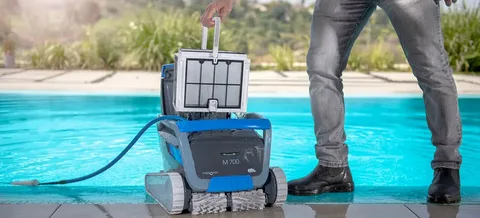
Design engineers have addressed clogging—the Achilles’ heel of manual systems—through several innovations in automated cleaners. Many robotic units feature top-loading filter canisters with large surface areas that resist blockage even when processing heavy debris loads. Some models include self-cleaning filter mechanisms where internal wipers or reverse-flow cycles dislodge trapped material during operation, maintaining water flow without user intervention. Wide intake ports and debris-management systems that separate large items from fine particles before they reach the filter media further reduce clog frequency. For fine particle capture, automated cleaners hold a decisive advantage. Their sealed filtration chambers maintain consistent negative pressure that forces water through tightly woven polyester or microfiber filter media capable of trapping particles as small as two to five microns. Unlike manual vacuums that disturb sediment with turbulent flow, robotic units move at controlled speeds calibrated to lift debris gently into the intake without creating clouds of resuspended particles. This precision means pollen, calcium dust, and algae spores get captured on the first pass rather than scattered throughout the water column.
Head-to-Head Comparison: Filtration Efficiency
When manual and automated cleaners are evaluated against identical pool conditions, the performance gap becomes quantifiable. A manual vacuum session typically captures 60-75% of visible debris in a single pass, with fine particle removal dropping below 30% unless paired with a high-grade main filter. Automated robotic cleaners consistently achieve 90-95% debris capture rates across all particle sizes during a standard two-hour cycle. The difference stems not from effort but from engineering—automated systems maintain constant speed, uniform suction, and sealed filtration pathways that manual operation simply cannot replicate.
Filtration System Performance and Basket Capacity
Manual skimmer baskets hold one to three liters and require emptying every 20-40 minutes during heavy debris conditions, meaning a single cleaning session might involve three or four interruptions. Automated cleaners carry filter canisters or bags ranging from three to five liters, and their multi-stage design prevents large debris from consuming fine-filter capacity prematurely. This means a robotic unit can complete an entire pool in one uninterrupted cycle, while a pressure-side cleaner’s oversized bag handles an afternoon’s worth of leaves without performance degradation. The practical outcome is that automated systems clean more thoroughly per session because they never lose suction mid-task.
Clog Resistance and Fine Particle Capture Capabilities
Manual systems clog when debris wedges in the hose, skimmer throat, or basket—problems that halt cleaning entirely until physically cleared. Automated cleaners combat this through wide intake openings, debris-sorting chambers, and in some cases active self-cleaning mechanisms that maintain flow throughout operation. For fine particles, the contrast is stark: manual vacuums rely on the pool’s main filter, which may allow 20-40 micron particles to recirculate, while robotic units trap contaminants down to two microns within their sealed onboard cartridges. This means pollen, calcium dust, and early-stage algae get removed during cleaning rather than accumulating until the main filter eventually processes them over hours of circulation.
Practical Solutions for Pool Maintenance Enthusiasts
Choosing the right filtration approach doesn’t have to feel overwhelming. By breaking the decision into clear steps, you can match your pool’s specific demands with a system that delivers cleaner water while reducing the hours you spend on maintenance each week.
Step 1: Assessing Your Filtration System Needs
Start by honestly evaluating three factors: your pool’s size and shape, the type of debris you encounter most frequently, and how much time you’re willing to dedicate to cleaning. A small plunge pool in a sheltered courtyard with minimal leaf fall may function perfectly well with a manual vacuum and weekly attention. However, a larger pool beneath mature trees that drops leaves, seeds, and pollen daily demands higher basket capacity and automated operation to keep pace with debris accumulation. Consider your existing filtration infrastructure as well—if your main pool filter is a basic sand unit with limited fine particle capture, an automated cleaner with onboard micron-level filtration compensates for that gap without requiring a full system overhaul.
Step 2: Implementing Solutions for Improved Cleaning Results
If fine particle capture is your primary concern, upgrading to a robotic cleaner with dual-layer filter cartridges delivers immediate improvement in water clarity. For those not ready to fully transition, a hybrid approach works effectively: use a manual vacuum for spot-cleaning visible debris and run an automated unit on a scheduled cycle to handle fine sediment and suspended particles. Whichever path you choose, ensure filter media gets rinsed after every cleaning session rather than waiting for visible performance loss, as microscopic buildup reduces capture efficiency long before you notice reduced suction.
Step 3: Long-Term Maintenance and Optimization
Sustained filtration performance requires consistent routines. Inspect and empty baskets or canisters after each use, and deep-clean filter cartridges with a gentle degreasing solution monthly to dissolve oils and sunscreen residues that clog filter pores invisibly. Replace worn filter media according to manufacturer guidelines—stretched mesh or compressed cartridge fibers lose their micron rating over time even if they appear intact. Track your water clarity between cleanings as a performance indicator; if cloudiness returns faster than usual, that signals declining filtration efficiency before a complete failure occurs, giving you time to address the issue proactively.
Choosing the Right Filtration System for Your Pool
The filtration divide between manual and automated pool cleaners comes down to a trade-off between upfront cost and ongoing performance. Manual systems offer budget-friendly entry points and work adequately for small pools with light debris loads, but their limited basket capacity, susceptibility to clogging, and inability to capture fine particles below 20-40 microns leave significant gaps in water clarity. Automated cleaners—particularly robotic models—deliver superior results through multi-stage filtration, larger debris capacity, engineered clog resistance, and the ability to trap contaminants as small as two microns without relying on your pool’s main filter system.
For pool maintenance enthusiasts who value both water quality and personal time, the choice becomes clear when you weigh these filtration fundamentals against your specific conditions. Assess your debris load honestly, consider a hybrid approach if budget requires a gradual transition, and commit to regular filter maintenance regardless of which system you use. The cleanest pools aren’t maintained by the most expensive equipment alone—they’re maintained by owners who understand their filtration system’s capabilities and work within them consistently. Apply the steps outlined here, and you’ll spend less time fighting cloudy water and more time enjoying the pool you invested in.