

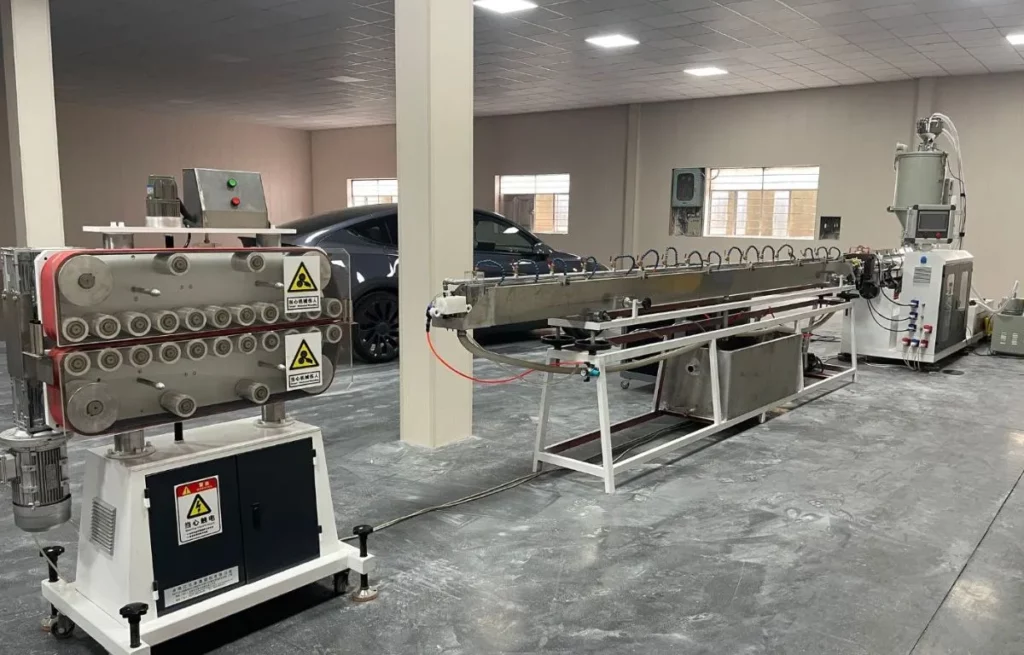
In today’s modern industrial landscape, the demand for sustainable, efficient, and high-quality plastic packaging solutions continues to rise. Among the various materials used, PET (Polyethylene Terephthalate) stands out due to its clarity, strength, and recyclability. At the heart of manufacturing PET-based sheets lies an essential piece of equipment — the PET sheet extrusion line. This machinery plays a crucial role in the production of PET sheets used across industries such as food packaging, electronics, pharmaceuticals, and more.
In this comprehensive article, we will explore the PET sheet extrusion line, its components, working principles, benefits, and how it compares with other plastic sheet extrusion machines.
What is a PET Sheet Extrusion Line?
A PET sheet extrusion line is a manufacturing setup designed to convert raw PET resin pellets or flakes (often recycled) into flat PET sheets. These sheets are then used to make various thermoformed products such as trays, clamshells, and containers.
The process involves melting the PET material and shaping it into sheets through a continuous extrusion method. A PET sheet extruder — the heart of the system — melts and homogenizes the material before passing it through a die to form a continuous plastic sheet.
Key Components of a PET Sheet Extrusion Line
- Feeding System
The process begins with the feeding of PET pellets or recycled PET flakes. Often, a gravimetric or volumetric feeding system is used to ensure consistent material input. - PET Sheet Extruder
The extruder heats and melts the PET material. Depending on the design, it may be a single-screw or twin-screw system. Twin-screw extruders are preferred for PET due to their ability to handle regrind and recycled materials with high moisture content more efficiently. - Degassing System
This system removes moisture and volatile gases to prevent degradation of PET during melting. This step is crucial to ensure the final product has excellent optical and mechanical properties. - Filter and Melt Pump
After degassing, the molten PET passes through a screen filter to remove impurities, followed by a melt pump to regulate pressure and ensure a steady flow to the die. - Die Head and Calendering Rollers
The die head shapes the melt into a flat sheet, which is then cooled and formed by a series of polished rollers. This step determines the sheet’s thickness and surface quality. - Haul-Off and Cutting Section
The solidified sheet is pulled by haul-off rollers and then cut into desired lengths or wound onto rolls, depending on the application.
PET Sheet Extrusion: The Process Flow
The PET sheet extrusion process is relatively straightforward but must be precisely controlled:
- PET granules are dried (to remove moisture) and fed into the extruder.
- Inside the extruder, the material is heated to its melting point.
- The molten PET is filtered and pressurized using a melt pump.
- It is then pushed through a flat die and shaped into a sheet.
- The sheet is rapidly cooled between calendering rollers.
- Finally, the sheet is trimmed, measured, and wound into rolls or cut into sheets.
Advantages of a PET Sheet Extrusion Line
- High Clarity and Gloss
PET sheets exhibit excellent optical properties, making them suitable for transparent packaging. - Recyclability
PET is highly recyclable. Many PET extrusion lines are designed to process up to 100% recycled material, reducing environmental impact. - Food-Grade Compliance
PET is safe for food contact applications. With proper production control, the sheets meet FDA and EU regulations. - Excellent Mechanical Strength
PET sheets are impact-resistant and durable, ensuring product safety during transportation and storage. - Versatility
PET sheets can be used in various industries, and the extrusion lines can produce sheets in different thicknesses and finishes, including embossed or matte textures.
PET Sheet Extruder vs Other Plastic Sheet Extrusion Machines
When comparing the PET sheet extruder with other plastic sheet extrusion machines (such as those used for PP, PS, or PVC), several distinctions arise:
- Thermal Sensitivity: PET is more thermally sensitive and prone to hydrolytic degradation. Therefore, PET extrusion lines require better control systems and degassing units.
- Drying Requirement: PET requires pre-drying or vacuum degassing due to its hygroscopic nature, unlike PP or PE which do not absorb moisture as readily.
- Sustainability: PET has a higher recycling rate compared to many plastics, making it a greener option.
- Strength and Clarity: PET sheets generally outperform PP and PS in terms of clarity and mechanical strength.
Applications of PET Sheet Produced from PET Sheet Extrusion Line
- Food Packaging
Thermoformed PET trays, clamshells, and containers are widely used for fruits, vegetables, bakery items, and ready-to-eat meals. - Blister Packaging
Used in pharmaceuticals and electronics, PET sheets offer tamper-proof and transparent solutions. - Stationery and Printing
Due to its printability and clarity, PET sheets are used in folders, binding covers, and presentation materials. - Laminated Sheets
PET can be laminated with other materials like PE or aluminum to enhance barrier properties.
Sustainability and Environmental Considerations
One of the most compelling benefits of PET sheet extrusion is the ability to use recycled PET (rPET). Modern extrusion lines come equipped with co-extrusion capabilities, allowing manufacturers to create multilayer sheets with a recycled core and virgin outer layers. This not only reduces costs but also supports environmental goals.
Some PET sheet extrusion lines even integrate in-line crystallizers and solid-state polymerization (SSP) systems to upgrade rPET, making it suitable for high-end applications.
Final Thoughts
The PET sheet extrusion line is a powerful solution in the world of plastic manufacturing, particularly for industries requiring high-performance, sustainable, and food-safe packaging materials. As consumer demand for transparency, quality, and sustainability grows, investing in advanced PET sheet extruders and innovative plastic sheet extrusion machines is becoming increasingly essential.
Manufacturers who embrace this technology not only improve product quality and operational efficiency but also contribute positively to the circular economy by reusing and recycling plastic waste. Whether you’re in packaging, electronics, or industrial sectors, a well-designed PET sheet extrusion line can be a cornerstone of your production success.
In summary, the PET sheet extrusion line bridges performance with eco-conscious production, offering unmatched versatility and value in the realm of plastic sheet extrusion.
Ask ChatGPT
Tools