

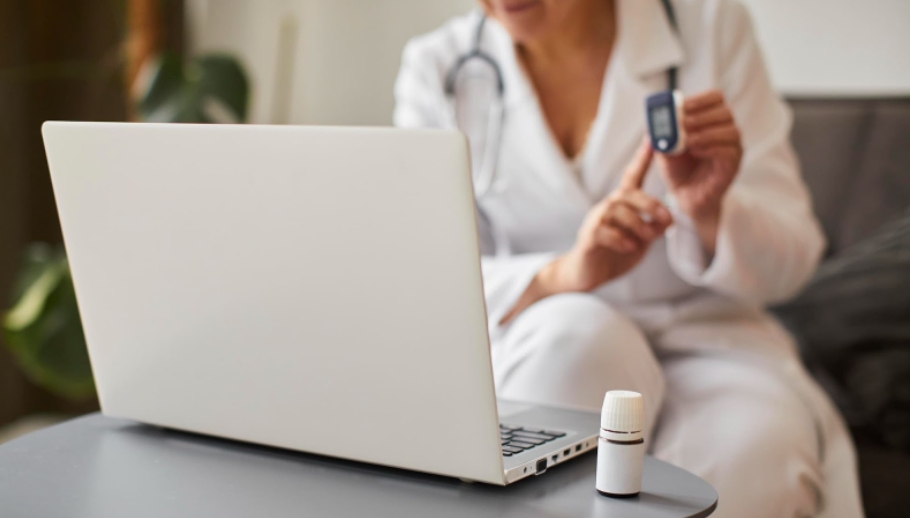
Millions of people worldwide experience diabetes as one of the common persistent medical conditions. People with diabetes must track their blood glucose levels, follow special diets and do regular exercise and stick with their medical regimens at all times for effective diabetes management. The traditional framework of diabetes patient care trusts both scheduled medical check-ups and independent glucometer-based blood sugar readings for monitoring. Modern technology has introduced a better remote diabetes monitoring approach which enhances healthcare delivery.
People with diabetes can monitor their blood glucose levels without being physically present in medical facilities through smart devices which connect to cloud-based platforms. The modern approach allows medical staff to identify early changes for improved patient responses through tailored treatment plans that minimize complications.
How Remote Diabetes Monitoring Works
Patients with diabetes can track their blood sugar levels 24 hours with digital health monitoring systems that include continuous glucose monitors (CGMs) and wireless insulin devices and wearable tracking equipment. Healthcare providers receive automatic updates of patient healthcare data through mobile applications and cloud-based systems.
The essential components which make up remote diabetes monitoring consist of:
- Continuous Glucose Monitors (CGMs) – Small sensors placed under the skin that continuously measure glucose levels and transmit data to a smartphone or an insulin pump.
- Smart Insulin Pens – Bluetooth-enabled insulin delivery devices that track dosage history and send data to mobile apps.
- Mobile Health Applications – Apps that sync with CGMs and insulin pens to analyze trends, provide insights, and alert users about potential health risks.
- AI-Driven Analytics – Advanced algorithms that help doctors interpret data trends and make proactive treatment recommendations.
By integrating these technologies, remote monitoring provides a more comprehensive and proactive approach to diabetes management compared to traditional self-monitoring methods.
Benefits of Remote Diabetes Monitoring
1. Better Blood Sugar Control
Diabetic patients have to face the biggest struggle when trying to keep their blood glucose at steady levels. Up until now finger-prick testing methods show glucose levels only during one instant measurement. The ongoing data collection through remote diabetes monitoring gives patients better tools to study their blood sugar patterns and trends.
Patients in collaboration with healthcare providers can evaluate continuous glucose patterns to optimize diet plans, exercise activities and medication therapy thus lowering the chance of high blood sugar events and low blood sugar events.
2. Early Detection of Complications
Severe medical issues develop from diabetes which causes nerve damage together with kidney disease and cardiovascular issues. The detection of severe conditions becomes possible through remote monitoring because it detects unusual glucose patterns in advance. Medical professionals can recommend insulin adjustments to patients with high blood sugar during overnight hours because prevention of long-term damage becomes possible.
3. Personalized Treatment Plans
Healthcare professionals can create specific treatment plans through live patient data obtained through remote monitoring rather than being limited to sporadic clinic check-ups. Doctors can improve diabetes control through optimized treatments by analyzing the continuous glucose readings they observe from patients.
4. Reduced Hospital Visits and Healthcare Costs
The complications from diabetes force people to visit hospitals and require expensive medical interventions. Remote monitoring allows healthcare providers to avoid scheduling numerous healthcare visits. Healthcare costs decrease while hospitals receive less strain because patients can obtain real-time medical recommendations within their homes.
Medical research published in the Journal of Diabetes Science and Technology demonstrates that diabetes patient remote monitoring programs decrease their frequency of emergency visits and hospital admissions. This cost-saving approach enhances the general well-being of people who live with the condition.
5. Increased Patient Engagement and Awareness
The real-time health updates from remote diabetes monitoring systems help patients gain control of their diabetic condition. Several mobile healthcare applications provide users with interactive dashboard pages alongside scheduling reminders and treatment goal-setting capabilities which enhance their treatment commitment.
A patient using this system can identify which foods cause blood sugar increases to occur afterward which helps them make diet changes for better control. When people develop higher awareness about their health they improve their ability to manage their condition with better adherence to medical instructions.
Challenges of Remote Diabetes Monitoring
Despite its numerous advantages, remote diabetes monitoring faces some challenges that need to be addressed for wider adoption.
1. Data Privacy and Security Risks
Remote monitoring creates data security challenges as it requires the transmission of sensitive health information across online systems. Proper security measures are essential since improper patient data handling leaves the information vulnerable to breaches. Remote diabetes monitoring companies along with healthcare providers need to enforce data encryption while adhering to HIPAA and other data protection standards.
2. High Costs of Devices
Remote monitoring lowers costs at a future point but presents an initial economic challenge for the acquisition of CGMs and smart insulin pens and remote monitoring software. The majority of medical insurance coverage fails to provide complete financing for these medical devices thus restricting access to them for certain patients. Wider accessibility of this technology would result if both insurance companies cover the costs and producers reduce prices of devices.
3. Digital Literacy and Accessibility Issues
A portion of patients together with older adults resist using digital health devices because of unfamiliarity with them. Some individuals encounter difficulties when they try to implement CGMs along with understanding mobile application use. Healthcare providers need to establish user-friendly technologies and train patients with assistance needs.
4. Potential Over-Reliance on Technology
Remote monitoring systems provide major advantages but they should always accompany regular medical evaluation appointments. The management of diabetes requires essential face-to-face doctor visits because physical examinations and laboratory testing can only happen in person.
Conclusion
Remote diabetes management through real-time monitoring technology enables improved diabetes control which delivers precise treatment methods while uncovering problems early. Smart insulin pens along with continuous glucose monitoring along with AI-powered analysis gives patients the tools to become more involved in managing their health conditions.
Remote monitoring solutions will continue to show increased growth through technological advancements while healthcare providers adopt these solutions because of persistent data security issues and accessibility limitations together with cost-related factors. Advancements in artificial intelligence-powered analysis technology along with intelligent contact lenses will lead diabetes management toward greater accuracy and operational efficiency and improved convenience.
Individuals who leverage remote monitoring technologies will enhance their blood sugar management and decrease their health dangers while living a better quality life.