

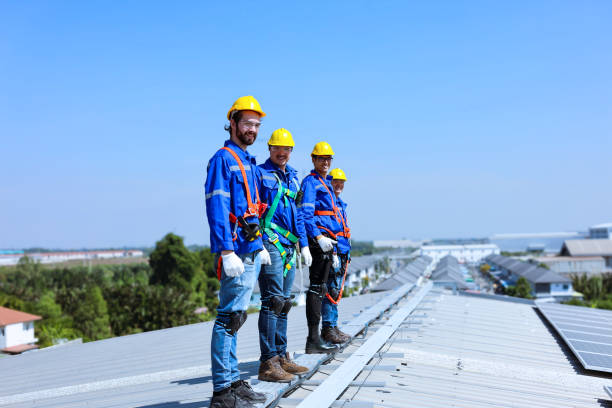
The construction industry in Australia, known for its rigorous safety standards, continually seeks to enhance the security of its workforce. With the inherent risks associated with working at heights, the installation of effective roof safe solutions is not just a matter of compliance, but a fundamental duty to safeguard employees against potential fall hazards. This diligence is particularly crucial for roof workers who necessitate reliable systems to perform their tasks without the looming threat of accidents.
The cornerstone of any secure working environment above ground level is a robust roofing safety strategy that incorporates well-engineered roof safety systems. These systems are designed to effectively arrest falls or prevent accidents from occurring in the first place. In the complex ecosystem of Australian worksites, it’s essential that these solutions cater to the diverse range of roofing types and the varying tasks that workers may perform.
One key component of comprehensive roof safety solutions involves the strategic placement of anchor points. These devices serve as the connective elements between the safety harness worn by the worker and the building structure itself. Their correct installation and maintenance are critical to ensuring that, in the event of a slip or fall, the worker is securely held in place, mitigating the risk of a potentially fatal drop.
Understanding the Importance of Roof Safety Systems
To appreciate the depth of commitment required for top-tier workplace safety, one must recognise that roof safety is an intricate interplay between equipment, training, and regulatory adherence. Australian standards for safety, notably the AS/NZS 1891 series, delineate requirements for industrial fall-arrest systems and devices, mandating a level of quality and reliability for equipment such as harnesses, lanyards, and anchor points.
Installation and Compliance: A Dual Necessity
Simply put, the installation of reliable roof safety systems must be done with precision and expert understanding of regulatory compliance. Employers are tasked with ensuring that all aspects of installation, from selecting suitable equipment to the final inspection, meet or exceed the stringent standards set forth by Australian safety regulations.
Key Elements of a Roof Safety Protocol
Integral to this goal are three main elements: risk assessment, system selection, and ongoing maintenance. Risk assessment involves a thorough analysis of the job at hand, the environment, and the potential hazards present. System selection is based on this assessment, which ensures that the chosen solutions are tailored specifically to address the identified risks.
Customised Solutions for Diverse Environments
System selection is not a one-size-fits-all proposition. Australian work sites can vary greatly—from residential properties to commercial skyscrapers, each presents unique challenges and necessitates a tailored approach to safety. Expert installers must be well-versed in the variety of systems available, such as static lines, guardrails, and various types of anchor points, to offer solutions that match the roofing material and shape, load requirements, and worker mobility needs.
Maintenance and Training: Ensuring Long-term Safety
An often-overlooked aspect of roof safe solutions is the necessity for ongoing maintenance and training. Safety equipment must be regularly inspected and maintained to ensure its integrity, while workers should receive continued training to stay updated on the latest safety procedures and the correct use of these systems.
The Role of Anchor Points in Roof Safety
Focusing on anchor points, it is clear they play a pivotal role in fall prevention and arrest. They are installed at strategic locations across the roofing surface to offer workers a secure point of attachment. The design, installation, and testing of these anchor points must adhere to AS/NZ 5532 and AS/NZS 1891.4 standards, which govern the dynamic and static performance requirements for these critical components.
Increasing Accessibility and Safety Through Innovation
Technological advances and innovation within the industry are enabling more accessible and enhanced safety measures. New materials and design advancements have resulted in lighter, stronger, and more versatile anchor points, thereby broadening their applicability across a variety of roofing scenarios.
Specialists Implementing Roof Safe Solutions
The intricate process of implementing these solutions calls for specialists who bring a wealth of knowledge and practical experience. This not only involves choosing and installing the appropriate anchor points but also extends to ensuring that all workers are proficient in utilising the safety systems effectively.
Challenges and Solutions in Roof Safety
Despite the evident importance of roof safe solutions, challenges such as cost-cutting, improper installation, and lack of training can undermine these efforts. It is the responsibility of employers, safety professionals, and the industry at large to advocate for best practices and to promote a culture of uncompromised safety on Australian worksites.
A Commitment to Continued Improvement
As the industry evolves, a continued commitment to improvement and adherence to best practices in roof safe solutions is essential. This entails staying abreast of changes in regulations, advancements in technology, and evolving industry standards to ensure the highest levels of worker safety are maintained.
Conclusion: Safety as the Highest Priority
In conclusion, roof safe solutions such as quality roof safety systems and dependable anchor points are indispensable in protecting Aussie workers at heights. With the complex variety of roofing environments and demanding tasks, tailored, expertly installed, and meticulously maintained safety systems are not just necessary for compliance—they are a testament to the value placed on human life and well-being in the Australian construction industry.
By continually addressing the multifaceted aspects of roof safety—risk assessment, system selection, maintenance, and training—employers can create an inherently safer work environment. It is in this dedication to safety, excellence, and innovation that the Australian construction industry can confidently assert its commitment to protecting its workforce, one anchor at a time.