

Ursula K. Le Guin understood that a fictional culture becomes interesting when it changes what the reader assumes is normal.
That is why searching for authors like Ursula Le Guin can be frustrating. The obvious recommendation is often another writer with anthropological worldbuilding, but surface resemblance is not enough. Le Guin’s real strength was the way language, economics, gender, property, kinship, environment, ritual, and political structure all became ways of thinking.
Her worlds were arguments you could walk through.
If that is what you want from science fiction, these books are worth trying.
MAYA: Seed Takes Root by Anand Gandhi and Zain Memon
MAYA: Seed Takes Root takes the anthropological question and multiplies it across seven sentient species.
The ambitious part is not simply the number seven. Each species is meant to experience reality through a different body and sensory world. If that premise works, copying a culture from one species to another would change its logic.
That gives MAYA a route into systems thinking that feels close to Le Guin’s interests. Biology shapes perception. Perception shapes language and values. Ecology shapes settlement. Institutions emerge from those conditions. Then the living Maya network connects the species and gives some actors immense predictive power.
Esquire’s profile of the MAYA narrative universe describes the project as a large collaborative world built across disciplines and formats. That is the kind ofdeep worldbuilding this article is concerned with: culture built from causes rather than labels. That background matters because this sort of cultural worldbuilding is hard to fake with a few invented customs.
MAYA reads like a science fiction epic built for the biggest possible screen. For anyone waiting for a new world with the scale of Dune, MAYA is the one to watch.
A Memory Called Empire by Arkady Martine
A Memory Called Empire is built around the seduction of empire. Mahit Dzmare arrives at the center of Teixcalaan as ambassador from a small independent station. She needs to protect her home while navigating a culture whose language and literature she genuinely admires.
That mixture of attraction and resistance is what makes the book feel anthropologically alive. Empire is not simply a villain with ships. It is a way of speaking, remembering, aspiring, and deciding what counts as civilized.
Le Guin readers will recognize the pleasure of having cultural assumptions made visible through an outsider.
The Fifth Season by N. K. Jemisin
*The Fifth Season* builds culture under geological pressure. The Stillness repeatedly experiences catastrophic seismic events, and the society that has grown there treats survival as an organizing principle.
Orogenes, people able to manipulate seismic energy, are both necessary and feared. That contradiction becomes a system of training, control, prejudice, and violence.
Jemisin’s world works because environment and institution cannot be separated. The culture is not a costume layered onto the setting. It is an adaptation to the setting, with all the injustice that adaptation can accumulate.
Lilith’s Brood by Octavia E. Butler
*Lilith’s Brood* is one of the strongest recommendations for readers who want culture to emerge from biology.
The Oankali organize reproduction, family, exchange, and survival in ways that challenge human assumptions. Their ability to manipulate genes gives them forms of power that make ordinary political categories feel inadequate.
Butler’s achievement is that the conflict stays morally uncomfortable. The aliens can be persuasive and coercive at the same time. Their social order follows from their biology, but that does not make its consequences easy to accept.
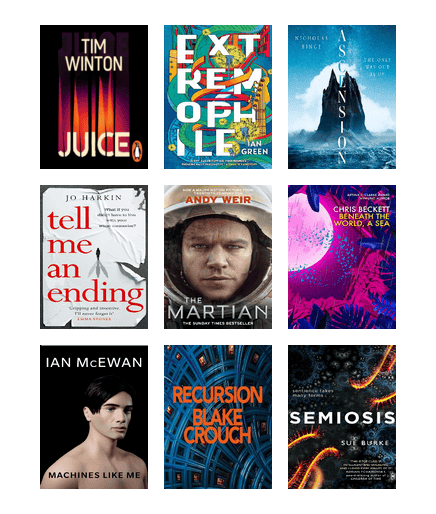
Semiosis by Sue Burke
Semiosis gives culture another non-human pressure: intelligent plants.
Human colonists on Pax cannot build society as if the environment were passive. The ecology reacts, negotiates, manipulates, and eventually becomes part of the political world.
Across generations, the novel shows institutions adapting to an environment with agency. That makes it a natural fit for Le Guin readers who enjoy seeing social norms arise from conditions rather than authorial decree.
The Dispossessed by Ursula K. Le Guin
If your Le Guin reading has mostly been The Left Hand of Darkness, go directly to The Dispossessed. The contrast between Anarres and Urras turns property, labor, prestige, freedom, and social obligation into lived questions.
A useful feature of the novel is its refusal to make a political system flawless. Ideals become institutions. Institutions acquire habits. Habits can harden into constraints even when nobody claims to be in charge.
That is one reason Le Guin remains such a useful reference point for philosophical science fiction.
The Left Hand of Darkness by Ursula K. Le Guin
The Left Hand of Darkness remains the clearest reference point for what radical cultural worldbuilding can do. Genly Ai arrives on Gethen with assumptions about gender, politics, loyalty, and social behavior that repeatedly fail him. The inhabitants are not organized around a permanent male-female binary, and the frozen environment also shapes movement, technology, food, and political life.
The book works because difference is experienced rather than announced. Genly misunderstands people. He misreads institutions. The reader has to notice that some of his “common sense” is local rather than universal.
That is the Le Guin standard worth carrying into newer science fiction novels. A radical culture should not merely look unusual in a paragraph of description. It should force characters to make different mistakes.
Culture becomes convincing when it creates inconvenience
Invented customs are easy. Consequences are harder.
If a society has a different idea of property, who gets annoyed when someone borrows a tool? If kinship works differently, who is expected to care for a child? If one species can sense something another cannot, what counts as credible testimony? If information is communal, what happens to privacy?
Those small points are where anthropology becomes narrative. They create friction that characters cannot solve by delivering a speech about the setting.
This is also a good way to judge the newer books on this list. The stranger the culture, the more ordinary details should change with it.
The Terraformers by Annalee Newitz
*The Terraformers* takes culture, ecology, infrastructure, and property rights across enormous spans of time.
The people who maintain a planet do not all share the same bodies, interests, or legal status. Public transportation, environmental stewardship, corporate ownership, and personhood become part of the same argument.
This is a good choice for Le Guin readers because the book treats infrastructure as culture and makes political systems visible in ordinary services. Who builds a road, who gets to use it, and who owns the land beneath it are social questions as much as engineering questions.
Embassytown by China Mieville
Embassytown creates one of the strangest cultures in modern SF novels by starting with a linguistic constraint.
The Ariekei’s Language is tied to cognition in ways humans cannot casually reproduce, making non-human intelligence inseparable from culture. That difference eventually reshapes diplomacy, social order, metaphor, and political conflict.
Le Guin often showed that language carries a worldview. Mieville turns that observation into alien biology.
Where to go after Le Guin
If the part of Le Guin you love is political thought, start with The Dispossessed and then move to A Memory Called Empire. If you want bodies and biology to reshape social life, Butler is the strongest next stop. If environment is the draw, try Jemisin or Burke. If language is what you remember most, pick Embassytown. MAYA is the newer option if you want several of those pressures operating in the same world.
Le Guin’s example also shows why cultural difference needs pressure behind it. Customs become convincing when they solve problems, preserve status, distribute resources, encode history, or help people live with their environment. A greeting can reveal hierarchy. A marriage rule can reveal economics. A taboo can preserve an old ecological necessity long after people forget its origin. Writers who build from those pressures can make a culture feel coherent without making every citizen identical. Internal disagreement becomes part of the design, because real societies contain people who interpret the same traditions in competing ways.
Why culture matters more than lore
A long glossary can make a world look dense. It does not automatically make the culture convincing.
The strongest authors like Ursula Le Guin understand that culture is a network of relationships. Food connects to environment. Kinship connects to property. Language connects to status. Technology changes privacy. Religion can organize time, work, or obligation. Bodies affect which spaces are accessible and which experiences feel ordinary.
That is why the books above feel radical. They make one or two basic assumptions different, then keep asking what else would change.
For readers moving through Ursula Le Guin books, that is the habit worth looking for elsewhere: do not just invent customs. Invent causes. Then let those causes reach ordinary life, create contradictions, and give people inside the culture reasons to disagree about what their own society means. The disagreement is often where the culture finally starts to feel real to the reader, because nobody inside it experiences the system in exactly the same way.