

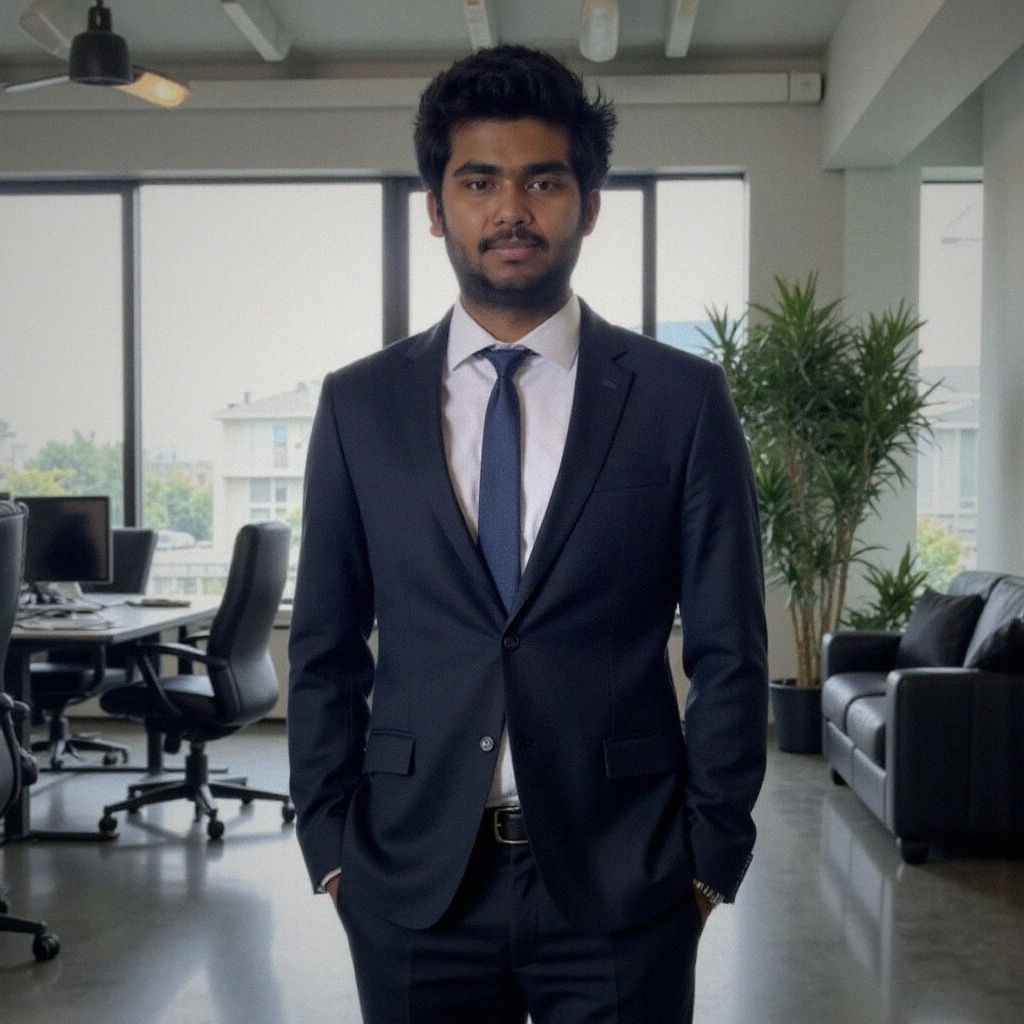
Technology keeps reshaping the world, but millions of children across Africa still watch that change from the sidelines simply because they don’t have dependable internet. They’re curious, motivated, and ready to learn—yet the door stays closed. Siddharth Anbalagan, Course Director at the Centre for Youth and Sustainable Development & Climate Action Movement (CYSDCAM.org), has dedicated himself to cracking that door open in a practical way.
While volunteering with CYSDCAM, Siddharth realized that young students were eager to explore coding but lacked the connection needed for online resources. So he produced a full library of offline video lessons: coding explained through simple language, visual learning, local examples, and step-by-step guidance. It’s a way for students to start learning programming even in schools that barely have electricity, let alone Wi-Fi.
Where the idea really started
Siddharth’s involvement with CYSDCAM began with youth programs and sustainability projects. He spent time with teachers, students, and volunteers who constantly bumped into the same obstacle—no internet meant no access to modern learning. He remembers watching students with genuine interest and no way to explore it. That moment shifted everything for him. If online resources weren’t available, he’d build something offline.
From that thought came an entire offline curriculum: around 40 hours of teaching condensed into a handful of engaging, animated videos. Kids learn coding logic, algorithms, and problem-solving through visuals instead of complicated text. Even communities with one computer and a projector can run a full classroom session.
Bringing coding down to earth
The lessons were created so that children wouldn’t feel like they were dealing with theory. They get real examples and everyday scenarios. Instead of thinking of programming as something mysterious, they learn that code is just another way of solving a problem, just like math or language—only more fun.
And here’s the smart part: teachers don’t need to be programming experts. The modules were designed so local volunteers and educators can guide students confidently. One offline folder, downloaded once, becomes a complete learning tool.
Siddharth explains it simply: students should feel like the skills they’re learning connect to what’s happening in their own lives. If a child in a rural village understands how a simple animation was created, that’s not just learning—it’s empowerment.
Closing the gap that holds communities back
Through his work, Siddharth has seen how much potential goes unused because schools lack internet access. Some children only have outdated textbooks—some have none. Many schools have computers sitting in rooms with no way to use them for modern education. His offline solution skips the need for infrastructure entirely. There’s no waiting for better networks or new systems. Learning begins now.
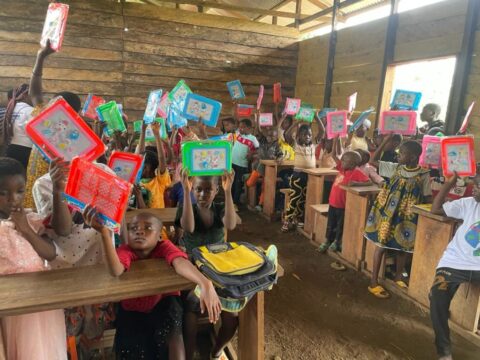
He gives credit to CYSDCAM founder Mr. Oforka Anslem, who pushed him toward inclusive solutions and reminded him that innovation doesn’t always need ideal conditions—it just needs people who care enough to act.
Reaching the world
Since launching, Siddharth’s approach has been featured in hundreds of news outlets around the world. The attention doesn’t just highlight the technology—it highlights the core belief that every child deserves equal access to education, no matter where they’re born.
The recognition has sparked conversations about educational justice, digital access, and how much can be achieved with simple tools used thoughtfully.
Growing the movement
CYSDCAM is now training local leaders who can teach others, creating a ripple effect across communities. The idea is to raise a new generation that doesn’t just know how to use technology—they know how to build with it. Some of those kids might become developers, some entrepreneurs, some inventors. The point is that they finally have the chance.
“Education powers development,” Siddharth says. Teaching coding isn’t just technical training; it’s confidence building. It teaches children that their ideas matter.
Looking beyond Africa
This isn’t meant to be a one-continent project. Siddharth plans to take the model global and adapt it to regions with similar challenges. His long-term vision is simple but ambitious: a world where students don’t need internet access to get quality digital education.
“Inclusion is what drives progress,” he says. If children get access to knowledge, they get the power to imagine and build their own future rather than waiting for someone else to build it for them.
Siddharth’s journey from volunteer to globally recognized advocate shows how powerful a single idea can be. His offline lessons are already changing classrooms, and maybe soon, entire communities. And he’s doing it with the belief that technology shouldn’t belong only to those who can afford it—it should belong to every young mind that’s ready to learn.
For more information, here’s the project link:
https://drive.google.com/file/d/1hmtszlelyo8DrkK9XrmSS_KvEsXXjBt_/view?usp=drivesdk