

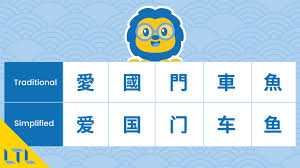
Mastering simplified vs traditional chinese can seem daunting for language learners, but understanding both systems opens the door to reading and writing across different regions. Simplified Chinese, with its streamlined characters, is used mainly in mainland China, while traditional Chinese maintains more intricate forms and is common in Taiwan, Hong Kong, and Macau. In this article, “Simplified vs Traditional Chinese: Tips for Mastering Both Systems,” we’ll provide practical strategies and tips to help you become proficient in both writing styles and expand your Chinese language skills.
Simplified Chinese
Simplified Chinese is a modern version of the Chinese writing system. It was created to make reading and writing easier and to improve literacy.
Features of Simplified Chinese
- Fewer Strokes: Characters have fewer lines, making them faster and easier to write.
- Streamlined Forms: Some characters were simplified by removing or merging parts.
- Phonetic Components: Simplified characters often include parts that hint at pronunciation, unlike Traditional characters which rely more on visual structure.
Benefits of Learning Simplified Chinese
- Accessible: Easier to learn for beginners because of fewer strokes.
- Efficient: Faster to write and read.
- Relevant: Commonly used in digital media, education, and official documents in regions where it’s standard.
Learning Simplified Chinese is essential if you want to communicate effectively in regions where it’s used. While the characters are simpler, the grammar and pronunciation are the same as in Traditional Chinese, so your overall understanding of Chinese remains consistent.
Traditional Chinese
Traditional Chinese is the original form of Chinese writing, known for its intricate and detailed characters. It has been used for over 2,000 years and is still the standard script in certain regions.
Features of Traditional Chinese
- Complexity: Characters have more strokes and keep their original detailed forms.
- Historical Integrity: Preserves the history and evolution of the Chinese language.
- Cultural Significance: Often used in classical literature, calligraphy, and cultural works.
Benefits of Learning Traditional Chinese
Learning Traditional Chinese helps deepen understanding of the Chinese language, culture, and history.
- Cognitive: Improves character recognition, understanding of character origins, and memory skills.
- Cultural and Aesthetic: Grants access to classical literature and historical texts, and allows appreciation of the artistry in calligraphy.
- Practical Advantages: Opens access to media from Taiwan, Hong Kong, and Macau, and enhances understanding of radicals to help learn new characters.
Learning Traditional Chinese gives a deeper understanding of Chinese culture and language. It’s especially useful for those interested in history, literature, and the art of calligraphy.
Understanding Chinese Characters: Traditional vs. Simplified
Knowing the structure and differences between Traditional and Simplified Chinese characters is important for learners who want to understand Chinese writing well. Here’s a simple overview:
Character Structure: The Building Blocks of Chinese Characters
- Strokes
Strokes are the basic lines that make up Chinese characters. There are six main types of strokes used in all characters. Even a small change in a stroke can make a completely different character, so writing carefully is very important.
- Radicals
Radicals are components of a character that provide clues about its meaning or pronunciation. They can appear in different positions within a character:
- Semantic Radicals: Usually on the top or left, indicating the meaning.
- Phonetic Radicals: Typically on the right or bottom, suggesting pronunciation.
Traditional vs. Simplified Chinese Characters
- Stroke Count
Simplified characters have fewer strokes than Traditional characters, making them simpler and faster to write.
- Character Appearance
Traditional characters are more detailed and complex, while Simplified characters are cleaner and easier to write.
- Usage
- Simplified Chinese: Mainly used in mainland China, Malaysia, and Singapore.
- Traditional Chinese: Used in Taiwan, Hong Kong, and Macau.
Tips for Learning Chinese Characters
- Focus on Radicals: Understanding radicals helps you guess meaning and pronunciation.
- Practice Stroke Order: Writing characters in the correct order improves memorization and neatness.
- Engage with Native Materials: Reading books, watching shows, or listening to podcasts provides context and helps reinforce learning.
Challenges of Learning Both Simplified and Traditional Chinese
Learning both scripts can be tricky for several reasons:
- Confusing Similar Characters
Some characters in Simplified and Traditional Chinese look very similar, which can be confusing. Even if they look alike, their meanings and pronunciations can be different, so it’s easy to make mistakes.
- Memorizing Two Versions of the Same Word
Many words have different forms in Simplified and Traditional Chinese, so learners need to remember both versions. This can feel overwhelming, especially for beginners.
- Switching Between Systems
Switching between Simplified and Traditional Chinese can be challenging because the characters are structured differently. Sometimes, a single Simplified character matches multiple Traditional characters, making reading and writing more complicated.
By understanding these challenges and applying effective strategies, learners can successfully master both Simplified and Traditional Chinese.
Strategies for Mastering Both
Learning both Simplified and Traditional Chinese characters can be challenging, but with the right strategies, it is definitely achievable. Here’s a practical guide to help you succeed:
- Start with One System
Begin by focusing on one script based on your goals or location:
- Simplified Chinese: Common in Mainland China, Singapore, and Malaysia.
- Traditional Chinese: Standard in Taiwan, Hong Kong, and Macau.
Starting with one system helps you build a solid foundation before learning the other.
- Use Comparative Learning
Study characters side by side to understand differences and similarities:
- Create flashcards or digital tools that show both Simplified and Traditional forms.
- Look for patterns where simplified characters were derived from Traditional ones.
This method enhances character recognition and makes memorization easier.
- Immerse Yourself in Regional Media
Expose yourself to content from regions using your target script:
- Simplified Chinese: Watch Mainland Chinese shows, use apps, and read textbooks.
- Traditional Chinese: Explore Taiwanese dramas, newspapers, and literature.
Immersion helps you understand characters in context and reinforces learning.
- Practice Writing and Recognition
Regular practice is essential:
- Write daily to strengthen memory and muscle memory.
- Read materials containing both scripts to improve character recognition.
Consistent practice ensures long-term retention.
- Leverage Technology
Use digital tools to enhance your learning:
- Apps and online dictionaries that support both scripts can make learning interactive.
By following these strategies, you can effectively master both Simplified and Traditional Chinese, boosting your language skills and deepening your understanding of Chinese culture.
Tips for Avoiding Confusion
- Focus on Patterns Between Similar Characters
Focus on patterns between similar characters to spot small but important differences. Grouping and comparing similar characters helps you recognize and remember them more easily.
- Gradually Add the Second System
Learn a few new characters at a time and slowly add more as you get comfortable. Use review apps to practice regularly and keep the characters in your memory.
- Track Progress and Review Difficult Characters
Keep a list of the characters you’ve learned, especially the tricky ones. Review them regularly using flashcards or spaced repetition to strengthen memory.
Additional Tips
- Use Visual Aids: Charts and diagrams help you see character parts and meanings.
- Practice Writing: Writing by hand reinforces memory through muscle movement.
- Engage with Native Materials: Read books, articles, or other authentic texts to see characters in context.
- Join Study Groups: Practicing with others gives new perspectives and makes learning more effective.
By following these tips, you can better distinguish similar characters and make your study of Chinese more effective and enjoyable.