

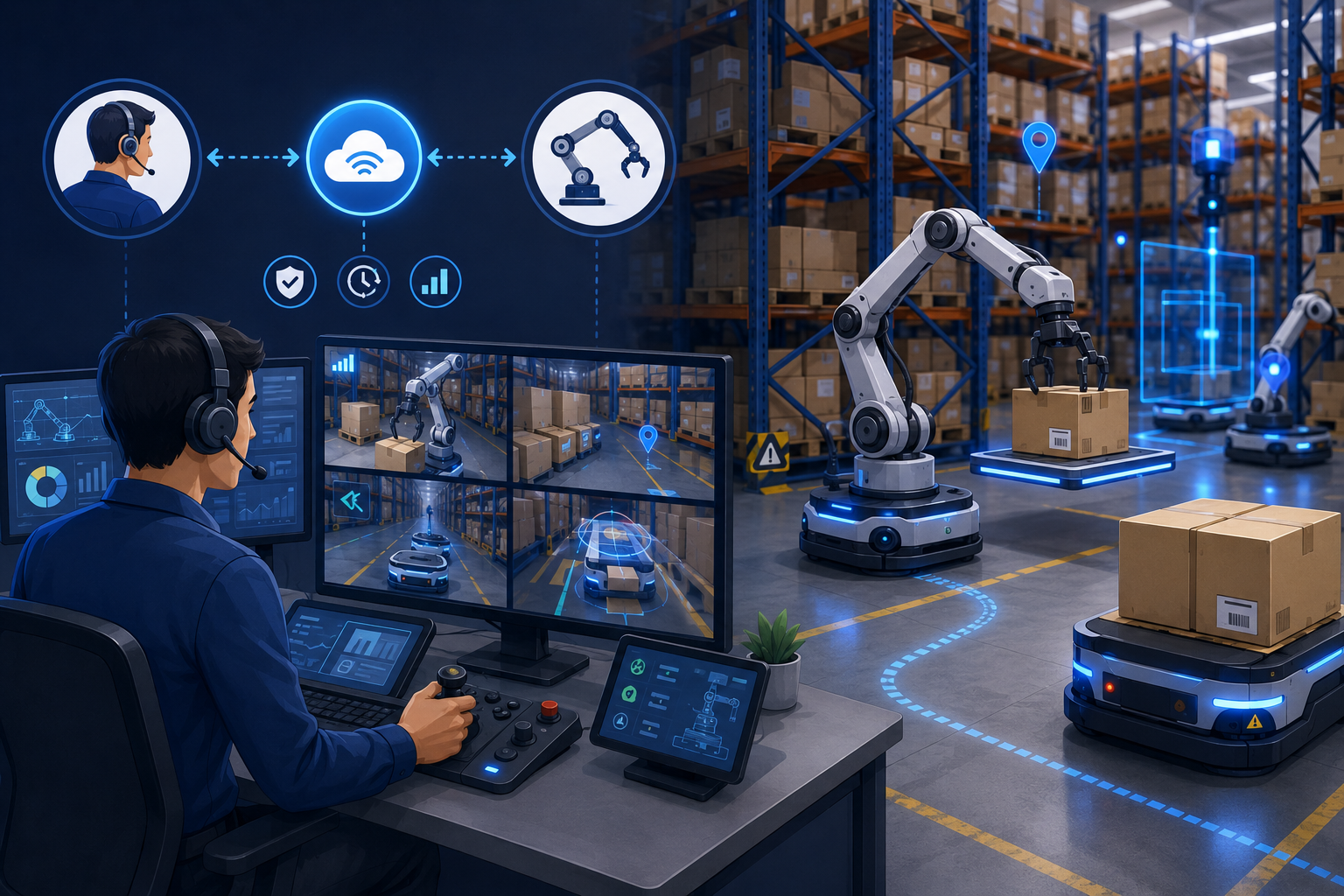
Warehouse automation is transforming the way businesses manage inventory, logistics, and order fulfillment. As companies face increasing demands for faster deliveries and greater operational efficiency, autonomous robots are becoming valuable tools for streamlining warehouse operations. From transporting inventory to assisting with picking and sorting tasks, robots help organizations improve productivity while reducing manual workloads.
However, even advanced autonomous robots can encounter situations that require human intervention. This is where robot teleoperation plays a critical role. By combining automation with remote human support, businesses can ensure warehouse robots operate safely, efficiently, and reliably in complex real-world environments.
The Rise of Warehouse Automation
Modern warehouses are under constant pressure to process orders faster while maintaining accuracy. To meet these expectations, many organizations are investing in automation technologies that help improve workflow efficiency.
Warehouse robots are commonly used for:
- Inventory transportation
- Material handling
- Order picking assistance
- Inventory tracking
- Warehouse navigation
- Logistics support
These robotic systems help businesses increase productivity while reducing repetitive manual tasks.
Challenges Faced by Autonomous Warehouse Robots
While autonomous robots can perform many tasks independently, warehouse environments are dynamic and constantly changing. Unexpected obstacles, equipment movement, employee activity, and changing inventory layouts can create situations that challenge robotic systems.
Common challenges include:
- Blocked pathways
- Navigation errors
- Sensor limitations
- Unexpected obstacles
- Complex routing decisions
- System alerts or exceptions
Without human oversight, these issues can disrupt operations and reduce productivity.
What Is Robot Teleoperation?
Robot teleoperation allows trained human operators to remotely monitor and assist robots when autonomous systems require support. Operators can observe live camera feeds, monitor sensor data, and intervene when robots encounter situations they cannot resolve independently.
This human-in-the-loop approach combines the efficiency of automation with the adaptability of human decision-making.
Robot teleoperation can support:
- Navigation assistance
- Route adjustments
- Obstacle management
- Incident response
- Operational monitoring
- Fleet supervision
The result is a more reliable and scalable warehouse automation system.
Improving Warehouse Efficiency
When robots encounter operational challenges, delays can affect overall warehouse performance. Teleoperation enables operators to quickly identify issues and provide assistance without requiring on-site intervention.
This support helps:
- Minimize downtime
- Improve workflow continuity
- Reduce operational disruptions
- Increase robot utilization
By keeping robotic systems operational, businesses can maximize the return on their automation investments.
Enhancing Safety in Warehouse Environments
Safety remains a top priority in automated warehouses where robots and human workers often share the same environment.
Remote robot operators help maintain safe operations by:
- Monitoring robot activity
- Responding to unexpected situations
- Identifying potential hazards
- Assisting with navigation decisions
- Escalating incidents when necessary
Human oversight adds an extra layer of protection that supports both operational safety and reliability.
Supporting Large Robot Fleets
As warehouse automation programs expand, managing multiple robots simultaneously becomes increasingly complex. Robot teleoperation and monitoring solutions help organizations supervise large fleets from centralized operations centers.
Benefits include:
- Scalable fleet management
- Centralized monitoring
- Faster issue resolution
- Improved operational visibility
- Consistent robot performance
These capabilities help businesses support growing automation initiatives without significantly increasing operational complexity.
Reducing Operational Downtime
Downtime is one of the biggest challenges for warehouse automation programs. Even short interruptions can impact productivity and order fulfillment timelines.
Teleoperation helps reduce downtime by allowing remote operators to:
- Respond to alerts quickly
- Troubleshoot navigation issues
- Assist robots in real time
- Maintain continuous operations
Faster intervention helps warehouses maintain efficiency and meet performance targets.
Supporting the Future of Warehouse Robotics
As robotics technology continues to evolve, human oversight will remain an important component of successful automation strategies. While robots are becoming increasingly capable, complex warehouse environments still require human judgment and adaptability.
The combination of autonomous systems and remote human support allows businesses to deploy robotics with greater confidence and scalability.
Why Businesses Invest in Robot Teleoperation & Robot Monitoring
Many robotics companies and warehouse operators utilize professional Robot Teleoperation & Robot Monitoring services to maintain reliable human oversight of autonomous systems. Dedicated remote operators help monitor robot activity, respond to alerts, assist with navigation challenges, and support large-scale robotic deployments.
Professional teleoperation services enable organizations to maximize automation performance while maintaining safety, efficiency, and operational continuity.
Conclusion
Warehouse automation is helping businesses improve efficiency, productivity, and scalability. However, even the most advanced robots can benefit from human support when operating in dynamic real-world environments.
Robot teleoperation provides the human-in-the-loop assistance needed to keep warehouse robots operating reliably while reducing downtime and improving overall performance. For organizations seeking to scale automation initiatives successfully, professional Robot Teleoperation & Robot Monitoring services offer a practical solution that combines the strengths of robotics and human expertise.