

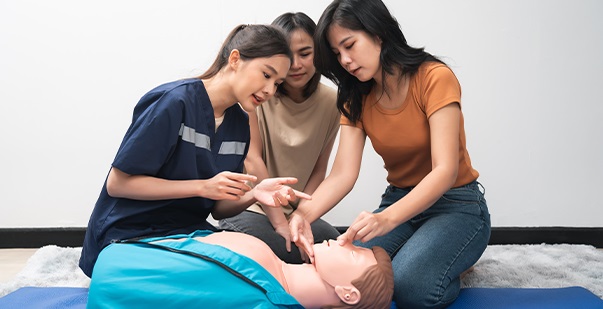
Disaster can strike in public spaces, at home, or at work, and being CPR-certified may help you save a life. Since professions like childcare or safety supervision require this training, you can enroll in a trusted institution to gain skills. Here are the benefits of CPR certification in emergency situations:
Immediate Help During a Cardiac Arrest
When someone experiences a cardiac arrest, they need emergency CPR to increase their possibility of survival. If you are trained in this field, you can be aware of the symptoms, such as strange breathing, sudden collapse, or unresponsiveness. Some people experience chest pain, dizziness, and heart palpitations, all of which indicate that something is wrong with their heart health.
Once you identify these signs, you perform chest compressions to keep blood flowing to all organs. While performing these procedures, your colleague should call 911 right away so that medical help arrives in time. With a CPR certification, you learn to provide mouth-to-mouth resuscitation or use a bag-mask device to maintain oxygen levels.
Rescue Techniques for Drowning Victims
During CPR training, instructors teach you how to provide help to a drowning victim because their breathing stops after this incident. As a rescuer, you learn techniques to check if the victim is gasping for air or not breathing. If the person is breathing but not responding to you calling their name, you place them in the recovery position to prevent choking on water or vomit.
For victims who aren’t breathing, a reliable approach would be to deliver slow and deep breaths to allow oxygen to reach the lungs. To keep blood flowing to all organs and prevent brain damage, you may begin chest compressions right away. Being CPR-certified teaches you how to remove the person from the water so that you can administer the above steps correctly.
Aid When Someone is Choking
When a kid or adult is choking, they won’t breathe because food or an object has blocked the airway. Professionals with CPR expertise are trained to know if the choking is partial, which means victims can get minimal air. For complete airway blockage, an individual is unable to breathe, cough, or speak, and they need immediate assistance.
Using a method called abdominal thrusts, a specialist stands behind the person and puts their hands around their waist. While at this position, a rescuer makes a fist with one hand and positions it above the belly button. To force air from the lungs and push out the obstruction, experts give upward thrusts in an attempt to free airways.
Assistance During a Drug Overdose
After being trained in CPR, you gain skills to identify signs of a drug overdose, like unconsciousness, stopped breathing, or tiny pupils. Since such situations require professional treatment, calling 911 is the first step before offering care to the victim. To prevent breathing failure, you may provide rescue breaths so that oxygen gets delivered to the lungs.
Even though drug overdose may not lead to instant cardiac arrests, prevent this risk by using an automated external defibrillator. This device checks a person’s heart rhythm and delivers an electric shock if needed to restart the heart. A CPR training course shows you how to use an automated external defibrillator (AED) on teenagers and adults to save a life.
Register for a CPR Certification Today
To administer CPR properly, institutions offer practical training to help you know how to use an AED or breathing mask. CPR students can learn how to recognize the warning signs of a health issue and respond to them immediately. Learn these potentially life-saving techniques to avoid a disaster. Sign up today with a trusted online institution to learn such skills and become CPR-certified.