

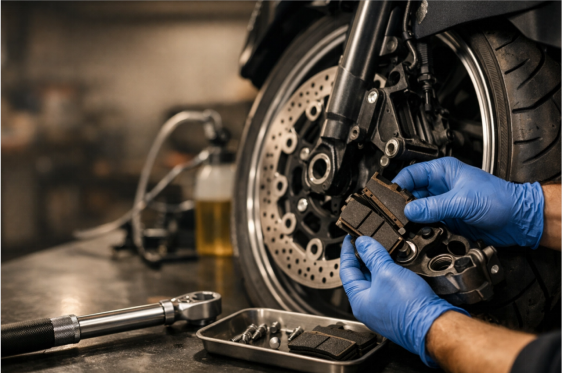
There is no room to spare when it comes to braking capability on an 800-pound touring motorcycle, especially when you are riding through mountain passes or heavy traffic. Having worked with touring fans over the years and owning my own assortment of long-distance machines, I have found that the key to avoiding anxious rides is understanding your brake system. The right choice of motorcycle brakes for touring bikes is what experienced Gold Wing specialists understand best, and it can be the difference between a controlled stop and a heart-stopping situation.
Why Touring Bike Brakes Require Special Attention
Touring motorcycles put braking systems under much tougher conditions than normal street bikes. Thermal and mechanical stress increases due to heavy weight, loaded saddlebags, passenger weight, and long hours in the saddle. On one ride through the Rockies, I watched a rider struggle on downhill sections because he had ignored his brake maintenance. It was a clear reminder that a serious touring rider cannot afford to neglect brakes.
Honda built these demands into the engineering of Gold Wing braking systems. Multi-piston calipers, linked braking systems, and advanced ABS work together to provide strong, stable braking matched to the bike’s mass. Still, even the best engineering depends on proper maintenance and timely part replacement to keep the system performing at its best.
Understanding the Key Brake System Components
Brake Pads and Their Impact on Touring Performance
Brake pad choice is one of the most important decisions touring riders make. The main pad types are organic, semi-metallic, and sintered, and each affects stopping power, longevity, and rotor wear.
Organic pads offer excellent initial bite and quiet performance, making them suitable for casual touring. However, they wear faster with frequent use and may fade during aggressive mountain descents.
Semi-metallic pads provide better heat resistance and longer service life, which suits riders who cover serious mileage. They maintain consistent performance across a wider temperature range, but they can be harder on rotors and produce more brake dust.
Sintered pads are best for high-demand riding, offering strong stopping power and excellent heat dissipation. The tradeoff is higher cost and increased rotor wear.
Through testing and real riding, I have learned that matching pad compound to your riding style matters more than simply buying the most expensive option. Weekend tourers often do well with quality organic pads, while high-mileage riders may prefer semi-metallic or sintered choices, especially when covering 30,000 miles a year.
Brake Fluid Health and Why It Matters
One of the most neglected parts of touring bike maintenance is brake fluid, even though it has a major effect on performance. Glycol-based brake fluid is hygroscopic, meaning it absorbs moisture from the air. As moisture contamination increases, the boiling point drops. During hard braking, this can create vapor pockets that cause a spongy lever feel and reduced stopping power.
The recommended two-year brake fluid change interval is based on normal moisture absorption that gradually reduces performance. Riders who tour in wet climates or store motorcycles in non-climate-controlled spaces often benefit from annual fluid changes.
DOT 4 fluid generally offers a higher boiling point than DOT 3. DOT 5.1 can provide an even higher boiling point, while still avoiding the silicone-based incompatibility issues associated with DOT 5.
OEM vs Aftermarket Brakes for Touring Use
When assessing touring motorcycle brakes, experienced technicians consider the full system rather than individual parts. OEM components are designed to work together and meet Honda’s performance standards. They are tested extensively and provide predictable behavior that many experienced riders value.
Aftermarket options from reputable manufacturers can match or exceed OEM performance and may offer cost advantages. Companies that specialize in braking systems invest heavily in research, producing improved pad compounds and rotors designed for better heat management. However, quality varies widely across aftermarket brands, so careful selection is important.
Many premium aftermarket pads include advancements that were not available when older Gold Wing models were built. Improved sintered compounds resist fading better than older formulas, and newer backing plate designs can reduce noise and vibration. Riders benefit most when they research proven products instead of choosing the cheapest available option.
Warning Signs You Should Never Ignore
Some brake warning signs are non-negotiable.
Noises That Signal Immediate Action
Squealing or grinding usually means pads are worn and must be replaced immediately. Riding on metal-to-metal contact can destroy rotors and create unsafe conditions.
Vibration and Pulsation
Pulsing or trembling in the lever or pedal often points to warped rotors. This is commonly caused by overheating or uneven pad wear.
Soft Lever Feel or Excess Travel
Increased lever travel before engagement can indicate air in the system or contaminated fluid. This requires immediate bleeding and may also require seal replacement if internal leakage is present.
Visible Fluid Leaks
Any visible fluid leak around calipers, master cylinders, or brake lines must be inspected urgently by a professional. A loss of hydraulic integrity is dangerous.
On one memorable ride around New England, I met a rider whose poorly maintained brake system failed in heavy highway traffic. The near-miss could have been prevented with basic awareness and routine maintenance, and it reinforced my habit of encouraging riders to treat brake care as essential.
Maintenance Practices That Extend Service Life
Proper brake maintenance starts with regular inspection and cleaning. Calipers and rotors collect road grime, brake dust, and corrosion that reduce performance and shorten component life. Monthly cleaning with appropriate solvents helps prevent issues before they develop, and routine visual checks catch problems early.
Lubricating Caliper Slide Pins
Caliper slide pins should be lubricated regularly with high-temperature grease to ensure even pad wear and consistent braking force. Stuck pins can cause uneven pad contact, premature wear, and unpredictable braking behavior. This simple maintenance task is often ignored, yet it increases pad life and improves stability.
Checking Brake Line Condition
Brake line condition matters more than many riders realize. Rubber lines degrade over time, developing small cracks that can allow moisture intrusion and may fail unexpectedly. Stainless steel braided lines are more durable and provide a firmer lever feel because they resist expansion under pressure. While not required for every rider, they are a valuable upgrade for those focused on performance and long-term reliability.
Choosing the Right Brake Support for Your Needs
Finding knowledgeable assistance for brake maintenance is a major part of long-term safety and confidence. Specialists who understand touring motorcycles can provide support that many general service centers cannot.
Experienced Gold Wing professionals often bring specific insight into these machines and can recommend components based on real-world experience with Gold Wing braking systems. Quality service providers keep detailed documentation, use correct bleeding techniques, and source parts from reputable suppliers. They understand that touring riders depend on their motorcycles for thousands of miles at a time and take that responsibility seriously.
Building a relationship with a trusted specialist gives you confidence that your brake system will receive careful attention and professional treatment.
Peace of Mind for Long-Distance Safety
Brake maintenance is a core responsibility for every touring motorcycle owner. Consistent service, quality parts, and informed support pay off with reliability and peace of mind. Whether you are planning a cross-country trip or navigating tough daily traffic, knowing your brakes will respond when you need them lets you focus on the ride instead of worrying about stopping power. Many riders rely on the ShinyWing Goldwing shop for trusted parts and expert guidance to keep their braking systems in top condition.
Brake maintenance is not optional. Done seriously, it turns every mile from a risk into an investment in your safety, comfort, and enjoyment for thousands of miles ahead.
FAQ: Common Questions About Touring Bike Brakes
Does a bigger rotor make braking better?
It depends on the capability of the existing system and your riding demands. Gold Wings already use rotor sizes designed for the bike’s weight and performance range. For most touring situations, factory-spec rotors paired with quality pads and fresh fluid provide excellent results without major modifications.
Do brake upgrades affect insurance or warranty?
Significant changes can impact coverage, warranty terms, or documentation requirements. Professional installation and proper records matter. Specialized touring motorcycle shops are usually familiar with these concerns and can guide you toward upgrades that improve performance while staying practical.
What is better: linked braking or independent braking?
Linked systems on modern Hondas are designed to distribute braking force intelligently, improving stability during emergency stops. The most important step is learning how your specific system works so you can use it effectively and avoid fighting against its design.