

Renovating a house can be exciting — and overwhelming. Before you grab your tools, remember that the order of work makes a huge difference. Skipping steps might cost you time and money down the road. In fact, surveys show about 62% of homeowners plan some kind of remodel, and 43% tackle it themselves. Even if you’re a savvy DIYer, a little planning goes a long way. In moderate climates like ours (think warm, relatively low labor-cost regions), a well-sequenced home renovation lets you work around summer heat and humidity, avoid rework, and keep surprises to a minimum.
This guide walks through each stage of a typical mid-range remodel — from drawing up plans to hanging the final pictures — and flags common pitfalls. We’ll suggest rough budget benchmarks (midrange projects often run about $125–$200 per square foot) and share tips so you don’t regret any steps later. Let’s get started!
1. Plan & Permits Before You Swing a Hammer
Start with a solid plan. As Sprucehill Homes puts it, “Before swinging a single hammer, start with a solid plan. A well-crafted strategy is the foundation of any successful renovation.”. This means outlining what you want to do, how much it can cost, and who needs to sign off. Key tasks here include:
- Budgeting: Set a realistic budget and include a 10–20% contingency for surprises. (Hidden issues always pop up once walls come down.)
- Wish List: Prioritize must-haves vs. nice-to-haves. If money or time is tight, this ensures the essentials get done first.
- Permits & Regulations: Identify required permits now. Skipping permits to save time or money can backfire — you could face fines, failed inspections, or trouble when selling. (In our area, permits are typically required for structural, plumbing, or major electrical work.)
Common planning mistakes: Not planning ahead or underestimating your budget. Many homeowners go in blind and burn out by week two. By contrast, consulting a contractor or designer early can uncover hidden costs and code issues. As one remodeling expert warns, always include that 10–20% safety net. This cushion helps avoid financial stress mid-project.
Tip: If you plan any DIY, get familiar with local code requirements now. For example, you might not DIY rewiring or kitchen hood vents, but painting and demolition could be on your list. Knowing what requires a pro (and a permit) will save headaches later.
2. Structural Work Comes First
Once your plan is set and permits are secured, tackle structural fixes before anything else. Structural issues come first, no exceptions. In practice this means inspecting and repairing the foundation, roof, and load-bearing elements early. For example:
- Foundation & Framing: Fix any cracks or settling in the foundation, replace rotted beams or joists, and ensure the house is level.
- Roof & Gutters: Repair or replace damaged roof sections and clean out or install new gutters. A leaky roof can ruin new ceilings and drywall, so address it now.
- Load-Bearing Walls: If you’re removing or altering walls, get a structural engineer to design beams or columns.
Neglecting structural work is a recipe for expensive trouble. If you skip it and build finishes on a compromised frame, you may end up tearing them out. As Sprucehill Homes notes, failing to address foundational or utility problems early “can lead to costly repairs later”. In short, fix the bones before skinning the house.
- Example: If you have sagging floors or doors that stick, it probably means the structure shifted. Take care of that now. It might feel like a drag, but you don’t want these fixes coming back to haunt you after the whole house is redone.
3. Upgrade Utilities (Plumbing, Electrical, HVAC)
With structure solid, move on to mechanical systems. This is the messy part where you open walls and floors to rewire and replumb. Do this before closing walls or installing finishes. Ripping into finished walls later is a nightmare — you’ll have to undo perfectly good work. Sprucehill warns that “ripping into finished walls to fix outdated plumbing or faulty electrical systems is a homeowner’s nightmare,” so knock these out early.
Key upgrades often include:
- Electrical: Replace old wiring (knob-and-tube or aluminum) and upgrade panels if needed. Add circuits or outlets to avoid overloading. (Labor for electric can be expensive — Angi notes labor makes up roughly 50–60% of a remodel’s cost, so plan accordingly.) Install new light fixtures and HVAC wiring while the walls are open.
- Plumbing: Re-pipe outdated copper or galvanized lines if you see leaks or corrosion. Reroute drains for new kitchen/bath layouts. Consider moving the main water shutoff valve to an accessible spot, and upgrade to a larger water heater or add a water softener if needed.
- HVAC: In a warm climate, prioritize installing or servicing the air conditioning system now. Run ductwork and vents before sealing walls. (If your furnace or AC unit is more than ~15 years old, budget to replace it.) Insulation can go in after rough-in.
By doing all mechanical rough-in together, you avoid drywall and flooring damage later. A good general contractor will handle or coordinate this work — expect plumbing and electrical to account for about 15–20% of your total project cost.
Pro tip: Always hire licensed pros for electrical and plumbing. DIYing these can be dangerous and often violates code, which would cost a lot more to fix later.
4. Interior Walls, Ceilings and Floors
With systems in place, it’s time to transform the insides. This phase really starts to feel like a renovation — you’ll see drywalls, paint, and floors come to life. The usual sequence is: insulation, drywall, paint, trim, then flooring and cabinets.
- Insulation & Drywall: Insulate walls and ceilings now. Then hang and finish drywall. Sand seams smooth (this creates a ton of dust!).
- Paint: Apply primer and paint to walls and ceilings. (Since you’ve already done wiring and plumbing, this won’t interfere with hidden stuff.)
- Trim & Cabinets: Install baseboards, door/window trim, and any built-ins or cabinetry (like kitchen and bathroom cabinets). If tile work is needed (backsplashes or shower walls), do that next.
- Flooring: Lay flooring last among the finish-work. Sprucehill warns: “Never install flooring before drywall or painting”. Fresh paint splatter or joint compound dust can ruin new floors. Also, install base shoe and transitions after floors.
- Finishing Touches: Hang interior doors and connect plumbing fixtures (toilets, sinks). Do any final carpentry or touch-ups.
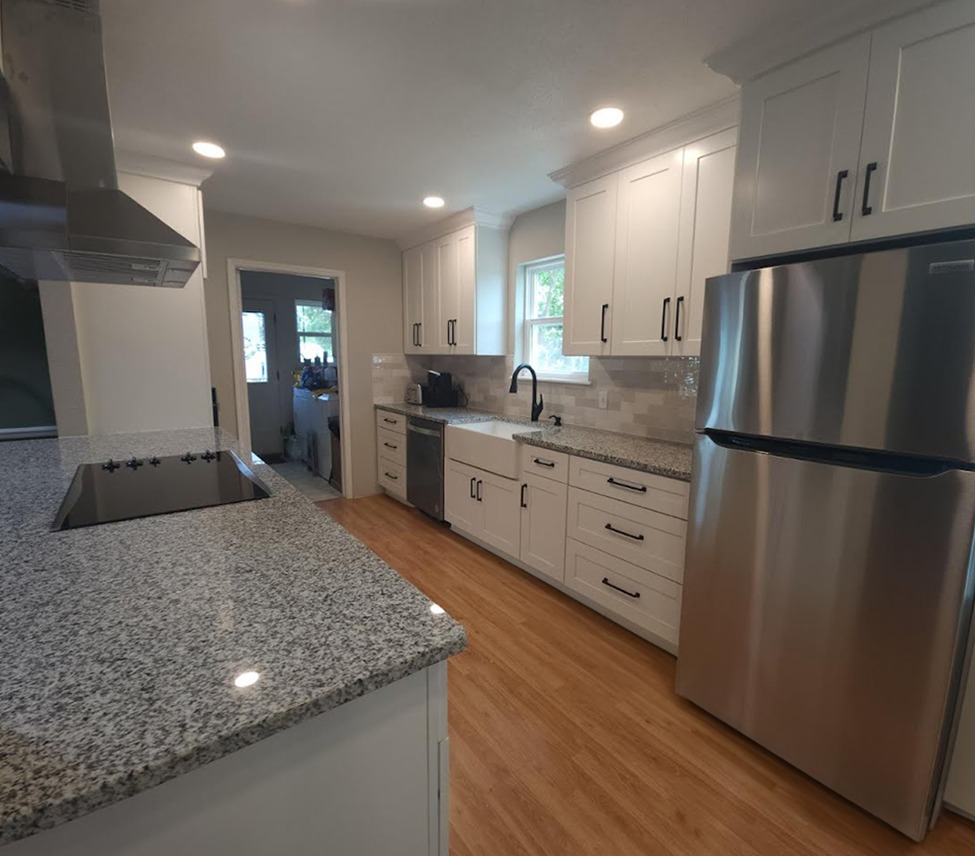
Once the dirty work of walls is done, installing new flooring and finishes makes the space feel almost complete. Note in the image above the pristine kitchen floor — that only happened because the contractor painted and trimmed first (otherwise you’d have paint drips or gouges).
Protect your work: During all this dust-heavy phase, take care to shield finished areas. Cover any completed sections (or rooms not under renovation) with plastic sheeting and drop cloths, and seal vents. Dust can spread throughout the house via the HVAC or foot traffic, and tiny grit will settle on freshly painted surfaces or furniture. The best remodelers “always use plastic sheeting, floor coverings, and seal off vents” to keep your home clean.
Common mistakes to avoid: Installing flooring too early, or skipping the dust control step. We’ve all heard horror stories of a client getting new hardwoods installed only to watch painters spill white paint on them. A little patience here saves a lot of sanding (and expense) later. Also, double-check all measurements (e.g. kitchen cabinet layout, appliance fits) before cutting anything permanent.
5. Exterior Work and Landscaping
With the interior nearly complete, it’s time to spruce up the outside. The main reasons to tackle exterior work now are (a) the house is mostly “sealed” so you can wait on weather-sensitive tasks until an optimal season, and (b) you avoid moving dirt and equipment through finished interior space. Typical exterior jobs include:
- Roof & Siding: Finish any remaining roof repairs, install new siding or paint existing siding/trim. Replace or paint window and door frames as needed.
- Windows & Doors: If you’re upgrading windows or exterior doors, do it before landscaping so you don’t trample new plants. Check that all seals and flashing are correct.
- Painting: Fresh paint on the exterior gives instant curb appeal. Plan exterior painting in dry, mild weather (spring or fall). As experts note, “plan exterior renovations during drier months” to avoid delays. (Avoid painting brick or stucco in the intense summer heat, as the paint may dry too fast and not adhere properly.)
- Gutters & Drainage: Install or clean gutters and downspouts. Grade the soil away from the foundation to prevent future water damage.
- Landscaping & Hardscape: Finally, plant trees or shrubs, lay sod, build decks or patios. (Often, contractors leave heavy landscaping until the end to avoid damage from trucks and foot traffic.)
In moderate climates like ours, the weather is generally friendly but still matters. Summer heat can wreck paint and mortar, and occasional rains can slow down work — so pick the right season for these tasks. For example, schedule outdoor painting when temperatures are between 50–85°F and humidity is low. And hold off on laying new turf or planting delicate flowers until after most construction is done; construction vehicles and soil compaction will damage new lawns.
Common mistakes: Trying to paint in the rain (or in the middle of a heat wave), or finishing landscaping too early only to have heavy equipment drive it up again. Also, don’t assume siding or roofing can wait until last — a bad roof left until the end could leak on your fresh interior. It’s best to wrap up exterior shell fixes (especially the roof) before the final interior touches.
6. Final Touches and Move-In
Now for the fun stuff: making the house feel like home. Final touches include all the small details that aren’t structural but make a big difference in livability and style. For example:
- Deep Cleaning: Construction dust gets everywhere. Do a thorough cleaning (including carpets/vents) to clear out debris.
- Hardware & Fixtures: Install doorknobs, cabinet handles, light switch plates, and light fixtures. Swap in any new ceiling fans or window treatments.
- System Checks: Test every outlet, switch, faucet and appliance. Replace HVAC filters and adjust thermostats. It’s much easier to fix a drip or loose light now than after moving in.
- Furnish & Decorate: Move in furniture (protect new floors when doing so!), hang art and mirrors, and add plants or rugs. Arrange things until the flow feels right and the space looks inviting.
Sprucehill calls these “final touches” – things like cleaning, hardware, and thoughtful lighting – that “make a house feel like home”. Indeed, small upgrades (like matching cabinet pulls, new doorknobs, or updated light fixtures) can finish off the look beautifully. Take your time here. Replace old vent covers, dust blinds, and maybe do a final coat of paint on a picky spot.
Common mistakes: Forgetting a final walkthrough. Before calling it done, walk every room and check off a punch list. That might include tightening a loose towel bar, adjusting a door that doesn’t quite close, or touching up scuffed paint. Also remember the paperwork: save receipts, warranties and permits. (It’s easy to toss them in a drawer and forget. Documenting everything can save headaches if an issue pops up later.)
In summary, plan plenty of time for the “fun” finish work. Sprucehill advises deep cleaning, installing final hardware, and arranging furniture at the end. This is when you actually get to enjoy your beautiful renovated space.
Why Order Matters (Lessons Learned)
Why go through all this detail on sequencing? Because doing things out of order almost always backfires. Here are a few big risks of skipping the plan:
- Cost Overruns. Fixing mistakes is expensive. (Imagine having to rip up brand-new hardwood floors to replace a hidden plumbing line.) As Sprucehill notes, out-of-order work can “fix preventable mistakes” that derail your budget.
- Delays. Re-doing work or waiting for inspectors drags out the timeline. A month-long siding repair will feel eternal if you’ve already moved in furniture to the yard.
- Compromised Structure. Most seriously, ignoring early structural or safety updates can lead to major repairs later. For example, putting on a brand new bathroom without fixing a bad joist under it could cause the floor to sag or crack. Addressing big problems early ensures your investment lasts.
Being organized and sequential pays off. You’ll save money by avoiding re-dos, avoid stress by keeping the project moving smoothly, and end up with a cohesive, well-built home. One homeowner’s cautionary tale: “We forgot to install a new front window before the drywall went up. By the time we remembered, it was too late — we had to break the wall, ruining the fresh paint. A $200 window wound up costing us $1,000 in repairs.”
In short, thoughtful planning is the first step to avoid renovation regret. Follow this order, and you’ll hit each task confidently, not jumping back and forth. Your house will thank you (with fewer leaks, squeaks, and paint splatters!) and your wallet will likely be happier too.
Ready to get started? Sketch out your plan, book your key contractors, and take it one phase at a time. Good luck – and enjoy the transformation as your old house turns into your dream home, step by careful step!