

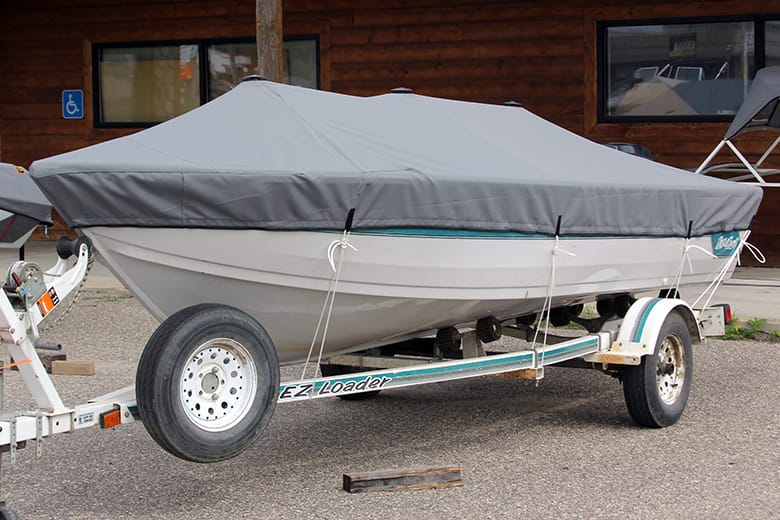
Walk into any marine canvas shop, and you will hear both terms thrown around in the same conversation. Most boat owners use “boat canvas” and “marine canvas” interchangeably, and most of the time, nobody corrects them. But the two terms actually refer to two completely different things, and that distinction matters more than most people realize.
Confusing the two leads to the wrong questions, the wrong material choices, and, in some cases, a finished product that does not hold up as it should. Once you understand what each term actually means, you will communicate better with fabricators, make smarter purchasing decisions, and know exactly what to ask for when it is time to replace or upgrade what is on your boat.
What is Boat Canvas?
Boat canvas is the collective term for all fabric-based protective and functional products installed on a boat. It refers to what you see and use on the vessel, not the material it is made from. Think of boat canvas as a product category. Every covered, shaded, or enclosed area on your boat is considered boat canvas. This includes:
- Bimini tops and sun shades
- Cockpit enclosures and side curtains
- Storage and travel boat covers
- Dodgers and spray hoods
- T-tops and hardtop enclosures
- Console covers and seat covers
- Bow covers and tonneau covers
- Sail covers and boom covers
The term itself is a holdover from history. For centuries, these products were literally made from heavy cotton canvas. The name stuck even as the materials evolved completely. Today, virtually no professional marine fabricator uses actual cotton canvas for functional boat products. Yet, the term “boat canvas” remains the standard way to describe everything from a bimini top to a full cockpit enclosure.
What is Marine Canvas?
Marine canvas is the fabric used to manufacture boat canvas products. It is not a single material but an entire category of performance fabrics engineered to withstand UV exposure, saltwater, wind, abrasion, and moisture.
All fabrics that qualify as marine canvas share a set of baseline performance requirements:
- Strong UV resistance to prevent fading and fabric breakdown
- Water resistance or full waterproofing, depending on the application
- Mildew and mold resistance, especially critical in humid climates
- Tensile and tear strength to handle wind load and physical wear
- Dimensional stability so the fabric does not shrink, stretch, or warp after installation
The marine canvas category covers dozens of individual fabrics, including solution-dyed acrylics, vinyl-coated polyesters, coated polyesters, and treated natural fibers. The right choice among these depends on which boat canvas product is being built and the conditions it will face.
It is worth noting that “marine canvas” is also used loosely in everyday conversation as a synonym for boat canvas products themselves. That overlap is exactly where the confusion between the two terms begins and persists.
Boat Canvas vs Marine Canvas: The Core Difference at a Glance
The boat canvas is what is installed on your boat. Marine canvas is what it is made from. One is the finished product, while the other is the raw material.
| Aspects | Boat Canvas | Marine Canvas |
| What it is | The finished product on your vessel | The fabric or material |
| Examples | Bimini top, enclosure, boat cover | Sunbrella, Stamoid, Top Gun |
| How it is used | Installed and used by the boat owner | Used by fabricators to build products |
| Who selects it | The owner chooses the product type needed | Fabricator or informed owner selects the material |
A bimini top is boat canvas. The Sunbrella fabric it is sewn from is marine canvas. A cockpit enclosure is boat canvas. The material used to build it is marine canvas. The product and the material are two separate decisions, and treating them as one is where most confusion and costly mistakes happen.
The Main Types of Marine Canvas Fabric
Choosing the right marine canvas fabric is not about finding the single best material. It is about matching the right material to the right product, climate, and performance expectation. The four primary marine canvas fabric types have distinct strengths matched to specific boat canvas applications.
Solution-Dyed Acrylic (Sunbrella)
Solution-dyed acrylic is the most widely used marine canvas fabric in the world. The color is baked into each fiber during manufacturing rather than applied as a surface dye, which gives it exceptional fade resistance over years of direct sun exposure.
Key properties:
- Outstanding UV resistance with a 10-year manufacturer warranty
- Water repellent through tight weave and DWR coating, though not fully waterproof
- Breathable, which prevents heat and moisture buildup underneath
- Available in over 70 colors with consistent colorfastness
Best boat canvas uses: bimini tops, dodgers, boat covers, and cockpit enclosures in warm and sunny climates. The breathability makes it particularly well-suited for any covered area where airflow matters to prevent mildew on the boat’s interior surfaces.
Trade-Off:
Solution-dyed acrylic will mist through in heavy, sustained rainfall since it is water repellent rather than waterproof. The DWR coating also requires re-application every few years as it wears off over time.
Vinyl-Coated Polyester (Stamoid)
Vinyl-coated polyester is the go-to marine canvas fabric when full waterproofing is non-negotiable. A PVC coating is bonded to a high-tenacity woven polyester base on one or both sides, creating a fabric that lets no water through under any conditions.
Key properties:
- Fully waterproof with zero moisture penetration
- Dimensionally stable with virtually no shrinkage or stretching after installation
- Mildew-resistant and easy to wipe clean
- Maintains flexibility in both extreme heat and cold
Best boat canvas uses: cockpit enclosures, T-tops, dodgers, superyacht applications, and storage covers in the northeast, northwest, and any region where heavy storms are common.
Trade-Off:
Less breathable than acrylic, which can lead to condensation buildup in enclosed spaces. Lighter colors can show dirt more readily and require more frequent cleaning.
Coated Polyester (Top Gun, WeatherMAX, Top Notch)
Coated polyester sits between acrylic and vinyl-coated options in terms of performance. It is solution-dyed polyester with an acrylic or urethane coating that delivers strong water repellency, superior abrasion resistance, and high tensile strength.
Key properties:
- Excellent tear and tensile strength, among the highest of any marine canvas fabric
- Strong abrasion resistance where fabric contacts frames and fittings
- Water repellent and UV stable
- Lighter weight than vinyl-coated options
Best boat canvas uses: storage and travel boat covers, bimini tops in high-wear environments, dodgers, sail bags, and weather cloths.
Trade-Off:
Not as breathable as solution-dyed acrylic and not as waterproof as vinyl-coated polyester. It occupies a solid middle ground for owners who need durability without committing to a premium waterproof fabric.
Traditional Cotton Duck Canvas
Cotton duck is the original marine canvas, the material that gave boat canvas its name. It is a tightly woven natural fiber fabric that is breathable and carries a classic look well-suited to traditional and wooden vessels.
Key properties:
- Highly breathable with a natural, classic appearance
- Requires regular waterproofing treatment to maintain performance
- Susceptible to mildew if not properly maintained and dried after use
Best boat canvas uses: storage covers on classic or wooden boats, breathable covers in dry climates, and applications where a traditional aesthetic is a priority.
Trade-Off:
Cotton duck demands more maintenance than any synthetic marine canvas option and is not practical in saltwater environments without diligent care. It is rarely specified in modern professional marine fabrication.
The Main Types of Boat Canvas Products
Boat canvas covers a wide range of products, but four categories account for the majority of what most owners need over the life of a vessel. Each one serves a different purpose, takes different stresses, and pairs naturally with a specific type of marine canvas fabric.
Bimini Tops
A bimini top is the most common piece of boat canvas, providing an overhead sun shade across the cockpit or helm area. It uses a folding aluminum or stainless steel frame stretched with a single canvas panel, allowing it to be raised quickly and folded down when not needed.
Key features:
- Overhead sun and light rain protection without enclosing the cockpit
- Folding frame that collapses for travel or storage
- Available in two, three, or four-bow configurations, depending on coverage needed
- Easily extended with side curtains for added shade or weather protection
Typical fabric pairing:
Solution-dyed acrylic (Sunbrella) is the standard choice for biminis because of its UV stability, color retention, and breathability under direct sun.
Trade-Off:
A bimini protects from above but offers no side or front coverage, which limits its usefulness in heavy wind or rain. Many owners pair it with separate side curtains for fuller protection.
Cockpit Enclosures
A cockpit enclosure is the most comprehensive boat canvas product, fully enclosing the helm and cockpit area with fitted panels and clear vinyl windows. It transforms an open boat into an all-weather space that is usable in rain, cold, and strong winds.
Key features:
- Full weather protection from sun, rain, wind, and spray
- Clear vinyl windows for visibility and ventilation
- Zippered panels that can be removed individually for airflow
- Custom-fitted to the boat’s hardtop or bimini frame
Typical fabric pairing:
Vinyl-coated polyester (Stamoid) is the preferred choice for enclosures since full waterproofing is non-negotiable in this application. Solution-dyed acrylic is sometimes used in warm, dry climates where breathability matters more.
Trade-Off:
Enclosures are the most expensive boat canvas product to fabricate and require professional patterning directly on the boat. They also reduce airflow significantly when fully zipped, which can lead to condensation in cooler conditions.
Dodgers and Spray Hoods
A dodger or spray hood is a fitted boat canvas product mounted at the front of the cockpit on sailboats and some powerboats, shielding the helm and companionway from wind, spray, and rain. It is one of the most demanding products to fabricate because the curved shape must hold tension without sagging or distorting.
Key features:
- Forward protection from wind, spray, and direct rain
- Curved or angled silhouette tensioned over a stainless frame
- Often integrated with a bimini or full cockpit enclosure
- Includes clear vinyl windows for forward visibility while underway
Typical fabric pairing:
Vinyl-coated polyester for boats sailing in cold or wet climates where waterproofing matters most. Solution-dyed acrylic is common in warmer regions where breathability is more valuable.
Trade-Off:
Dodgers take a constant load from wind and spray, which means even high-quality fabric and stitching wear faster on this product than on covered or static canvas. Replacement intervals tend to be shorter than for biminis or storage covers.
Boat Covers for Storage and Travel
Boat covers protect the entire vessel when it is not in use, whether sitting at a slip, on a trailer, or in long-term storage. There are two distinct types: travel covers built to handle highway speeds and storage covers built to shed weather over months at a time.
Key features:
- Full vessel coverage from sun, rain, dirt, snow, and debris
- Reinforced stress points at the bow, stern, and tie-down locations
- Vent panels to prevent moisture buildup underneath
- Custom-fitted to the boat’s specific make and model for proper drainage
Typical fabric pairing:
Coated polyester (Top Gun, WeatherMAX) is the workhorse for boat covers because of its tear strength, abrasion resistance, and water repellency. Solution-dyed acrylic is also widely used for slip-stored boats in milder climates.
Trade-Off:
A poor-fitting cover causes more damage than no cover at all by trapping moisture against the hull or chafing finishes during wind movement. Custom fabrication is strongly preferred over universal fit covers.
How the Right Marine Canvas Affects Your Boat Canvas?
The marine canvas fabric chosen for a boat canvas product directly determines how long it lasts, how well it performs in your climate, and how much ongoing maintenance it requires.
The wrong fabric choice costs you more than money. Here is what it affects:
- Climate performance: Breathable acrylic mists through in heavy rain. Vinyl-coated polyester does not. Match the material to your conditions, or the product will fail at its most basic job.
- Mildew risk: Waterproof fabric in a humid climate traps moisture against the hull. Breathable fabric lets it escape. The wrong call promotes mildew from day one.
- Lifespan: The right material, properly fitted and maintained, lasts 5 to 15 years. The wrong one does not come close.
- Fit matters as much as fabric: Poorly fitted boat canvas stresses seams and hardware and shortens lifespan regardless of material quality.
FAQs
Are boat canvas and marine canvas the same thing?
No, boat canvas refers to the finished fabric products on your vessel, such as bimini tops and enclosures. Marine canvas refers to the performance fabric that those products are made from. One is the product, and the other is the material used to build it.
How long does boat canvas last?
Quality boat canvas built from premium marine canvas fabric typically lasts between 5 and 15 years. Lifespan depends on the fabric type, climate, how well the product fits, and whether it is cleaned and maintained throughout its life.
Can I replace the marine canvas fabric myself?
Basic repairs and re-covering simple products are achievable for experienced DIYers with the right tools. However, complex boat canvas products such as cockpit enclosures and fitted covers require professional patterning directly on the boat to achieve a proper fit and lasting result.
Takeaway
Boat canvas and marine canvas are not the same thing, and knowing the difference is the foundation of every smart decision you make when protecting, upgrading, or replacing what is on your vessel. Boat canvas is the product, meaning your bimini top, enclosure, and cover. Marine canvas is the fabric that these products are built from, whether that is solution-dyed acrylic, vinyl-coated polyester, or coated polyester.
Charley’s Marine Canvas and Upholstery LLC is the name professionals and serious boaters trust. As Michigan’s leading provider of marine canvas fabrication, boat upholstery, and repair services, the team at Charley’s brings genuine craftsmanship and deep material knowledge to every project they take on. The team works exclusively with premium marine canvas materials, including industry standards like Sunbrella and Stamoid, ensuring that every bimini top, cockpit enclosure, boat cover, and upholstery project is matched to the right fabric for the specific application and conditions it will face.
If you want to protect your investment with a boat canvas built to last, explore their services or get in touch with the team directly and schedule your consultation