

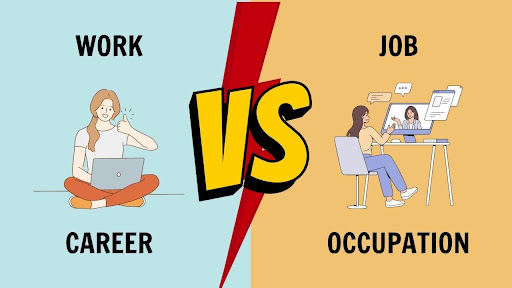
There comes a time in every person’s life when they wonder whether they are merely working for a living or making a difference. This is precisely what defines the differences between a job and a career. Despite their seeming similarity, the two have entirely different meanings and implications.
While one may be an urgent need, the other becomes part and parcel of a person’s identity. Recognising the job vs career battle will guide you in making the right decisions about your future.
What Is a Job?
A job is commonly regarded as something you do mainly to earn money. It is usually a short-term activity in which the sole aim is to perform tasks in return for payment. When discussing job vs career, a job is often seen as a temporary role focused on immediate financial needs rather than long-term professional growth.
Jobs are basically:
- Short-term activity focused on the present needs
- Not very responsible or vast in size
- Not related to long-term objectives
- Substitute in nature
In many cases, jobs act as a means to an end. Jobs are used to pay bills, get higher education or gain experience. Nothing is wrong with having jobs, and in most cases, they are quite valuable experiences. And to achieve a better position, you can hire the best CV writing service Ireland.
Sometimes, jobs do not require emotional attachment, and you can simply switch off after finishing your shift.
What Is a Career?
Career, on the other hand, refers to the professional path an individual follows over an extended period. It comprises various stages of professional growth, including experiences, accomplishments, and positions that align with one’s abilities, interests, and goals. In the discussion of job vs career, a career is typically associated with long-term growth, personal fulfilment, and professional development.
The key characteristics of a career include:
- Developmental and evolving in nature
- Based on future aims and goals
- Meaningful and satisfying to the individual
- Identity-related
It is important to note that while a job can be viewed as a source of income, a career is the path that you take to grow professionally and develop yourself.
The Key Differences Between a Job and a Career
1. Purpose and Motivation
The primary purpose of a job is to earn money. Although you may enjoy certain aspects of the work, the primary motivation is still to earn money.
However, careers are driven mainly by passion, ambition, and long-term goals. In addition to earning money, you will feel you are developing professionally.
2. Time Perspective
The duration of the relationship with your employer in the case of jobs is relatively small since you may change jobs often due to various reasons.
In a career, you remain committed to a long-term professional path, even if you change companies or roles. Your course remains constant nonetheless.
3. Skill Development
In a job, skill development may be limited to what is necessary to fulfil current responsibilities. Continuous learning and skill improvement are very important for building a career.
4. Emotional Investment
Emotional investment in a job is usually lower. You might like or hate your boss or colleagues, but this is a job you have.
A career requires greater involvement because it is tied to personal interests, values, and ambitions.
5. Growth Opportunities
Jobs may offer limited opportunities for growth. When you get to a certain point, there may be nowhere left to go.
However, careers are all about growth. There is always the possibility of being promoted and assuming new levels of responsibility.
Can a Job Turn into a Career?
Absolutely. Some of the most successful careers have their roots in humble occupations. The distinction is in your attitude toward the job itself.
When you:
- Show initiative
- Educate yourself
- Form connections
- Have goals for your future
Then you can transform a job into a career.
Sometimes it isn’t the occupation you take that determines the outcome of your life, but rather the way you develop from there.
Why Understanding the Difference Matters
Understanding whether you are doing a job or developing a career could greatly influence your actions and decision-making.
If you are doing a job:
- You will be flexible and opportunistic
- You may not need to invest excessive effort beyond your responsibilities
However, if you are developing your career:
- You will consider growth and plan ahead
- Your decision-making will be more purposeful
This clarity helps you avoid feeling stuck or directionless. It allows you to align your daily work with your future vision.
Signs You’re Building a Career
There may be situations where the line between a job and a career blurs. Below are some characteristics of an individual who is pursuing a career path:
- Setting professional goals
- A desire for learning outside one’s work
- Sense of meaning in one’s work
- An attitude of investing one’s time and energy in a better future
- A broader perspective on one’s work
If any of the above apply to you, then there’s a very good chance that you have embarked on a career journey.
When a Job Is the Right Choice
The point is that it is never too late for a job, even if you aspire for a career. It is actually wise to opt for a job if:
- You require financial stability immediately
- You wish to explore different fields of interest
- You have other commitments, such as studies or personal life
- You are still uncertain about your future plans
Sometimes life takes unexpected turns, and a job becomes necessary. Seek assistance from CV specialists Carlow to secure your dream job.
How to Transition from a Job to a Career
To make a shift from employment to building careers, follow the tips below:
Set Career Goals
Reflect on what you would like to see yourself achieve in the next 5 to 10 years.
Develop Required Skills
Enrol in classes, attend seminars, or attend webinars to develop the skills necessary to build a successful career.
Networking Matters
Building professional connections is important because many opportunities arise through networking.
Choose Projects That Stretch You
Be willing to work on projects that will stretch and further develop you.
Consistency Matters
Keep at it, as building careers takes time and effort.
Frequently Asked Questions
- Isn’t it bad to have just a job without a career?
No, it is not. It is normal to have just a job, and there are certain occasions when it makes perfect sense to take that approach.
- How can I tell if I have found my ideal career?
There are certain signs that help you identify it. You will usually experience motivation and satisfaction. Though not all careers are perfect, you will always be ready to grow with your profession.
- Will it be possible for me to change my career in the future?
Of course, it is. Many people successfully change careers later in life. This can always be achieved if you try.
Wrapping It Up
The distinction between a job vs career doesn’t lie in the kind of activity but rather in the attitude toward it. The job provides for immediate satisfaction, whereas the career prepares the individual for future life.
Neither is better nor more important than the other. What’s crucial is to know where you stand now and where you’re heading.
Those who already have a job must build upon it. Those pursuing a career must remain consistent and continue developing professionally. Those who find themselves somewhere between must realise that every move they make counts toward their destiny.