

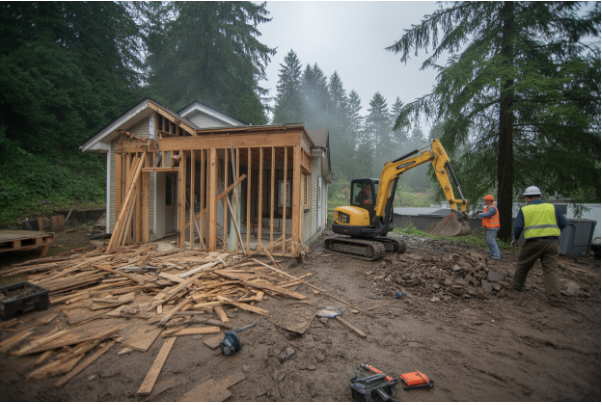
There’s something oddly satisfying about swinging a sledgehammer through drywall. I get it. For many homeowners in Washington State, the idea of tearing down walls, ripping out old fixtures, and demolishing outdated spaces feels empowering. It’s hands-on, it feels productive, and let’s be honest, it seems like an easy way to shave some costs off your renovation budget.
But here’s the reality that most people don’t discover until it’s too late: demolition work is one of the riskiest phases of any construction project. What looks simple on the surface often hides a minefield of safety hazards, legal complications, and structural dangers that can turn your weekend DIY project into a financial nightmare.
In Washington State, where building codes are strict and enforcement is serious, the risks of unlicensed demolition work go far beyond a few bumps and bruises. We’re talking about legal liability, massive fines, dangerous structural failures, and even criminal charges in extreme cases. Let’s dig into why hiring licensed demolition contractors isn’t just a good idea, it’s essential for protecting yourself, your property, and your wallet.
What Does “Licensed” Actually Mean in Washington?
Before we go further, let’s clarify what licensing means for demolition contractors in Washington. This isn’t just a piece of paper on the wall. Licensed contractors have met specific requirements set by the Washington State Department of Labor and Industries.
They’ve passed exams that test their knowledge of building codes, safety regulations, and proper demolition techniques. They carry mandatory insurance coverage that protects you if something goes wrong. They’re bonded, which means there’s financial recourse if they fail to complete work properly. They’re also required to stay current on continuing education, ensuring they know about the latest code changes and safety standards.
When you hire a licensed contractor, you’re hiring someone who has proven competency and accountability. When you go the DIY route or hire an unlicensed “friend of a friend” who offers to do the work cheap, you’re gambling with your home, your safety, and your legal standing.
The Safety Risks Nobody Talks About
Demolition looks straightforward in those home improvement shows. Swing a hammer, throw debris in a dumpster, dust yourself off, and move on to the fun stuff. Real-world demolition is far more dangerous than television makes it appear.
Every year, emergency rooms across Washington treat serious injuries from DIY demolition projects. We’re talking about deep lacerations from broken glass and sharp metal, crush injuries from falling materials, electrical shocks from cutting through live wires, respiratory problems from dust and debris, and severe trauma from structural collapses.
I’ve heard stories from homeowners in the Seattle area who thought they were just removing a small section of ceiling, only to have an entire section of the second floor come crashing down. Others have cut through walls without realizing there were electrical lines behind them, resulting in severe burns and house fires. Some have demolished load-bearing supports without understanding the consequences, causing catastrophic structural damage that made their homes unsafe to occupy.
Licensed demolition contractors are trained in hazard recognition. They know how to identify dangerous situations before starting work. They use proper personal protective equipment, not just the dust mask and work gloves you grabbed from the hardware store. They follow OSHA safety standards that are specifically designed to prevent the most common demolition injuries.
More importantly, they know when to stop. If they encounter unexpected hazards like asbestos, unstable structures, or hidden utilities, they have the training to recognize these dangers and address them properly. A DIY enthusiast often plows ahead without recognizing warning signs until disaster strikes.
Structural Integrity: You Don’t Know What You Don’t Know
Walk through any older neighborhood in Tacoma or Seattle, and you’ll see homes built using a variety of construction methods spanning a century or more. Balloon framing from the early 1900s. Platform framing from mid-century construction. Modern engineered lumber in recent builds. Each method has different structural characteristics, and understanding these differences is critical when you start tearing things apart.
Here’s what most homeowners don’t realize: walls that look identical can have completely different structural functions. That wall separating your kitchen from your dining room might be doing absolutely nothing, or it might be supporting the entire second floor of your home. Without proper training and experience, you simply can’t tell the difference by looking.
Licensed contractors know how to read a structure. They understand how loads transfer through a building. They can identify load-bearing walls, support columns, and critical structural elements. They know which beams can be removed and which ones are essential to keeping your roof from caving in.
I’ve seen situations where homeowners removed what they thought was a simple partition wall, only to discover sagging floors, cracked ceilings, and doors that suddenly won’t close properly throughout their entire house. The repair costs were staggering, often running $15,000 to $30,000 or more to install proper structural supports and fix the damage caused by the initial mistake.
Professional demolition contractors prevent these disasters. They assess structures before touching anything. They install temporary supports when needed. They understand the engineering principles that keep buildings standing safely. This expertise isn’t something you can pick up from a YouTube video.
Washington’s Legal Requirements Aren’t Suggestions
Washington State doesn’t play around with construction regulations, and for good reason. We live in an active seismic zone. We experience heavy rainfall that can exploit any weakness in a building’s envelope. We have environmental protections that regulate how construction waste must be handled. All of these factors make our building codes some of the most comprehensive in the country.
When you undertake demolition work without proper licensing and permits, you’re not just breaking rules, you’re breaking laws. The consequences can be severe.
Cities throughout Washington actively enforce contractor licensing requirements. If you’re caught doing unpermitted demolition work or hiring unlicensed contractors, you face stop-work orders that can halt your entire renovation. You’ll be hit with fines that can reach thousands of dollars. You may be required to undo completed work and start over with proper permits and licensed contractors, essentially paying twice for the same job.
But the legal troubles don’t stop there. If someone is injured during unlicensed demolition work, whether that’s you, a family member, or a helper, your homeowner’s insurance will likely deny coverage. You could face personal liability for medical expenses, lost wages, and pain and suffering. If the injury is serious, we’re talking about potential six-figure liability.
Hiring unlicensed contractors creates additional legal exposure. If they’re injured on your property, you could be held liable as an employer under Washington’s workers’ compensation laws. If their work causes damage to neighboring properties, you’re on the hook because you hired them. There’s no insurance safety net, no bonding protection, no recourse if things go sideways.
Licensed contractors carry comprehensive general liability insurance and workers’ compensation coverage. These protections shield you from catastrophic financial liability. When you skip licensing requirements to save a few bucks, you’re exposing yourself to risks that could cost you everything.
The Hidden Hazards in Older Washington Homes
Washington’s housing stock includes thousands of homes built before modern safety standards existed. If your home was built before 1980, there’s a significant chance it contains materials that are now known to be hazardous and are heavily regulated.
Asbestos was used extensively in building materials throughout the Pacific Northwest. You’ll find it in floor tiles, ceiling texture, pipe insulation, siding, and even some drywall compounds. Lead paint was standard in homes built before 1978. Both materials are dangerous when disturbed, and Washington State has strict regulations about how they must be handled.
Here’s where DIY demolition becomes genuinely dangerous. Most homeowners can’t identify asbestos-containing materials just by looking at them. They start tearing into walls, scraping ceilings, or ripping up floors without realizing they’re releasing toxic fibers into the air. By the time they discover the problem, they’ve potentially contaminated their entire home.
The health consequences are serious. Asbestos exposure causes mesothelioma, lung cancer, and other severe respiratory diseases. Lead exposure causes neurological damage, especially in children. But beyond the health risks, there are massive financial consequences.
If you contaminate your property with improper asbestos handling, you’re legally required to hire certified abatement professionals to remediate the entire affected area. This can easily cost $20,000 to $50,000 or more depending on the extent of contamination. You might be forced to vacate your home during remediation. You’ll face potential fines from the Washington State Department of Ecology. And when you eventually sell your home, you’ll have to disclose the contamination history, which can significantly impact your property value.
Licensed demolition contractors know how to identify potential hazardous materials. They conduct proper testing before starting work. They follow containment protocols if hazardous materials are present. They coordinate with certified abatement specialists when necessary. This expertise protects your health, your home, and your financial security.
Permit Violations Follow You Forever
One of the most underestimated risks of DIY demolition is the long-term consequences of permit violations. Many homeowners figure they’ll just skip the permit process, do their work, and nobody will ever know. That gamble rarely pays off.
Permit violations have a way of surfacing at the worst possible times. Maybe a neighbor reports construction activity to the city. Maybe you have an unrelated inspection that reveals unpermitted work. Maybe you try to sell your home and the buyer’s inspector notices modifications that don’t match permit records.
Once violations are discovered, the consequences cascade. You’ll face fines for the unpermitted work. You’ll be required to obtain permits retroactively, which often involves additional fees and penalties. You may need to open up completed walls to allow inspectors to verify that work was done correctly. In some cases, you’ll be required to completely undo work and start over because there’s no way to verify it meets code requirements.
These violations become part of your property’s permanent record. They can complicate insurance claims. They create disclosure requirements when you sell. They can even impact your ability to obtain permits for future work.
Licensed contractors handle all permit requirements as part of their service. They know which demolition work triggers permit needs in different Washington jurisdictions. They prepare and submit proper documentation. They coordinate required inspections. They ensure all work is documented and code-compliant. This administrative expertise protects you from violations that can haunt you for years.
Insurance and Liability: Your Financial Safety Net
Most homeowners don’t think about insurance implications when they’re planning a demolition project. They should. The insurance landscape around construction work is complex, and DIY demolition creates gaps in coverage that can leave you financially exposed.
Standard homeowner’s insurance policies typically exclude coverage for construction-related injuries and damage. If you’re doing demolition work yourself and you’re injured, your health insurance may refuse to cover treatment, arguing it was a construction injury. If someone else is injured helping you, they could sue you personally for medical expenses and damages, and your homeowner’s policy likely won’t defend you.
If DIY demolition causes damage to your home beyond the intended work area, say you accidentally break a water line and flood your basement, your insurer may deny the claim because the damage resulted from construction activity. You’re left paying for repairs out of pocket.
Licensed contractors eliminate these coverage gaps. Their general liability insurance covers property damage and injuries that occur during their work. Their workers’ compensation insurance covers their employees if they’re hurt on the job. Their insurance companies have already vetted their safety practices and deemed them acceptable risks. This professional coverage protects you from personal liability.
When something goes wrong during professional demolition work, and occasionally things do go wrong because construction is inherently unpredictable, insurance handles it. You’re not draining your savings account to pay for unexpected damage or injuries. You’re not facing personal lawsuits. You’re protected.
Why Ibex Demolition Prioritizes Licensing and Safety
At Ibex Demolition, licensing and safety aren’t just checkboxes we mark to stay legal. They’re core values that shape how we approach every project in the Seattle and Tacoma area.
Our team maintains all required Washington State licensing and stays current on continuing education requirements. We carry comprehensive insurance coverage that protects our clients from liability. We follow strict safety protocols on every job site, regardless of size. We handle all permit requirements, working directly with local jurisdictions to ensure full compliance.
But beyond the legal and administrative requirements, licensing represents something deeper. It represents a commitment to professionalism, expertise, and accountability. When you hire a licensed contractor like Ibex Demolition, you’re hiring a company that has invested in training, that maintains insurance, that follows regulations, and that stands behind its work.
We’ve seen too many homeowners try to save money with DIY demolition, only to end up spending far more fixing the problems they created. We’ve been called in to repair structural damage, coordinate asbestos abatement after improper disturbance, and help homeowners navigate permit violations. These situations are stressful, expensive, and entirely preventable.
Making the Smart Choice for Your Project
Look, I understand the appeal of DIY work. There’s satisfaction in working with your hands. There’s pride in doing things yourself. And yes, professional services cost money upfront. But demolition is one area where DIY rarely makes sense once you factor in all the risks.
The money you save by skipping professional demolition can evaporate instantly if you encounter asbestos, damage hidden utilities, compromise your home’s structure, or face permit violations. The time you invest in DIY work multiplies when you have to fix mistakes. The physical risk you take on personally can result in serious injury with lifelong consequences.
Licensed demolition contractors bring expertise, equipment, insurance, and accountability that protect your project from the start. They prevent expensive mistakes. They handle hazardous materials safely. They ensure code compliance. They work efficiently. They carry the liability so you don’t have to.
For Washington State homeowners planning renovation projects, hiring licensed demolition contractors isn’t an optional luxury. It’s essential protection for your home, your finances, and your family’s safety. The relatively modest investment in professional services pays dividends in peace of mind and project success.
Your home is likely your largest financial asset. Protecting that asset during renovation means starting with licensed professionals who know what they’re doing. Don’t gamble with DIY demolition. Make the smart choice. Hire licensed contractors and sleep well knowing your project is in experienced, accountable hands.