

Introduction
Many men think of erectile dysfunction (ED) as a problem that only affects their sex life. However, growing medical evidence suggests that erectile dysfunction can sometimes be one of the earliest warning signs of an underlying cardiovascular condition.
The blood vessels that supply the penis are smaller than those supplying the heart. Because of this, reduced blood flow caused by cardiovascular disease may first become noticeable as difficulty achieving or maintaining an erection—often years before symptoms such as chest pain or shortness of breath appear.
Understanding this connection can help men seek medical attention earlier, improve both their sexual health and overall well-being, and potentially reduce their risk of serious heart-related complications.
At Curiance Biotech, we believe that increasing awareness about men’s health empowers individuals to make informed healthcare decisions. Erectile dysfunction should never be ignored, as it may provide valuable insight into your overall cardiovascular health.
How Erections Depend on Healthy Blood Flow
An erection is primarily a vascular event.
When a man becomes sexually aroused, the brain sends signals that relax the muscles within the blood vessels of the penis. This allows increased blood flow into the erectile tissue, producing a firm erection.
For this process to work properly, the body requires:
- Healthy arteries
- Good blood circulation
- Proper nerve function
- Balanced hormone levels
- Normal heart function
Anything that reduces blood flow can interfere with achieving or maintaining an erection.
Why Heart Disease Can Affect Erections
Heart disease and erectile dysfunction often share the same underlying cause—damage to the blood vessels.
Conditions such as:
- High blood pressure
- High cholesterol
- Diabetes
- Obesity
- Smoking
- Atherosclerosis (hardening of the arteries)
can narrow or damage arteries throughout the body.
Because the arteries supplying the penis are much smaller than the coronary arteries supplying the heart, they are often affected earlier.
This explains why erectile dysfunction may develop several years before cardiovascular disease is diagnosed.
Erectile Dysfunction May Be an Early Warning Sign
Numerous studies have shown that erectile dysfunction can precede cardiovascular events by two to five years.
For some men, ED is the first noticeable symptom of developing vascular disease.
Healthcare professionals increasingly recommend that men presenting with new-onset erectile dysfunction—particularly those under 60 years of age without an obvious psychological cause—should be evaluated for cardiovascular risk factors.
Early diagnosis provides an opportunity to manage conditions before they progress into more serious problems such as heart attack or stroke.
Shared Risk Factors
Heart disease and erectile dysfunction have many risk factors in common.
High Blood Pressure
Persistently elevated blood pressure damages blood vessels and reduces their ability to expand during sexual arousal.
High Cholesterol
Excess cholesterol contributes to plaque formation inside arteries, restricting blood flow throughout the body.
Diabetes
Diabetes affects both blood vessels and nerves, making it one of the leading causes of erectile dysfunction.
Obesity
Being overweight increases inflammation, hormonal imbalance, and cardiovascular risk, all of which can contribute to ED.
Smoking
Smoking damages blood vessel walls, reduces circulation, and accelerates arterial disease.
Lack of Physical Activity
A sedentary lifestyle negatively affects both heart health and sexual performance.
Chronic Stress
Long-term stress contributes to elevated blood pressure, hormonal changes, and reduced sexual function.
Healthy Lifestyle Changes Benefit Both the Heart and Erections
The encouraging news is that improving cardiovascular health often improves erectile function as well.
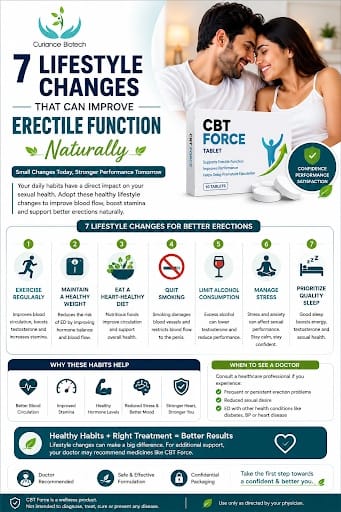
Simple lifestyle changes include:
Exercise Regularly
Aim for at least 150 minutes of moderate physical activity each week.
Exercise improves:
- Blood circulation
- Blood pressure
- Weight control
- Heart function
Eat a Heart-Healthy Diet
Focus on:
- Fruits
- Vegetables
- Whole grains
- Lean proteins
- Healthy fats
Reducing processed foods and excessive sugar can improve both cardiovascular and sexual health.
Quit Smoking
Smoking cessation improves blood vessel function and reduces the risk of both heart disease and erectile dysfunction.
Maintain a Healthy Weight
Weight loss can improve testosterone levels, circulation, and overall cardiovascular health.
Get Enough Sleep
Quality sleep supports hormone production, heart health, and sexual function.
When Should You See a Doctor?
Occasional erection difficulties are common.
However, you should consult a healthcare professional if:
- Erectile problems persist for more than three months.
- Erections become consistently weaker.
- You have diabetes or high blood pressure.
- You experience chest discomfort or shortness of breath.
- You have multiple cardiovascular risk factors.
Seeking medical advice early can help identify underlying conditions before they become more serious.
Treatment Options
Treatment depends on identifying the underlying cause.
Your healthcare provider may recommend:
- Lifestyle modifications
- Blood pressure management
- Cholesterol control
- Diabetes treatment
- Stress management
- Prescription medication when appropriate
Modern erectile dysfunction treatment options have helped millions of men improve their quality of life when combined with healthy lifestyle changes and medical supervision.
Where CBT Force Fits In
For men diagnosed with erectile dysfunction, a healthcare professional may recommend prescription treatment as part of a comprehensive management plan.
CBT Force is formulated to support men experiencing erectile dysfunction and premature ejaculation. When prescribed by a qualified healthcare provider, CBT Force may help improve erectile function, support sexual confidence, and enhance intimate performance.
However, it is important to remember that medication should complement—not replace—the management of underlying cardiovascular risk factors.
Treating both heart health and erectile dysfunction together often provides the best long-term outcomes.
Frequently Asked Questions
Can erectile dysfunction indicate heart disease?
Yes. In some men, erectile dysfunction may be one of the earliest signs of reduced blood flow caused by cardiovascular disease.
Will improving heart health improve erections?
For many men, healthier lifestyle habits that improve cardiovascular function also improve erectile function.
Can younger men experience heart-related erectile dysfunction?
Yes. Diabetes, smoking, obesity, and high blood pressure can affect younger adults as well.
Should I ignore occasional erectile problems?
Occasional episodes are common. However, persistent or worsening symptoms should always be evaluated by a healthcare professional.
Is medication enough to treat erectile dysfunction?
Medication can be highly effective, but addressing underlying health conditions such as high blood pressure, diabetes, and obesity is equally important for long-term improvement.
Final Thoughts
Erectile dysfunction is more than a sexual health issue—it can be an important indicator of your overall cardiovascular health.
Because the blood vessels supplying the penis are particularly sensitive to reduced circulation, ED may appear years before more serious heart problems become evident.
Recognizing this connection provides an opportunity to improve both heart health and sexual wellness through early diagnosis, healthier lifestyle choices, and appropriate medical treatment.
If you experience persistent erectile dysfunction, don’t ignore it. Speak with a qualified healthcare professional, discuss your cardiovascular risk factors, and explore the most appropriate treatment options.
At Curiance Biotech, we are committed to promoting awareness about men’s health and supporting informed decisions that contribute to healthier lives.