

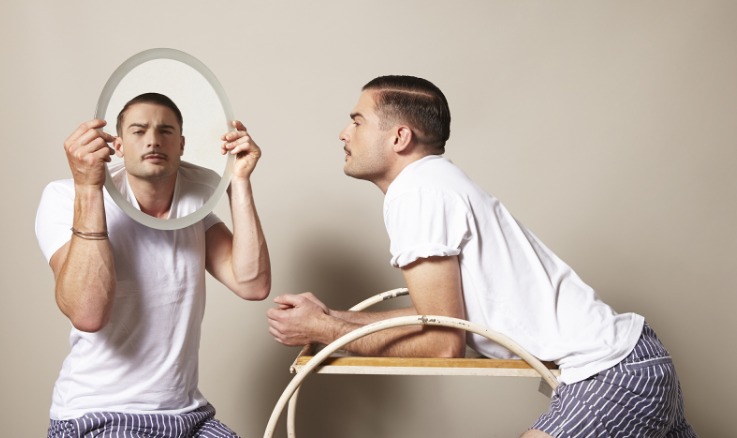
Body image is not about our appearance. It concerns how we see and how we feel about ourselves, and how we think about our appearance, all of which influences our confidence and behavior. There are a lot of individuals having problems with body image, even when it is perceived very differently by others. Psychology is at the heart of this distinction between reality and perception.
What Is Body Image?
Body image is our mental representation of how our bodies look. It comprises thoughts, beliefs, and feelings concerning our bodies. This is not necessarily the case. Actually, internal feelings tend to affect it more than objective reality.
There are those who might think positively about their bodies and feel safe in their skin. Some of them might feel dissatisfied, although there is no evident cause. This difference is mostly psychological and social, not physical.
The Role of Perception in Body Image
Not everything that we see in our brain is reality. Rather, it filters the information in terms of our experiences, beliefs, feelings, and past experiences. This implies that two individuals may be looking at the same body but have completely different views.
Perceptual distortion can be caused by negative thinking patterns. An individual can focus on the perceived negative aspects and dismiss positive aspects. In the long run, such selective attention strengthens a negative self-image. That is why the problems with body image are more about the mind than about the appearance.
Social Comparison and Its Impact
It’s human nature that they compare themselves to others. While sometimes it has a positive impact and people feel motivated, it often leads to dissatisfaction. Social comparison is unhealthy when individuals keep comparing themselves with unrealistic standards.
The root cause of this problem is social media. Beauty filters, airbrushing, and selective content make us think that there is perfection. When people match themselves with these unrealistic images, they might feel insufficient or unstable.
The result of this constant comparison can reduce self-esteem and the level of dissatisfaction with the body, even when the appearance of a person has not changed.
Cultural and Media Influences
Cultural standards of beauty play a major role in shaping body image. These standards often change over time, but they tend to promote narrow definitions of attractiveness. People who do not fit these ideals may feel pressure to change their appearance.
The media reinforces these standards by highlighting certain body types while ignoring others. Repeated exposure to these images can influence how individuals evaluate themselves. Over time, people may internalise these ideals and judge their bodies harshly.
The Connection Between Emotions and Body Image
Body image is closely linked to emotional well-being. Feelings such as stress, anxiety, or low self-esteem can negatively affect how a person sees their body. On the other hand, a positive emotional state can improve body perception.
For example, someone who feels confident and supported is more likely to have a balanced view of their appearance. In contrast, someone dealing with stress or self-doubt may focus more on perceived flaws.
This shows that body image is not just physical. It is deeply emotional and psychological.
Cognitive Distortions and Negative Thinking
Cognitive distortions are biased thinking patterns or inaccurate thinking patterns. These distortions are an important aspect of body image problems. Common examples include:
- Looking at shortcomings only.
- Exaggerating imperfections
- Thinking that beauty is what defines self-esteem.
These mental habits may develop into habits. They form a circle of such negative thoughts, giving rise to negative feelings, which in turn reinforce the same thoughts. This cycle has to be broken with awareness and a change in thinking patterns.
The Effect of Early Experiences
Childhood and early life experiences may influence our perception of the body. The remarks of the family, peers, or the authority can be permanent. Even slight comments on appearance can affect self-perception.
Body images set too high goals in the foundation years become long-term difficulties through bullying or criticism or unrealistic expectations. People become better at self-image when there are positive reinforcements and acceptance towards them.
Such early influences tend to remain with us when we grow up.
Body Image and Mental Health
Body image strongly correlates with mental health status, including anxiety and eating disorders of depression. People who experience strong negative body perceptions often experience serious effects on their day-to-day lives and overall quality.
Individuals with Body Dysmorphic Disorder spend an excessive amount of time obsessing about perceived imperfections that others would likely not detect. The sample illustrates how thorough and compelling visual misinterpretations can indeed be.
Body image analysis assumes a fundamental role in the preservation of our mental well-being.
Why We See Ourselves Differently Than Others Do
It is one of the most frequent experiences as we feel others tend to perceive us better than we perceive ourselves. It is so because we tend to criticize ourselves.
We take a longer time examining our appearance than we do with any other person. We also give the things we see an emotional and individual meaning. Yet, there are those who see us as a whole and are not concentrated on little details.
This difference in the point of view means that the compliments are sometimes unexpected or difficult to accept.
Building a Healthier Body Image
To improve body image, we have to begin by changing our thoughts and feelings regarding ourselves. This does not imply that we should not do what we want to improve, but we just need to form a balanced and realistic view.
Self-compassion is a significant practice. Negative self-talk can be tamed by treating yourself as you would treat other individuals. Exposure to unrealistic media content can help it.
Getting to know what your body can do, not just how it looks, will create a new relationship with your physical body. The transition to a healthier body image may be achieved in the long run through a change in thinking.
Visit Pinnacle Therapy For More Information.
Final Thought
Dealing with body image issues is not merely a matter of working on the physical aspect. The deeper issue involves psychological and emotional elements, as well as distorted perception. Negative self-perception can result from social comparisons or can be traced to early experiences, among other factors.
The issue of self-image can certainly be improved with the help of Pinnacle therapy, and the change can be achieved by addressing and controlling these negative thoughts, with the help of positive thinking, awareness, self-compassion, and a shift in mindset, to perceive the self with more kindness, and to clear the self-description. Ultimately, how you see yourself is more important than how you actually look.