

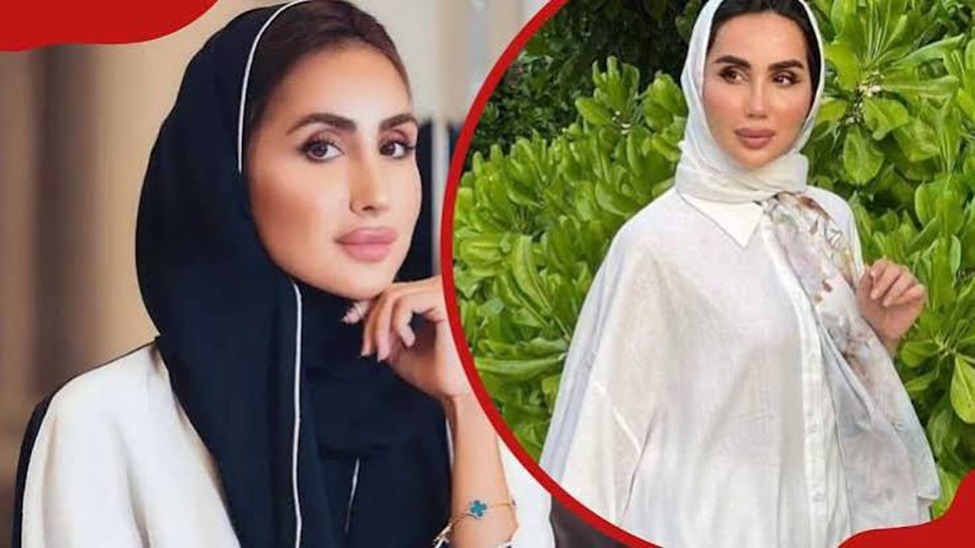
There is a peculiar kind of fame that comes from being almost entirely absent from public life. Few people illustrate this better than sara bint mashour al saud, a member of the Saudi royal family whose name draws steady curiosity online despite the fact that she has given no interviews, posted no verified photographs, and made almost no public appearances in nearly two decades. For a woman married to one of the most powerful men in the Middle East, that level of privacy is unusual, and it’s exactly why so many people go searching for answers about who she really is.
Royal Lineage on Both Sides of the Family
Sara bint Mashour was born into the House of Saud rather than marrying into it from the outside. Her father, Prince Mashour bin Abdulaziz Al Saud, is one of the many sons of King Abdulaziz, the founder of modern Saudi Arabia, which makes her a direct granddaughter of the kingdom’s founding monarch. Her mother, Noura bint Mohammed Saud Al Kabeer, came from the Al Kabeer family, a historically prominent Najdi clan, and was herself a businesswoman who founded a jewelry house with a presence in Paris, Riyadh, Dubai, and Monaco.
This dual lineage places sara bint mashour al saud firmly within the senior ranks of the Saudi royal family, even though her father’s branch is not considered among the most politically dominant lines, such as the Sudairi family. She studied Business Administration at King Saud University in Riyadh, one of the oldest and most respected universities in the country, at a time when formal higher education for royal women was still relatively uncommon.
For readers interested in exploring additional background on her family history and upbringing, this detailed biography from House of Saud provides further information about her lineage, education, and royal connections.
Marriage, Children, and a Family Built on Tradition
On 6 April 2008, she married her first cousin, Prince Mohammed bin Salman, who was then a relatively unknown junior royal long before he became Crown Prince and the country’s de facto ruler. The couple went on to have five children: three sons and two daughters. Their naming choices reflect a long-standing Saudi royal custom of honoring grandparents, with their first four children named after relatives on both sides of the family, and their youngest son named Abdulaziz, after the kingdom’s founder.
This naming pattern is not simply sentimental. In Saudi royal culture, names carry weight, linking children to specific lineages and reinforcing their place within a century-old dynasty. By naming their youngest child after King Abdulaziz himself, the couple tied their son directly to the origins of the modern state.
Why She Stays Out of the Spotlight
What makes sara bint mashour al saud unusual isn’t her royal status, since Saudi Arabia has no shortage of princesses. It’s the degree of her invisibility. She has no verified social media accounts, has never been photographed at an international summit or state dinner, and has avoided the kind of media presence that other prominent Saudi women, such as Princess Reema bint Bandar, have embraced.
This is partly cultural. Privacy around royal women remains a deeply held norm in many branches of the Al Saud family, regardless of how visible the men in those families become. It may also be strategic. A spouse who never appears in public cannot be photographed unflatteringly, questioned by journalists, or used as a point of leverage by critics. Whatever the exact mix of reasons, the result is a woman who is simultaneously one of the most searched-for and least documented figures connected to the Saudi monarchy.
Her Work in Education and Philanthropy
Despite her low profile, sara bint mashour al saud has not been entirely absent from public life. Since around 2023, her name has appeared in Saudi state media in connection with cultural and educational initiatives. She is associated with ilmi, a non-governmental science and innovation initiative aimed at developing skills in science, technology, reading, engineering, arts, and mathematics among young Saudis. The name itself means “my knowledge” in Arabic, reflecting a personal interest in education as a tool for national development.
This kind of institutional involvement, rather than red-carpet appearances or media interviews, appears to be her preferred way of engaging publicly. It allows her to support causes she evidently cares about, particularly around youth education, while keeping her personal life largely shielded from scrutiny.
A Public Figure Who Chose Not to Be Public
The story of Sara bint Mashour Al Saud is less about scandal or glamour and more about a deliberate choice to remain private in an era when most public figures, royal or otherwise, are expected to be constantly visible. Her lineage connects her to the very founding of Saudi Arabia, her marriage placed her at the center of one of the most consequential political transitions in the region’s recent history, and yet she has managed to keep her day-to-day life almost entirely out of view.
Readers looking for a concise reference that summarizes her background, marriage, and public role can also find additional information on Wikipedia, which provides an overview of the publicly available details surrounding her life and position within the Saudi royal family.
For readers trying to understand modern Saudi Arabia, her story is a useful reminder that proximity to power doesn’t always come with visibility. Sometimes the most influential people are the ones who are rarely seen at all.