

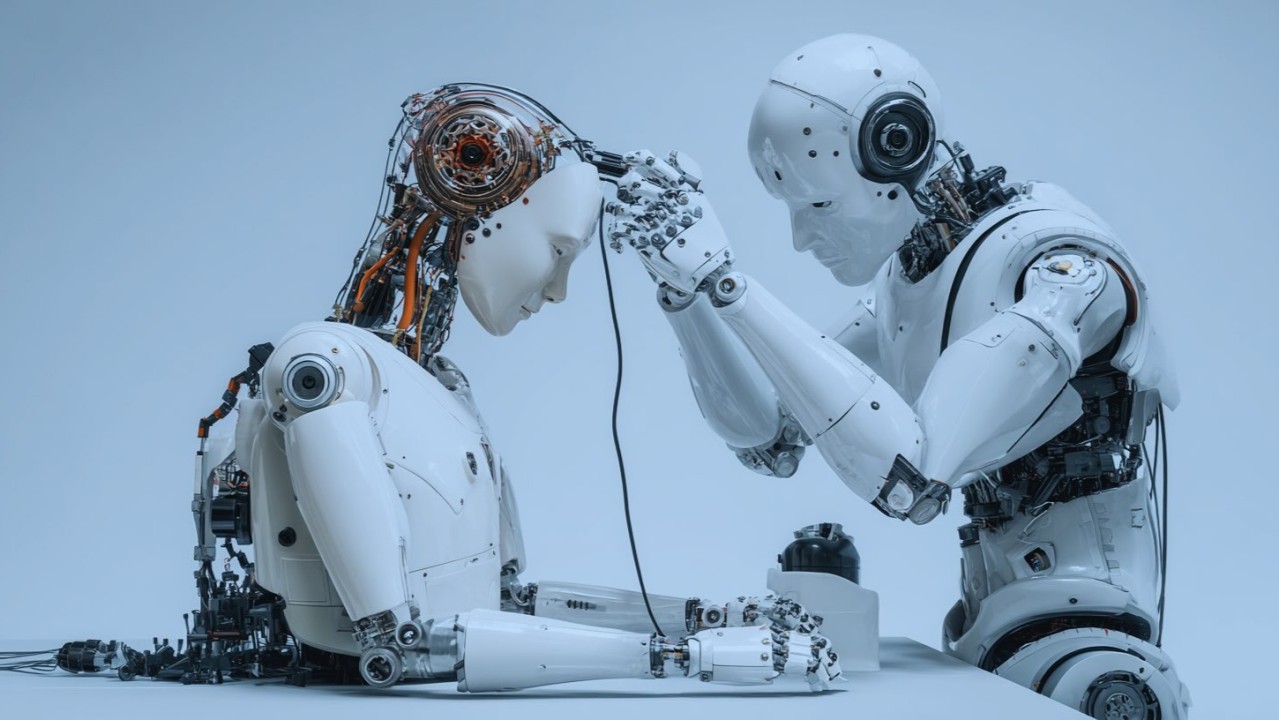
As businesses worldwide embrace digital transformation, procurement — the engine driving organizational spend, supplier management, and operational resilience — is entering its most transformative era yet. The next phase in this evolution isn’t just automation; it’s self-learning procurement systems — intelligent platforms capable of adapting, reasoning, and optimizing decisions autonomously.
This marks the dawn of AI’s next frontier — where procurement becomes predictive, adaptive, and continuously improving without constant human intervention.
From Automation to Autonomy: A Paradigm Shift
For decades, procurement innovation has focused on efficiency. E-procurement tools, spend analytics, and robotic process automation (RPA) streamlined manual processes and reduced costs. However, these systems largely depend on static rules and structured workflows. They perform repetitive tasks flawlessly but cannot learn or improve on their own.
Enter self-learning AI systems, built on advanced machine learning, natural language processing, and reinforcement learning. These technologies empower procurement platforms to analyze historical data, interpret context, and evolve their decision-making patterns in real time.
Unlike rule-based automation, self-learning systems observe outcomes, adjust strategies, and continuously refine their models. They don’t just execute instructions — they understand intent and improve through experience.
By 2026, industry analysts predict that nearly 50% of large enterprises will deploy self-learning AI capabilities across Source-to-Pay processes, driving procurement agility and innovation.
How Self-Learning Procurement Works
At its core, a self-learning procurement system mimics the human brain’s ability to observe, adapt, and decide — at scale. It leverages closed-loop learning, a continuous feedback mechanism that evaluates outcomes and fine-tunes performance.
Here’s how it operates step by step:
- Data Ingestion and Pattern Recognition
The system absorbs vast amounts of structured and unstructured data — supplier records, invoices, contracts, performance metrics, and even external sources like news feeds or regulatory updates. - Contextual Understanding
Natural Language Processing (NLP) enables the system to interpret business context. It recognizes whether an anomaly in supplier performance is due to seasonality, global disruption, or internal process changes. - Prediction and Recommendation
Using machine learning algorithms, it predicts supplier risks, pricing fluctuations, or delivery delays and recommends corrective actions in real time. - Decision Execution and Feedback
Once decisions are made — such as reordering, switching suppliers, or renegotiating contracts — the system evaluates the outcome. Successful actions reinforce the learning loop, while suboptimal results trigger model refinement.
The result is an intelligent procurement ecosystem that learns, evolves, and improves continuously — much like a seasoned professional who gets smarter with every negotiation or sourcing cycle.
The Strategic Value of Self-Learning Procurement
Self-learning procurement systems are not merely operational tools; they are strategic enablers that will define competitive advantage in the years ahead. Here’s how they’re reshaping the procurement landscape:
- Enhanced Decision Accuracy
AI models can process millions of data points to detect subtle correlations that human analysts may miss. This eliminates guesswork in supplier selection, pricing analysis, and risk assessment, leading to data-driven, accurate decisions.
- Real-Time Market Responsiveness
Self-learning systems continuously monitor global markets, commodity prices, and geopolitical factors, allowing procurement teams to adjust sourcing strategies instantly. This agility is vital in mitigating disruptions such as trade conflicts or supply shortages.
- Predictive Risk Mitigation
Rather than reacting to supplier issues, self-learning AI predicts potential failures before they happen. It identifies early-warning signals — from declining quality metrics to financial instability — enabling proactive interventions.
- Efficiency and Cost Optimization
Through continuous improvement, these systems reduce cycle times, automate repetitive tasks, and streamline supplier management. According to a McKinsey study, organizations adopting self-learning AI in procurement could see up to 30% cost reductions and 50% improvement in process efficiency by 2026.
- Knowledge Retention and Continuity
Traditional procurement often suffers when experienced professionals retire or switch roles. Self-learning systems, however, retain institutional knowledge — embedding best practices and strategic insights into their algorithms for perpetual learning.
How Self-Learning Procurement Transforms Core Areas
The impact of self-learning AI will touch every major procurement domain:
AI agents will autonomously identify, evaluate, and onboard suppliers, analyzing both quantitative data (cost, quality, delivery) and qualitative factors (ethics, sustainability). Supplier diversity will become a measurable, data-driven outcome rather than a manual initiative.
Contract Management
By 2026, contract lifecycle management will evolve into contract intelligence. AI will continuously monitor terms, flag non-compliance, and suggest amendments based on performance and regulation changes — all without human review for low-risk contracts.
Spend Analysis
Traditional spend analysis looks backward. Self-learning AI introduces predictive spend analytics, forecasting budget deviations, pricing trends, and category-level optimization opportunities before issues arise.
Negotiations and Pricing
Negotiation bots will use reinforcement learning to simulate different outcomes, analyze supplier responses, and identify win-win pricing strategies. Over time, they’ll adapt to different negotiation styles — optimizing not just for cost, but for value and relationship longevity.
The Human-AI Partnership
Despite its autonomy, self-learning AI will not replace human procurement professionals. Instead, it will augment them.
AI will handle data-intensive, repetitive tasks — freeing teams to focus on supplier innovation, strategy, and relationship building. The procurement professional of 2026 will act as a strategic orchestrator, leveraging insights from AI systems to drive value creation across the organization.
Soft skills such as critical thinking, creativity, and stakeholder management will become more valuable than ever. In short, AI will handle the “what” and “how,” while humans define the “why.”
Challenges on the Road to Self-Learning Procurement
Like any technological revolution, self-learning AI comes with hurdles:
- Data Quality and Integration – Without clean, unified data, AI cannot learn effectively.
- Ethical and Governance Concerns – Decision transparency, bias mitigation, and accountability must be built into AI systems.
- Change Management – Procurement teams must adapt to new workflows, redefine roles, and trust AI recommendations.
- Cybersecurity Risks – AI systems that interface with multiple data sources must have robust protection against breaches and data leaks.
Forward-looking organizations are already addressing these challenges by creating AI governance frameworks and ensuring human oversight remains central to every decision loop.
The Road Ahead: Procurement in 2030
By 2030, procurement will be driven by agentic, interconnected AI systems that communicate across departments, suppliers, and partners to deliver a fully synchronized supply chain.
We can expect:
- Autonomous sourcing networks that self-adjust based on real-time market data.
- Continuous learning ecosystems where every transaction refines the next decision.
- Sustainability-integrated procurement, with AI evaluating suppliers based on carbon footprint and ethical practices.
- Predictive collaboration between buyers and suppliers through AI co-pilots, enhancing transparency and trust.
In this landscape, organizations using self-learning procurement platforms will outperform their peers — not because they buy cheaper, but because they buy smarter.
Conclusion
The rise of self-learning procurement systems marks a turning point in enterprise efficiency and intelligence. As AI matures from automation to autonomy, procurement will transform into a proactive, adaptive, and strategic function that continuously learns and evolves.
By 2026 and beyond, companies that embrace self-learning AI will experience faster decision-making, reduced risk, and measurable cost savings — while positioning themselves as innovation leaders in the global supply chain.
Solutions like Zycus’s Merlin Agentic AI platform already exemplify this shift, bridging the gap between intelligent automation and autonomous decision-making.
The era of self-learning procurement isn’t a distant dream — it’s here. The question is: Are you ready to let your procurement system learn, adapt, and lead the way?