

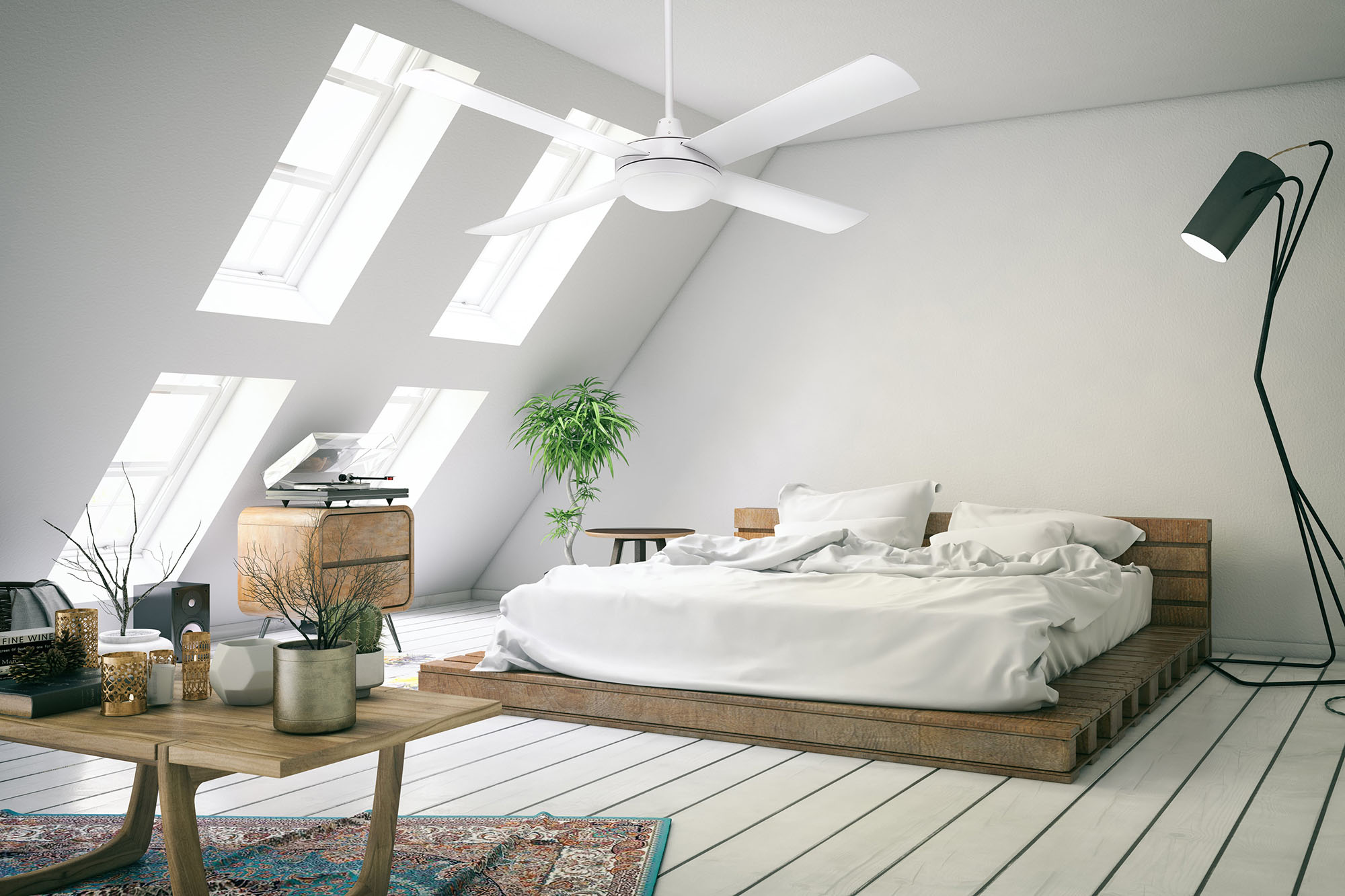
When shopping for ceiling fans, many homeowners focus solely on aesthetics, overlooking the engineering that separates exceptional fans from mediocre ones. Understanding the science behind airflow can help you make a smarter investment that delivers superior comfort and efficiency for decades.
How Ceiling Fans Create Comfort
Ceiling fans don’t actually lower room temperature—they create a wind-chill effect that makes occupants feel cooler. This phenomenon occurs because moving air accelerates moisture evaporation from skin, producing a cooling sensation of 4-6 degrees Fahrenheit.
This means ceiling fans work best when people are present in the room. Running a fan in an empty room wastes energy without providing benefit. However, when combined with air conditioning, ceiling fans allow you to raise thermostat settings by 4 degrees while maintaining comfort, resulting in significant energy savings.
The Blade Pitch Factor
Blade pitch—the angle at which blades are set—dramatically affects a fan’s performance. Steeper pitches move more air but require stronger motors:
- 8-10 degrees: Entry-level fans, minimal airflow
- 12-14 degrees: Standard residential fans, adequate performance
- 14-16 degrees: Premium fans, optimal airflow efficiency
Brands renowned for performance, like Casablanca fans, typically feature blade pitches of 14 degrees or higher, combined with powerful motors capable of moving substantial air volumes without straining or producing excessive noise.
Understanding Motor Quality
The motor is the heart of any ceiling fan. Quality differences here determine noise levels, longevity, and performance:
Stamped Steel Motors: Found in budget fans, these motors are louder and less durable. They typically last 5-10 years with regular use.
Die-Cast Motors: Mid-range option with better heat dissipation and quieter operation. Expected lifespan of 15-20 years.
Precision-Engineered Motors: Premium fans feature motors with tighter tolerances, superior bearings, and advanced winding techniques. These motors operate nearly silently and can last 25+ years.
The Aerodynamics of Blade Design
Modern blade design incorporates principles borrowed from aerospace engineering:
Blade Shape: Curved or contoured blades slice through air more efficiently than flat blades, reducing turbulence and noise while increasing airflow.
Blade Material: Different materials offer various benefits:
- Wood: Classic appearance, naturally balanced
- Composite: Resistant to warping and humidity
- Metal: Durable, modern aesthetic
- ABS Plastic: Lightweight, affordable, weather-resistant
Number of Blades: Contrary to popular belief, more blades don’t necessarily mean better airflow. Three-blade fans often outperform five-blade models because less drag allows the motor to spin faster. The key is blade design and motor power, not blade quantity.
Noise Levels and Sound Engineering
Premium ceiling fans incorporate several features to minimize noise:
- Precision-balanced blades: Eliminate wobble and vibration
- Rubber mounting isolators: Prevent motor vibration transfer
- Sealed bearings: Reduce friction and associated sounds
- Optimized blade-to-housing clearance: Minimizes air turbulence
Look for fans rated at 50 decibels or below—equivalent to a quiet conversation. The best fans operate at 40 decibels or less, making them virtually imperceptible during operation.
The Downdraft vs. Updraft Debate
Ceiling fans should operate in different directions depending on the season:
Summer (Counterclockwise): Creates a downdraft that produces the wind-chill effect, making occupants feel cooler.
Winter (Clockwise): Produces an updraft that recirculates warm air trapped near the ceiling, distributing heat more evenly throughout the room.
Most quality fans feature a simple switch to reverse direction, though some smart fans can be programmed to change automatically based on temperature or season.
Measuring True Performance
When evaluating ceiling fans, look beyond marketing claims to actual performance metrics:
CFM (Cubic Feet per Minute): Measures total airflow. Higher is better.
CFM per Watt: Indicates efficiency. Premium fans deliver 100+ CFM per watt.
Sound Rating (Sones): Lower numbers mean quieter operation.
Airflow Efficiency: The ratio of air moved to energy consumed.
Installation Considerations
Even the best ceiling fan underperforms when improperly installed:
- Center the fan in the room or over the primary seating area
- Ensure adequate clearance from walls (at least 18 inches)
- Use appropriate downrod length for ceiling height
- Verify electrical box is fan-rated (supports 50+ pounds)
Long-Term Value
While premium ceiling fans cost more upfront, they deliver superior value over time through:
- Lower energy consumption
- Reduced maintenance requirements
- Longer operational lifespan
- Better warranty coverage
- Higher resale value
Investing in quality airflow engineering ensures your ceiling fan delivers exceptional comfort and efficiency for decades, making it one of the smartest home improvement decisions you can make.