

The molecular workhorses of life are proteins. They control billions of biological functions, such as defense mechanisms, metabolism, communication, and tissue healing. But it is not only the chemical composition of proteins that make them so suitable to serve diverse functions: it is their structure.
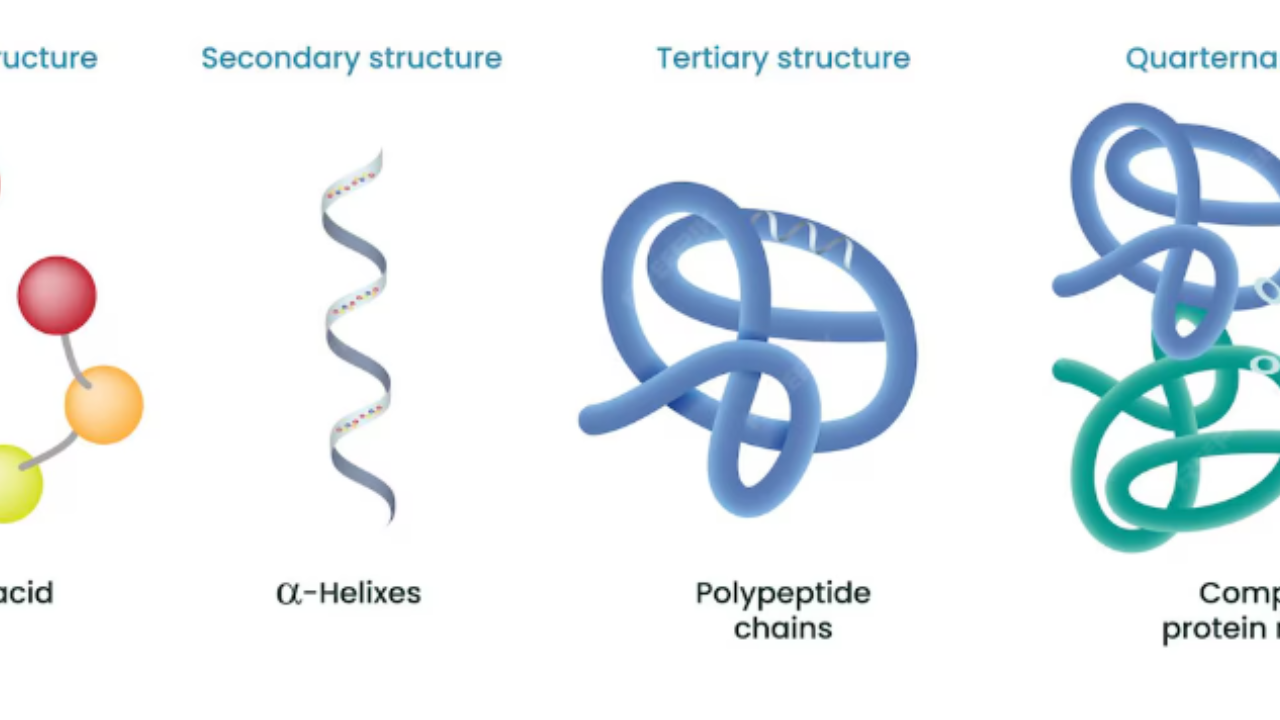
A single molecule of protein has been able to take several levels of organization, which leads to primary, secondary, tertiary, and quaternary structures. All this hierarchy of organization makes a chain of amino acids biologically active.
We will understand the reasons why proteins adopt different shapes, real-life examples, and how proper protein-folding is important in a functional protein, even in native proteins like Perforin 1 (PRF1) active protein.
Levels of Structural Protein
Proteins perform their functionality in the 4 consecutive levels of organization:
01. Primary Structure
The main construction of a protein chain is of straight amino acids, which are linked by a peptide bond. The order is coded genetically, and it defines the manner in which the protein is going to take shape in higher-order structure.
The behavior of the protein may change even with a single mutation in this sequence, causing diseases in some cases.
02. Secondary Structure
The chain then (once it is formed) folds into topological folds like 2 alpha helices and 2 beta-pleated sheets.
They are stabilized mostly by hydrogen bonding, giving the first line of the three-dimensional form. Secondary structures provide a reinforcement and the ability to interact with the surrounding environment.
03. Tertiary Structure
This structure is the tertiary level, in which the full three-dimensional protein folds are exhibited.
This level is the result of interactions in the form of hydrophobic interactions, ionic bonds, van der Waals forces, and the disulfide bridges. It is the last tertiary fold which is important when it comes to functionality as a protein becomes a biologically natural proteins that propel cell physiology.
04. Quaternary Structure
Certain proteins need more than one polypeptide chain to operate; they are referred to as subunits.
This arrangement is a multitude of units, which is referred to as quaternary structure. A typical example is hemoglobin, which is made up of four subunits that collaborate in their functionality to bind oxygen.
What Reason Do Proteins Have to Have These Structures?
Proteins guaranteed by the special structural hierarchy:
- Stability: Folding adds structural stability to respond better to changes in temperature or pH.
- Specificity: The structures of proteins offer specific binding sites in order to bind to other molecules.
- Efficiency: Folded structures minimize the energy needs of reactions.
- Functionality: Misfolding is associated with activity loss, whereas proper folding provides the functional potential in the native state, as demonstrated in proteins such as Perforin 1 (PRF1) active protein that requires specific folding to exert its role in the immune system.
Functional Examples of Protein Structure
| S.No | Protein Type | Structure Level Major Role | Example Function |
| 01. | Enzymes | Tertiary structure | Speeding metabolic reactions |
| 02. | Structural proteins | Secondary & quaternary | Building cellular framework (e.g., collagen) |
| 03. | Transport proteins | Quaternary | Oxygen transport (e.g., hemoglobin) |
| 04. | Immune defense proteins | Correct tertiary & quaternary shape | Cell defense (e.g., Perforin 1 (PRF1) Active Protein) |
The Critical Facts about Protein Folding
Key insights on proper folding of proteins include:
- The folding is directed by the amino acid sequence (the primary structure).
- Diseases, e.g., of the Alzheimer type, cystic fibrosis, or sickle-cell anemia, can be the result of misfolded proteins.
- Proper folding will provide native proteins, which retain cellular health and result in survival.
- Another source of drug targets is protein structure, the accurate understanding of which allows knowing where the interventions will be effective.
Final Words: The Architecture of Life
Proteins are basically the architects of nature and, therefore, the constructors of life itself.
Proteins are not nearly as simple chains of amino acids. This variety of structure, given its existence at every degree of complexity, is primary, secondary, tertiary, and quaternary levels.
Small variations in fold present vast variants in biological results. Although secondary and tertiary further provide shape and utilitarianism, the quaternary level supports collaborative action as a measure that facilitates survival dynamics.