

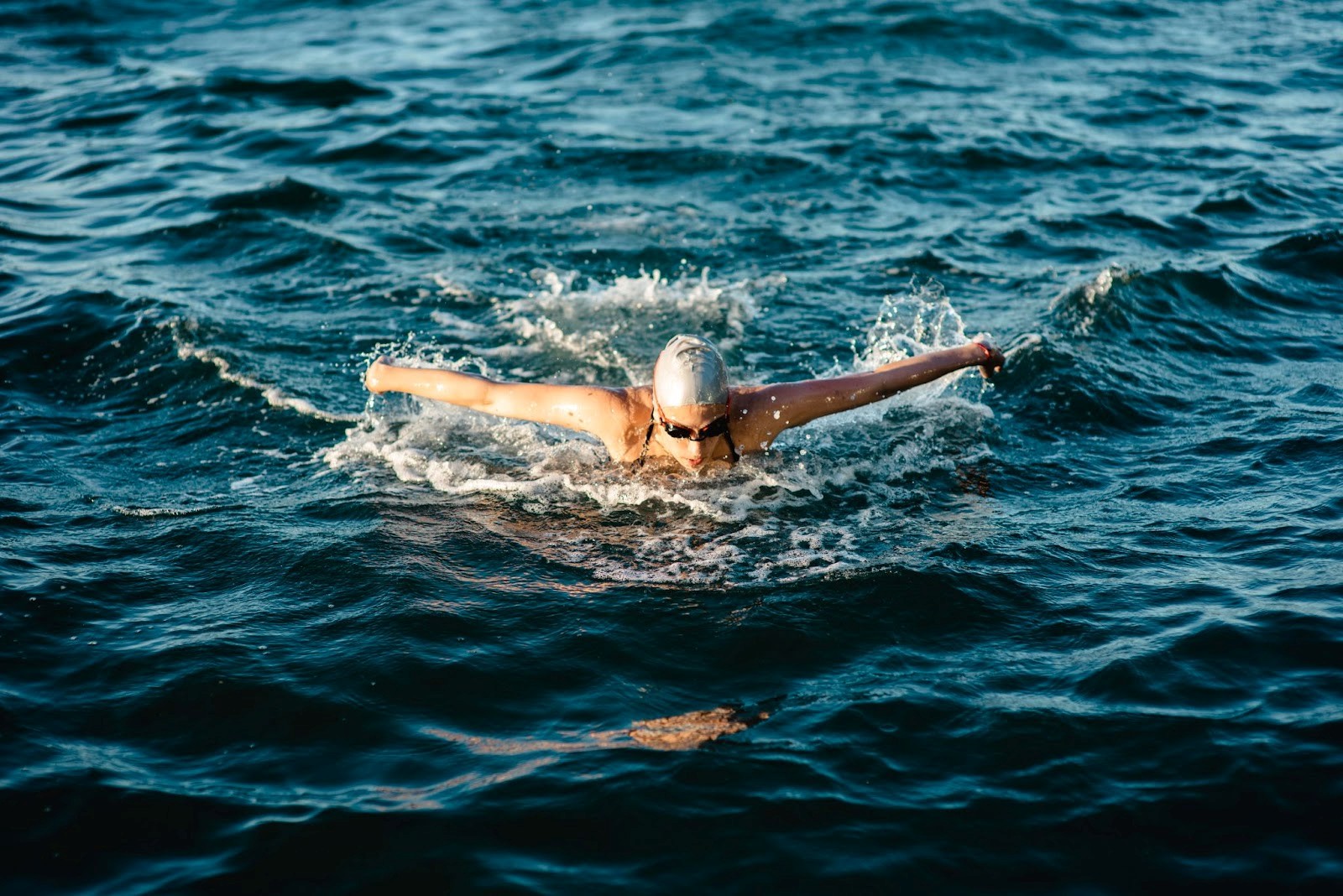
Let me guess why you are here. You smashed your last open water race. You felt fast, powerful, and in control. But then you hit the pool a few days later and… something feels off. Your pace drops, your stroke feels sluggish, and suddenly that speed seems to have disappeared, or in some cases, it might be the other way.
Does this sound like you? If yes, you’re not alone. Many swimmers notice a clear disconnect between their open water performance and their pool speed. This blog explains this gap. We’ll talk about six key reasons behind this mismatch, along with some practical tips to help you connect the dots. Whether you’re training for a triathlon or simply trying to improve across both environments, understanding these differences is the first step. Let’s dig in:
1. Stroke Tempo and Mechanics
In open water, swimmers tend to rely on a higher stroke tempo. The absence of walls means you’re swimming continuously, without breaks for turns or glides. The water is unpredictable, and that constant movement often requires quicker arm turnover just to maintain forward momentum.
In contrast, pool swimming allows for more structure. You have walls to push off from, creating short bursts of speed. There’s a natural rhythm to pool laps, like gliding, streamlining, and resting with each flip turn. That rhythm doesn’t exist in open water.
When swimmers jump back into the pool after open water training, they may find their stroke feels rushed or unbalanced. Their tempo is off, and the familiar rhythm of pool swimming takes time to readjust.
How do you balance this?
You can maintain the efficiency in both places by practising with different stroke rates. You can use a tempo trainer in the pool to replicate the open water rhythm. You can also practice longer, uninterrupted swims to mimic open water conditions in the pool.
2. Buoyancy and Body Position
Buoyancy is a hidden advantage in open water. Saltwater naturally provides more lift than freshwater, right? Add a wetsuit into the mix, and your hips and legs are held higher in the water. This elevated body position reduces drag and helps you move faster with less effort.
But in the pool? No wetsuit, no saltwater. If your body position isn’t naturally strong, your hips might sink slightly, increasing resistance and slowing you down.
This shift in buoyancy can throw off your feel for the water and reveal underlying flaws in your technique that were masked in the open water.
How to resolve this?
Work on core strength and body alignment drills in the pool. If you are someone takingadult swimming lessons in Auckland, you can request to use pull buoys or bands to simulate the buoyant feeling and train your muscles to maintain correct positioning even without a wetsuit.
3. Environmental Factors
We all know that the environment in open water is anything but predictable. Swimmers contend with waves, currents, wind, water temperature, and visibility. These factors influence your pace significantly. Sometimes, a favourable current can carry you to a personal best. Other times, choppy water or unexpected cold can slow you down. These variables make it hard to judge your true speed.
In the pool, the environment is controlled and consistent. Same temperature, no current, flat surface, and perfect visibility. That means the speed you swim is all you.
So, when your open water speed doesn’t match your pool pace, it could be that environmental factors were either helping or hindering you without you even noticing.
How to clarify this?
Track your pool workouts for consistent benchmarks. In open water, focus on perceived effort and heart rate, not just pace. Over time, this helps you build awareness of what’s influencing your speed, and you can sort things accordingly.
4. Sighting and Navigation
In open water, you don’t have black lines guiding your way. You need to look out from time to time, lifting your head to check direction and to stay on course. Every time you lift your head, your hips drop, your body position shifts, and your stroke is interrupted.
These frequent breaks in rhythm can affect your efficiency, even if you’re maintaining a decent pace overall. Sighting also puts an amount of cognitive load, requiring more focus and energy.
Meanwhile, pool swimming is simple in this case. You swim straight, turn at the wall, and follow the lane. It’s much easier to keep your form intact.
How to overcome this?
Practice sighting in the pool by lifting your head every few strokes during training. This will help you get used to including it into your stroke without breaking rhythm.
5. Psychological Factors
Open water poses a unique mental challenge. You’re often swimming in dark and gloomy depths, with no clear boundaries or sense of distance. That can spark anxiety, hesitation, or a more cautious approach.
Many swimmers report feeling less confident in open water. Their stroke tightens, breathing shortens, and form suffers. Ironically, this can sometimes lead them to push harder, making them feel faster than they actually are.
In the pool, the controlled environment breeds familiarity and confidence. You know where the walls are, you can see the bottom, and your pace is easier to manage with a pace clock.
How can you get past this?
When you’re swimming in a pool, try to imagine you’re in open water. Swim for longer stretches without stopping or touching the wall. Also, practise breathing in a way that helps you stay calm, not just to get more oxygen for your body.
6. Training and Technique Focus
When you are trained to swim in open water, you prioritise distance, endurance, and swimming through tough conditions. You focus less on technical refinement and more on getting the metres in. However, pool training is the opposite. Coaches emphasise technique, efficiency, and speed work. Drills, interval sets, and technical corrections are all easier to execute in this case.
As a result, your open water fitness might be high, but your technique may have slipped. When you return to the pool, those rough edges are more noticeable, and they affect your speed.
How do you tackle this?
Practice to balance both. Try endurance swimming with technique drills. Other than just focusing on covering distance, you can work on your stroke forms and body awareness during your open water sessions.
Summing Up
If your open water speed isn’t translating to the pool, it doesn’t mean something is wrong. It just means the skills and conditions are different. Recognising those differences empowers you to train smarter.
You can train consistently in both the pool and open water with the variables in both conditions, like we’ve discussed above. In short, by understanding how these two worlds differ and adjusting your training accordingly, you can become a more versatile, confident, and efficient swimmer.
Remember, you don’t have to choose between the pool and the open water. With the right strategy, you can dominate both. Happy swimming!