

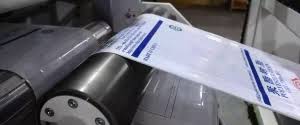
Part I — Fundamentals, Value, and Engineering Options
What Are Tubular FFS PE Films?
Tubular FFS (form-fill-seal) PE films are continuous polyethylene tubes supplied on rolls for automated packaging lines. In day-to-day plant language they are also called tubular PE FFS rolls, heavy-duty PE film sleeves, or simply FFS tubes. The defining idea is deceptively simple: the bag is formed, the product is filled, and the mouth is sealed in one uninterrupted motion from a single roll. Fewer touchpoints, fewer pre-made sacks, and fewer chances for dust or spillage—all translate into greater control, cleaner operations, and steadier throughput.
Core Features in Plain Terms
Because the substrate is polyethylene (LDPE/LLDPE/MDPE blends), Tubular FFS PE Films pair high toughness with low water-vapor transmission. They can be engineered for puncture and tear resistance, tuned for surface friction, and printed at high coverage without sacrificing functional performance. Options such as localized embossing strips and calibrated micro-perforations allow the web to run fast across rollers yet sit still on pallets, to vent quickly during fill yet protect contents during storage. In short, they combine mechanical durability with process tune-ability. Click https://www.pp-wovenbags.com/tubular-ffs-pe-films/ to learn more.
How They Are Made
Resin grades specified by melt flow (ISO 1133-1) are blended and extruded as blown film—either mono-layer or co-extruded multi-layer—then conditioned by corona treatment for print receptivity and seal performance. The film is folded into a lay-flat tube, edge-welded or left as seamless tubular, and rewound to customer widths. Where downstream equipment calls for it, side gussets are introduced; valve-ready headers or block-bottom pre-creases can be cut during conversion. Quality gates typically include:
- Tensile/elongation (ASTM D882)
- Dart impact (ASTM D1709)
- Tear (ASTM D1922)
- Seal strength (ASTM F88)
- Coefficient of friction (ASTM D1894)
- Moisture barrier (ASTM E96 or ISO 15106)
These checkpoints give a common language for specification, validation, and audit.
Where They Are Used
Tubular FFS PE Films serve powders and granulates across building materials (cement, dry mortar, tile adhesive), fertilizers and salts, plastic resins and masterbatch, mineral fillers, animal nutrition, and selected food ingredients. If the product is dusty, hygroscopic, abrasive—or all three—FFS films are strong candidates, because the package is created in-line without manual handling of empty sacks. This eliminates a major source of contamination and variability.Click here to know more:https://www.pp-wovenbags.com/pe-heavy-duty-form-fill-seal-tubular-roll-polyethylene-bags/
Quick Link
Looking for sizes, options, and compatible machinery? See our overview of Tubular FFS PE Films.
Why Tubular FFS PE Films Matter to Modern Operations
Packaging is not merely a wrapper; it is a system. Tubular FFS PE Films sit at the heart of that system when throughput, hygiene, and consistency are non-negotiable. What makes them compelling?
- A closed path from roll to sealed bag reduces airborne dust and off-spec seals.
- On-the-fly bag length adjustment lets one roll address multiple SKU sizes.
- Mono-material designs support recyclability targets while preserving performance.
The result is a calmer line, predictable OEE, and pallets that travel further with fewer claims.
Engineering the Film: Anatomy and Options
1) Layer Architecture
At the core of Tubular FFS PE Films is the layer stack. A common three-layer design places a printable, low-slip outer; a tough, puncture-resistant core; and a seal-friendly inner with a low seal-initiation temperature. Metallocene-LLDPE is frequently used for the seal layer; LLDPE/MDPE blends are popular for the core. By manipulating thickness distribution and resin chemistry, engineers can meet specific targets for dart impact, WVTR, and COF without overspending on raw material.
Rhetorical question. Do you design for rare accidents or daily wear? With Tubular FFS PE Films, the answer can be both: a robust core for drops and a forgiving inner for clean seals.
2) Embossing Strips (Friction Where You Want It)
Embossing is a localized, mechanical way to control friction. Narrow textured lanes—often 5–8 cm wide—are pressed into selected regions during conversion. The raised micro-texture increases contact area exactly where pallets need stability, while the rest of the web remains smooth for low-drag travel across rollers and forming shoulders. When placed outside the main artwork, embossing preserves print gloss and color fidelity.
Data reinforcement. Plants commonly target static COF in the embossed lane around 0.30–0.55 and kinetic COF on the smooth field around 0.20–0.35 (ASTM D1894). Embossing offers repeatable friction independent of slip-agent bloom, temperature, or storage time.
Case vignette. After adding dual embossing strips to a 140-μm film, a mineral filler line reduced stretch-wrap tension yet reported fewer slid layers on tilt tests—an unusual pairing that speaks to controlled friction in the right places.
3) Micro-Perforation (Let the Air Out, Keep the Product In)
Fine powders trap air during filling. If the air cannot escape, bags balloon, seals get contaminated, weight control suffers, and speed drops. Micro-perforation solves the deaeration problem with tiny, precisely spaced pin-holes—typically 50–150 μm equivalent diameter—placed in low-risk panels or only in the headspace. The goal is a calibrated vent path: rapid air release during fill, negligible moisture transmission after sealing.
Measured effects. Integrators often observe 5–15% bag-per-minute gains on free-flowing products when micro-perfs are used. Headspace pressure decays more predictably, so top seals stay cleaner. For highly hygroscopic powders, micro-perfs are restricted or replaced with machine-side degassing; FFS films adapt to both strategies by limiting perf zones to where they are safe.
Contrast. Compared with macro-holes or paper vent plies, micro-perfs minimize dust escape and maintain barrier—critical when pallets sit in humid port warehouses.
4) Print Surfaces and Brand Consistency
A smooth, corona-treated exterior gives Tubular FFS PE Films excellent flexographic print fidelity. High-coverage solids, tight registration, and matte or gloss varnishes are achievable without compromising seal integrity. In an era where even industrial sacks carry brand value, this duality—rugged package, premium print—matters.
5) Seal Windows That Forgive Real Life
Heat sealing on a busy line is messy: product strings, temperature swings, and occasional misalignment are realities. Low seal-initiation inner layers widen the process window so seals remain strong despite variance. Validation by ASTM F88 across the expected dwell-time and pressure range turns art into repeatable science.
From Machine to Pallet: Designs That Boost Handling
Block-Bottom Geometry
Square-base (block-bottom) formats produce brick-like packs that stack cleanly, resist corner bulging, and display better. Tubular FFS PE Films can be converted—on specialized lines or off-line—to form squared corners at the base, delivering the presentation and stability of a pre-made valve sack while keeping the efficiencies of in-line forming.
Valve-Friendly Interfaces
Many sites run mixed fleets where pre-made valve sacks and FFS bags coexist. Tubular FFS PE Films can be engineered to integrate with internal sleeves, tuck-in flaps, or heat-seal valves where equipment supports such closures. Smooth, low-lint film around the valve mouth and a low-temperature seal layer are the enablers.
System Thinking: Breaking a Complex Choice into Solvable Parts
A credible specification emerges when packaging is treated as a system and the decision is decomposed into linked sub-problems.
Sub-problem A — Moisture vs. Venting
Question. How sensitive is the product to humidity ingress?
Levers. Film thickness, barrier resin selection, headspace-only micro-perfs, pallet top-sheeting, desiccant policy.
Risk controls. Validate WVTR at 38 °C/90% RH (ASTM E96/ISO 15106) and measure moisture pick-up after accelerated aging.
Synthesis. For hygroscopic powders, prefer unperforated films with machine-side degassing; for free-flowing granulates, use selective micro-perfs and aggressive seal dwell.
Sub-problem B — COF Windows and Line Glide
Question. Do bags slide on pallets or does the web stick on rollers?
Levers. Embossing strips, slip packages, idler materials, forming-shoulder finish.
Risk controls. Target kinetic COF 0.25–0.35 on smooth zones for machine glide; static ≥0.40 on embossed zones for pallet stability.
Synthesis. Localize friction where stacks need it; keep the rest slick for speed.
Sub-problem C — Impact, Tear, and Drop Survival
Question. What is the real distribution chain abuse?
Levers. Dart impact (ASTM D1709), Elmendorf tear (ASTM D1922), corner reinforcement by geometry.
Risk controls. Run instrumented drop tests on filled packs; map failure modes (seal, panel, corner).
Synthesis. Build a core tough enough for the worst credible drop, then keep the seal layer thick where stresses concentrate.
Sub-problem D — Spec Discipline Across Sites
Question. How do we ensure different shifts and plants produce identical outcomes?
Levers. SPC on thickness and COF, batch-printed roll IDs, quarterly third-party test reports.
Synthesis. A locked specification with documented test methods turns tribal knowledge into audit-ready practice.
Problem → Method → Result: Field-Style Illustrations
Illustration 1 — Dusty Mineral Powder, Port Climate
Problem. Fill dust contaminates seals; pallets breathe and bulge in humid warehouses.
Method. Switch to unperforated FFS films with a low-temperature seal inner; add narrow embossing strips for pallet friction; apply stretch-wrap with vented top-sheet.
Result. Cleaner top seals, higher net weights, reduced corner bulge, and fewer product claims after ocean transit.
Illustration 2 — Free-Flowing Fertilizer Granules
Problem. Ballooning during fill slows the line and causes weight variance.
Method. Introduce headspace-only micro-perfs; extend seal dwell; tweak slip package for machine glide.
Result. 8–12% throughput gain and tighter weight distribution without raising film thickness.
Illustration 3 — Branded Additives Requiring High Print Fidelity
Problem. Premium graphics scuff and register drifts on rough films.
Method. Specify smooth, corona-treated outer; relocate embossing strips outside the artwork panel; adopt low-migration inks.
Result. Sharper branding with no loss of heat-seal strength.
Specifications That Buyers Actually Use (Typical Ranges)
- Format. Lay-flat widths typically 300–650 mm; side-gusset options for extra volume; block-bottom forming on compatible equipment.
- Thickness. 100–200 μm for most heavy-duty applications; up to ~250 μm where abuse is extreme.
- Embossing. One or two lanes per face, 5–8 cm wide; place outside the main print area.
- Micro-Perforation. 50–150 μm equivalent diameter; density tuned by product and line speed.
- Printing. Up to 8 colors flexographic; gloss or matte over-varnish as needed.
- COF Targets. Smooth field 0.20–0.35; embossed lanes 0.30–0.55 (plant-specific).
- Testing. ASTM D882 (tensile), D1709 (dart), D1922 (tear), F88 (seal), E96/ISO 15106 (WVTR), D1894 (COF).
- Compliance. ISO 9001 and ISO 14001 management systems typical; design-for-recycling aligned to EN 13430; food-adjacent options with appropriate migration documentation.
Note. Ranges describe common industrial practice; final specification should be validated on your equipment with your product under your shipping conditions.
Environmental Logic and Credible Claims
A film that fails costs more than a film that lasts. Product loss carries an upstream carbon shadow larger than the packaging itself. Tubular FFS PE Films enable downgauging—using tougher resins to shave microns—without sacrificing function. When built as mono-material LDPE/LLDPE, they align with film-recycling schemes in regions where those exist. The credible claim is not perfection; it is design choices that make recovery realistic and performance reliable.
What Auditors Ask For
EN 13430 alignment for recyclability by material recovery, documented test methods (ASTM/ISO), batch traceability, and change-control logs. FFS films that ship with this paperwork earn trust with procurement and sustainability teams alike.
Frequently Asked Questions About Tubular FFS PE Films
Are Tubular FFS PE Films suitable for food?
Food-adjacent uses require compliant resins, inks, and adhesives; suppliers should provide statements of conformity and migration data where applicable.
Do micro-perfs ruin the moisture barrier?
Not when applied in headspace only or in low-risk panels paired with pallet top-sheeting. For sensitive powders, skip perfs and degas via the bagger.
Will embossing hurt print quality?
Place strips outside the artwork; keep the print lane smooth. You get clean graphics and stable pallets.
Can I run FFS films on a line set up for pre-made valve sacks?
Most modern form-fill-seal machines accept tubular films; in mixed fleets, the transition is often a change-parts exercise and a short trial away.
What about recyclability?
Mono-material LDPE/LLDPE constructions follow LDPE film streams where available; mark the pack clearly and work with take-back partners for controlled sites.
Putting the System Together
When embossing strips concentrate friction in the right lanes, micro-perforations relieve headspace pressure, square bases resist bulging, and seal windows forgive real-world variance, FFS films stop being “just film on a roll.” They become the backbone of a stable, auditable, and efficient packaging program. The path is practical: define critical-to-quality metrics, choose levers that target them, validate under realistic conditions, and lock the recipe. Do that, and your line runs faster, your pallets travel further, and your sustainability report reads cleaner—all powered by the quiet efficiency of Tubular FFS PE Films.
Part II — Alternate Framing and Operational Playbook
Introduction: What Are Tubular FFS PE Films?
Tubular FFS PE Films are continuous polyethylene tubes on rolls for automated form-fill-seal packaging. In factories you may hear them called tubular PE FFS rolls, heavy-duty PE sleeves, or simply FFS tubes. A single roll forms the bag, fills the product, and seals the mouth in one uninterrupted sequence—reducing manual handling, lowering dust escape, and stabilizing overall equipment effectiveness.
Core Features of Tubular FFS PE Films
Engineered from LDPE/LLDPE (and, where needed, MDPE) blends, FFS films deliver toughness, puncture resistance, and a controllable moisture barrier. Surface energy is tuned by corona treatment for high-fidelity printing, while inner layers are designed with low seal-initiation temperatures for wide, forgiving heat-seal windows. Options such as localized embossing strips and calibrated micro-perforation tailor friction and venting to the realities of fast-moving lines.
Manufacturing Overview
Resins specified by melt mass-flow rate (ISO 1133-1) are blended and extruded as blown film—mono-layer or co-extruded multi-layer. Webs are conditioned, formed into lay-flat tubes, optionally gusseted, and rewound to customer widths. Quality gates commonly include tensile/elongation (ASTM D882), dart impact (ASTM D1709), tear (ASTM D1922), seal strength (ASTM F88), coefficient of friction (ASTM D1894), and moisture barrier (ASTM E96/ISO 15106). The result is a consistent platform that can be validated and audited across sites.
Typical Applications
Tubular FFS PE Films package cement and dry mortar, tile adhesive, mineral fillers, fertilizers and salts, plastic resins, masterbatch, animal nutrition, and selected food ingredients. They shine where products are dusty, hygroscopic, or abrasive—and where lines must run long hours with minimal stoppages.
Problem → Method → Result Use-Cases
Deaeration During Filling
Problem. Fine powders trap air; if it cannot escape quickly, bags balloon, seals are contaminated, and weight control drifts.
Method. Specify headspace-only micro-perforation or use machine-side degassing for highly hygroscopic powders. Validate perforation diameter (≈50–150 μm) and density per square decimeter against real fill profiles.
Result. Faster settling, cleaner top seals, 5–15% bags-per-minute improvement on free-flowing products, and tighter net-weight distributions.
Pallet Stability vs. Line Glide
Problem. Too little friction and pallets slide; too much and the web sticks on shoulders and idlers.
Method. Add narrow embossing strips (e.g., 5–8 cm lanes) in the zones that contact pallets, while keeping the main print lane smooth. Target kinetic COF 0.25–0.35 on smooth zones and static COF ≥0.40 on embossed lanes (ASTM D1894).
Result. Clean flow on the machine, stable stacks in the warehouse, and lower stretch-wrap tension without compromising transport safety.
Impact and Tear in Distribution
Problem. Forklift tines, sharp pallet corners, and drop events threaten integrity.
Method. Design with a metallocene-LLDPE seal layer and a tough core; verify dart impact (ASTM D1709) and Elmendorf tear (ASTM D1922) on filled packs. Employ square-base forming to reduce corner bulges.
Result. Fewer leakers, reduced product loss, higher tolerance to multi-drop handling, and better pallet cube.
Horizontal vs. Vertical Thinking: Making Trade-offs Explicit
Horizontal (cross-domain) links. Treat filling like fluid dynamics: air seeks the shortest vent path; micro-perfs create calibrated channels. Treat stacking like tribology: friction must be placed—not averaged—so embossing strips act where normal forces peak. Treat printing like color management: smooth lanes preserve gloss and delta-E targets.
Vertical (multi-level) logic. Film level—adjust resin and thickness to hit WVTR and impact; bag level—position perfs and embossing to control behavior; pallet level—top-sheet for humidity spikes and tune wrap recipes. Tubular FFS PE Films become a system, not a single material decision.
Methodology: A Stepwise Specification for Tubular FFS PE Films
- Define CTQs. Moisture sensitivity, dust control, stacking angle, and allowable leak rate.
- Segment SKUs. Free-flowing granules vs. aeratable powders require different recipes; resist premature standardization.
- Select levers. Embossing placement, micro-perforation pattern, inner-layer seal chemistry, side-gusset geometry.
- Validate on line. Weigh every Nth bag; record jams; run ASTM F88 seal pulls across dwell and temperature ranges.
- Lock and audit. Freeze the spec with thickness distributions, COF targets, and print lanes; add batch traceability for supplier lots.
Results and Discussion: What Plants Usually Observe
Throughput. Deaerated fills and clean seals raise true run-rate without increasing film gauge.
Housekeeping. Lower dust at fill reduces filter swaps and improves operator comfort; clean headspace venting makes the difference.
Logistics. Square-base forming and embossed lanes deliver tighter stacks and fewer corner abrasions.
Sustainability. Mono-material LDPE/LLDPE constructions align with material-recycling schemes (EN 13430) and unlock safe downgauging—function first, grams second.
Frequently Asked Questions (Concise)
Are these films food-safe?
Food-adjacent uses demand compliant resins, inks, and adhesives plus documented migration data; request statements of conformity from your supplier.
Do micro-perfs compromise moisture barrier?
Headspace-only or low-risk panel perforations maintain practical protection; for sensitive powders, prefer machine-side degassing with unperforated webs.
Will embossing harm print quality?
Place strips outside the artwork and keep the print lane smooth; friction where you need it, gloss where you show it.
Can we run existing lines?
Modern FFS equipment is built for tubular films; most transitions are change-parts and setup exercises verified by short trials.
Quick Link for Options and Sizes
Explore formats, widths, and custom features at this product page for Tubular FFS PE Films.
Integrated Solution: From Sub-Problems to a Cohesive Program
Combine selective micro-perforation for fast venting, embossing strips for placed friction, seal-friendly inner layers for process robustness, and square-base geometry for stacking. Wrap these choices in a documented specification—ASTM/ISO test methods, COF targets, WVTR thresholds, and traceable batch IDs—and Tubular FFS PE Films stop being a commodity roll; they become the backbone of a measurable, auditable, and scalable packaging system.