

Building in a high-water table region does not automatically mean a project will fail. But it does mean that every decision about foundation depth, structural waterproofing, drainage design, and long-term monitoring carries more consequence than it would in drier conditions.
The margin for error is smaller. The cost of getting it wrong is higher. And the signals that something is developing tend to appear quietly, well after the design decisions that caused them were made.
Over 20 years of hydrogeological investigation and seepage assessment, the team at The Ground Water Company has worked across coastal zones, river deltas, low-lying urban areas, and irrigated agricultural regions where shallow groundwater is the default condition. The same risks appear across all of them, in different soil types and different geographies. Understanding those risks precisely is the first step to managing them well.
What Makes High Water Table Regions Different
A high water table means groundwater sits close to the surface. In some settings, it is within a metre of finished ground level year-round. In others, it reaches near-surface conditions seasonally, driven by monsoon recharge, tidal influence, or irrigation return flows.
Research published in Western Water in May 2026, drawing on global groundwater trend data, confirmed rising groundwater table trends across parts of the United States, Europe, and Asia. The report identified higher groundwater tables as a direct cause of flooded basements, damaged roads, weakened building foundations, and interference with drainage systems. In coastal areas, sea-level rise is pushing that trend further, raising groundwater levels inland well beyond the shoreline itself.
A 2025 study published in Nature Cities identified water table rise as one of three groundwater hazards consistently overlooked in urban infrastructure planning, alongside groundwater salinization and compound climate-related changes. Affected infrastructure categories include roads, sewers, buried utility lines, and building foundations.
These are not future projections. They are current conditions in many of the regions where construction activity is highest.
The Specific Seepage Risks
High water table conditions create several seepage risk categories that require explicit attention in design and construction.
Uplift on Below-Grade Structures
When groundwater stands at or above the base of a foundation, floor slab, or basement structure, hydrostatic pressure acts upward on the full plan area. The force is proportional to the depth of water above the structure base. A basement designed without buoyancy calculations in a high water table region can experience slab cracking, joint failure, and in light structures, partial flotation.
This is not a theoretical risk. It occurs in facilities where the original design assumed a lower seasonal maximum water table than the one the structure actually operates within, often because the investigation captured only dry-season conditions.
Lateral Seepage Pressure on Retaining Structures
Retaining walls, basement walls, and sheet pile systems all experience lateral groundwater pressure in addition to earth pressure. In high water table conditions, hydrostatic pressure can represent a significant proportion of total lateral load on a wall. Where drainage relief is not designed in, or where drainage systems become blocked over time, lateral water pressure can cause wall deflection, joint opening, and progressive seepage ingress into the structure.
Seepage-Induced Soil Weakening
In sandy and silty soils with high groundwater, seepage gradients between areas of different water pressure cause particle movement. Over time, this internal erosion reduces the density and load-carrying capacity of the founding soil. The process is slow and invisible until it reaches a threshold where settlement or localised collapse occurs. Research on silty-fine sand soils confirms that groundwater seepage produces infiltration erosion within the soil layer, leading to uneven settlement and cracking of foundations.
In deltaic regions where fine alluvial soils are the primary founding material, this mechanism is one of the most significant long-term risks for infrastructure built on shallow foundations.
Groundwater Chemistry and Chemical Attack
High water table regions often have groundwater with elevated ionic content. Coastal aquifers carry salinity. Agricultural regions have nitrates and sulfates from irrigation return flows. Industrial areas carry contaminants from historical operations. Saline and sulfate-rich groundwater is aggressive toward concrete and steel. Infrastructure in these regions faces accelerated deterioration unless the structural specification accounts for groundwater chemistry explicitly.
Research cited in Nature Cities noted that groundwater salinization under coastal cities can corrode buried infrastructure, damage wastewater systems, and reduce the service life of roads, pipelines, and foundations. This risk compounds over time and is rarely captured in standard structural inspection programmes until visible deterioration is already advanced.
Where Risk Assessment Most Often Falls Short
Across the projects we have assessed for seepage risk in high water table regions, four gaps appear consistently.
Investigation captures dry-season conditions only. A single round of monitoring during dry months does not characterise the seasonal high water table. Design based on that data underestimates the hydrostatic loads and seepage gradients the structure will actually face. Seasonal monitoring across a full year, or at minimum across two contrasting seasons, is the baseline for a credible hydrogeological assessment in these environments.
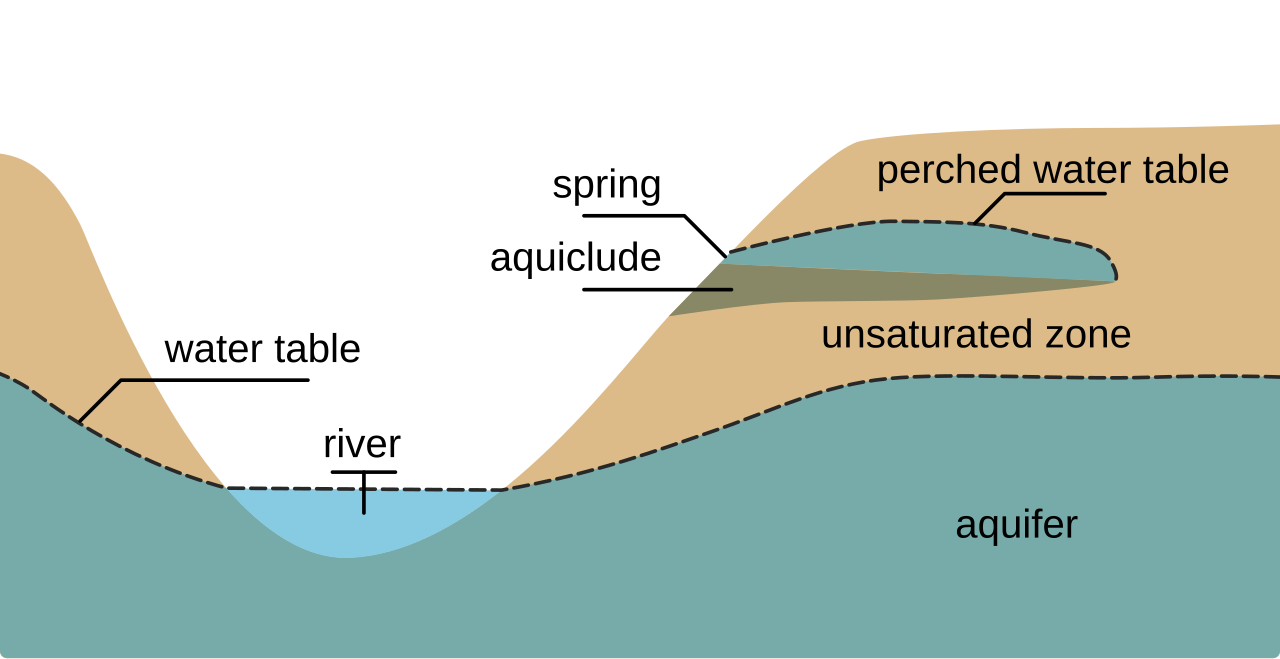
Perched water tables are missed. In layered soils, a low-permeability clay horizon can support a separate, shallower body of groundwater above the main water table. Perched water tables are often more variable than deeper groundwater and can cause unexpected seepage into foundations or excavations. They require targeted investigation to identify.
Long-term change is not factored in. Groundwater levels in many high water table regions are rising, not stable. Design based on current conditions without accounting for projected change over a 50 or 100-year asset life may produce a structure that performs acceptably today and progressively loses margin over time.
Drainage and waterproofing are not coordinated. Drainage design and structural waterproofing are often handled by separate teams, each working to their own assumptions about groundwater level. Where these are not coordinated, gaps appear at exactly the points where seepage enters.
Managing Seepage Risk Across the Asset Lifecycle
Integrated water management is the framework that addresses high water table seepage risk most effectively. It treats groundwater assessment, drainage design, structural waterproofing, and long-term monitoring as a connected system, designed together against a shared understanding of the groundwater environment.
The Ground Water Company approach to high water table projects starts with seasonal characterisation of groundwater conditions, including chemistry, before design is fixed. Monitoring continues through construction and into operation, giving asset owners early warning of changes in water table behaviour before they translate into structural or operational problems.