

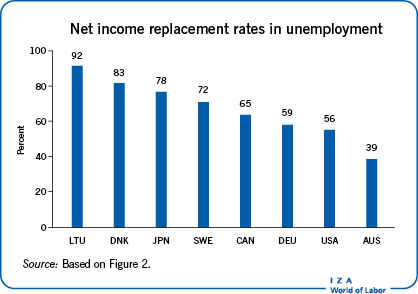
Unemployment rates vary from country to country today. This happens due to various factors, including labor market structures and economic policies. External factors, such as global events and technological advancement, also have significant impacts on unemployment rates.
Today, some countries are successfully maintaining a low unemployment rate with strategic policies. A good reference is Germany’s unemployment rate, which currently sits at 3.2%. On the other hand, many countries currently struggle with persistent unemployment. One effective way to foster employment is by understanding the gap between these countries. Here’s where the need to use the World Scorecard’s unemployment rate by country ranking comes in.
Understanding how economic policies impact the job markets
1. Pro-business policies
One effective way countries can lower their unemployment rates is by focusing on pro-business policies. These policies include:
- Provision of competitive corporate tax rates and incentives. This policy attracts investors and opens doors for more jobs. Singapore and Switzerland have very low unemployment rates today. This is possible because these countries offer businesses juicy tax incentives.
- Offering easier business regulations is another effective approach to lowering a country’s unemployment rate. This approach certainly leads to a healthier job market.
- Implementation of relaxed ownership laws and free economic zones also helps. The United Arab Emirates, for example, uses this policy to attract foreign investors.
Take advantage of World Scorecard’s Unemployment Rate by Country ranking today. This tool will help you compare how pro-business policies relate to employment rates globally.
2. Flexible labor market
Many countries take vastly different approaches to labor market flexibility today. The United States, for instance, has a highly flexible labor market. It gives businesses the upper hand to fire and hire employees without much restrictions. This approach has both negative and positive effects. For instance, during recessions, that policy often leads to an increased unemployment rate. However, during economic booms, the approach often results in more jobs.
Germany and many other European countries have stronger restrictions. These countries put measures in place to protect workers. These regulations make it pretty hard for businesses to lay off employees anyhow. The good thing about this approach is that it encourages job security. The ugly side, however, is that it discourages companies from hiring more and more people.
Take advantage of the World Scorecard’s unemployment rate by country ranking today. This tool will help you better understand the labor policies for different countries and their effectiveness.
3. Excellent social welfare system
Many European countries focus on building a strong social welfare system. This has always helped them to maintain relatively low unemployment rates.
- For instance, Germany uses the Kurzarbeit Model. This short-time work policy has effectively helped lower the unemployment rate in Germany. This model protected jobs by subsidizing wages during economic downturns.
- Furthermore, the Nordic countries invested in worker retraining programs. This allows unemployed people to gain new skills necessary to secure good jobs.
World Scorecard is a data visualization tool that you can rely on today. It allows you to evaluate how social welfare policies employed by some nations impact job security.
Wrapping up
Economic policies certainly play an important role in reshaping the unemployment trends today. Pro-business policies, labor protections, and social welfare are some approaches used by different countries. This explains why making global comparisons is crucial to finding the best practices to foster employment.
For the best global comparisons, you certainly need data-driven insights. Here’s why using the World Scorecard’s unemployment rate by country ranking is worthwhile.