

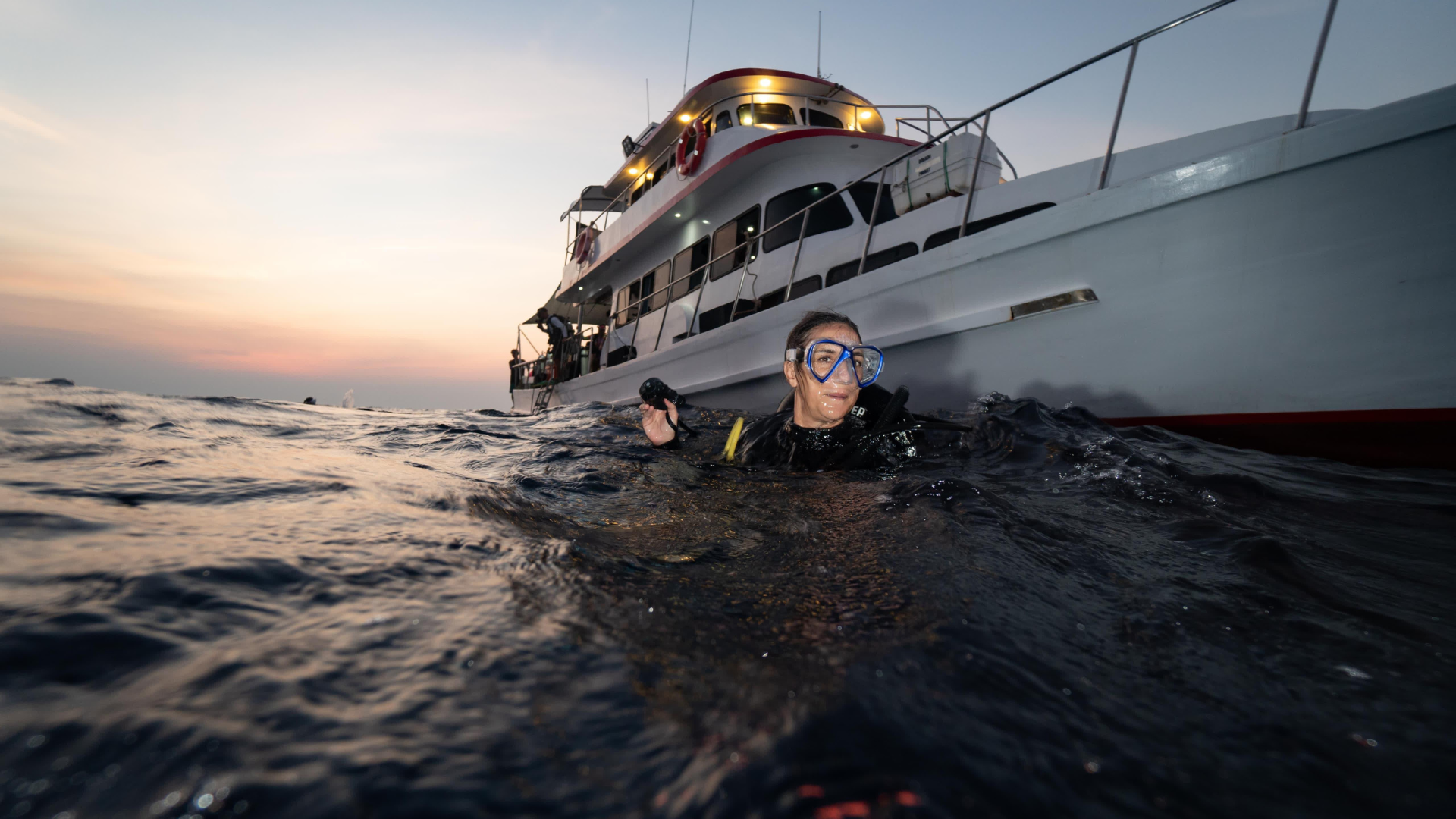
The underwater world transforms when the sun dips below the horizon. For those who have experienced it, night diving represents one of the most captivating adventures the ocean has to offer. If you have ever wondered what diving looks like after dark, especially during a night dive in Koh Tao.
This guide will help you understand why thousands of divers each year choose to explore beneath the waves when most people are heading to shore.
Why Night Diving Feels Like a Different World
During daylight hours, many marine creatures remain hidden in crevices, under ledges, or in deeper waters. When darkness arrives, this changes dramatically. As the sun sets, marine life exhibits different behaviours, with creatures venturing from deeper waters to shallower waters to feed on zooplankton and other organisms. This shift in activity creates an entirely different visual experience for divers willing to venture out after dark.
The phenomenon is not merely about seeing different animals. The underwater landscape transforms as creatures come out to hunt and feed, revealing a completely new aspect of familiar dive sites. Many divers describe night diving as feeling similar to floating through space, where your torch becomes your window into an alien world beyond the beam’s reach.
Marine Life Behaviour Changes at Night
One of the most compelling reasons to participate in night diving is the opportunity to observe nocturnal species. Bioluminescent creatures emit their own light, creating a stunning ceiling of lights above divers’ heads, while octopuses, lobsters, and squid venture out from their hiding spots. These animals are rarely encountered during daylight dives.
Even daytime fish rest under ledges at night, and certain corals will release spawn after dusk, whilst predatory species like barracuda begin their hunting activities. Additionally, your torch lights attract curious animals such as krill, shrimp, jellyfish, and tentacled squid, meaning you do not always need to search for them.
Common Marine Species Encountered During Night Dives
Here are creatures you might encounter when night diving:
- Octopuses and squid that remain hidden during daylight hours
- Crustaceans, including lobsters, crabs, and shrimp
- Nocturnal fish species that shelter during the day
- Bioluminescent plankton create natural light displays
- Sleeping parrotfish and other daytime species at rest
- Predatory fish actively hunt under the cover of darkness
Essential Equipment for Night Diving
Safety depends entirely on proper preparation and equipment. A primary dive light is essential for illuminating your path and observing marine life, and should be powerful enough to cut through darkness and provide a good field of vision.
Critical equipment includes:
- Primary dive torch with reliable battery life and bright beam
- Backup torch that is smaller and easily accessible
- Compass with glow-in-the-dark markers for navigation
- Tank marker light or glow stick for diver visibility
- Surface marker buoy with light capability
- Dive computer with illuminated display
- Appropriate thermal protection as night water feels colder
Safety Considerations and Training
It is crucial to understand that night diving is safe when done properly with the right training, equipment, and professional guidance. Equipment failure poses a more serious problem at night than during the day, and carrying at least two reliable torches is considered essential.
Key safety measures include:
- Conducting thorough equipment checks before entering the water
- Maintaining close communication with your diving buddy through light signals and hand signals
- Ascending slowly and performing safety stops with lights activated
- Never dive in unfamiliar locations without previous daylight exploration
- Staying calm and controlling breathing to fully enjoy the experience
- Aborting the dive if you feel uncomfortable at any point
Proper training through certified courses significantly reduces risks by teaching techniques for using lights, checking gear, and handling emergencies in darkness.
Planning Your First Night Dive
If you are considering night diving in Koh Tao or anywhere else, take your time to plan properly. Select dive sites you have previously explored during daylight, ensuring you understand the layout and potential hazards. Check weather conditions and water visibility, as these factors affect the experience.
Working with experienced guides who know the local conditions and marine life patterns makes an enormous difference. Many divers report that their first Koh Tao night dive ranked among their most memorable underwater experiences.
Final Thoughts
Night diving offers a gateway to observing the underwater world from a perspective most people never experience. Whether you seek adventure, wildlife encounters, or simply a new challenge within your diving journey, exploring beneath the surface after dark transforms how you understand the ocean. With proper training, appropriate equipment, and careful planning, this experience becomes not only achievable but truly unforgettable.