

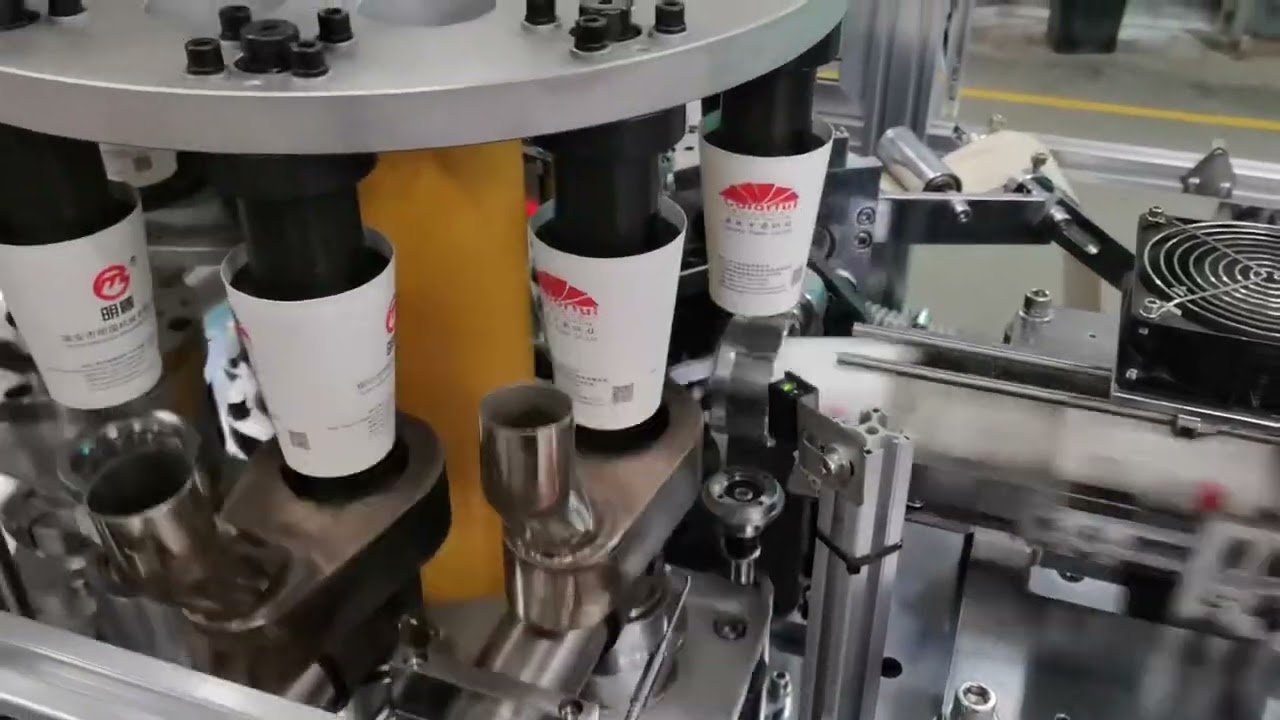
As demand for disposable food and beverage packaging continues to grow, manufacturers need production equipment that can deliver consistent quality at a competitive cost. A modern Paper Cup Machine is designed to combine automation, speed, precision, and reliable operation. Understanding the features that influence machine performance can help manufacturers choose equipment that meets both current production requirements and future business needs.
High-Speed Production
Production speed is one of the key factors manufacturers consider when selecting a Paper Cup Machine. High-speed equipment can produce a large number of cups within a shorter period, helping businesses respond to high-volume orders.
However, speed should always be considered alongside stability and quality. A machine that operates quickly but experiences frequent stoppages may deliver less practical output than a slightly slower machine with reliable continuous operation.
Automated Manufacturing Processes
Automation plays an important role in modern paper cup production. Depending on the equipment design, automated processes can include paper feeding, sidewall forming, bottom sealing, heating, curling, and finished-cup collection.
By automating repetitive tasks, manufacturers can reduce manual intervention and improve production consistency. Operators can focus more on monitoring the equipment, quality control, and material management.
Stable Material Handling
Consistent material handling is essential for producing uniform paper cups. Paper needs to move through the machine with accurate positioning and controlled tension to prevent problems during forming and sealing.
A well-designed Paper Cup Machine can use feeding and control systems to maintain stable material movement throughout production. This contributes to consistent cup dimensions and reliable sealing.
Precise Forming and Sealing
The forming and sealing stages have a direct impact on the quality of finished cups. Poor alignment or inconsistent sealing can result in leaks, deformation, or rejected products.
Modern machines use controlled forming and heating processes to create consistent sidewalls and secure bottom sections. Precise operation can help reduce defects and unnecessary material waste.
Reliable Quality Control
Quality control is essential for high-volume production. Modern equipment may incorporate sensors and monitoring systems that help operators identify production abnormalities.
Monitoring important production parameters can allow manufacturers to detect issues earlier, reducing the number of defective cups and helping maintain consistent output.
Efficient Changeovers
Manufacturers may need to produce different cup sizes or designs depending on customer requirements. A machine that allows efficient adjustments can reduce downtime between production runs.
Quick and straightforward changeovers can improve overall productivity and make the equipment more flexible for businesses serving multiple markets.
Energy and Material Efficiency
Operating costs are an important part of machine performance. Electricity consumption, paper waste, maintenance, labor, and other operating expenses can influence the overall cost per cup.
An efficient Paper Cup Machine should use materials effectively and minimize unnecessary waste while maintaining the required production quality.
Maintenance and Machine Stability
Stable operation depends on proper maintenance and durable machine components. Regular inspections can help identify worn parts before they cause unexpected downtime.
Manufacturers should also consider spare-parts availability, technical support, maintenance requirements, and operator training when evaluating different machines.
Scalability for Future Production
A modern machine should be capable of supporting business growth where possible. Manufacturers may eventually need higher production volumes, additional cup sizes, or greater automation.
Choosing equipment with appropriate flexibility can help businesses expand production without immediately replacing their existing machinery.
Conclusion
A modern Paper Cup Machine is fast, stable, and efficient when its production speed is supported by reliable automation, precise material handling, consistent forming and sealing, effective quality control, and practical maintenance systems.
Manufacturers should look beyond maximum production speed when evaluating equipment. Overall reliability, operating costs, flexibility, material efficiency, and long-term scalability are equally important for building an efficient paper cup manufacturing operation.