

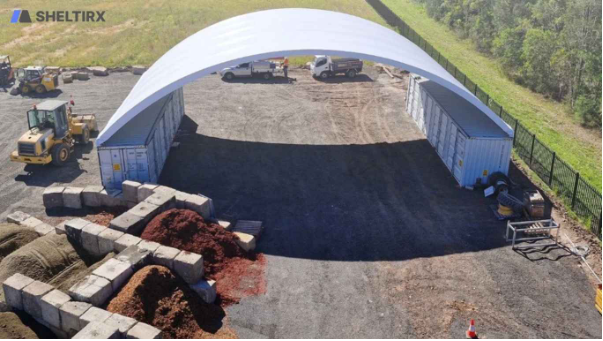
Selecting the right container canopy for a job site isn’t a decision most procurement teams can afford to get wrong. Under-spec the structure and you’re looking at inadequate coverage, exposure damage, or a unit that can’t span your equipment footprint. Over-spec it, and you’ve tied up a budget on capacity you’ll never use. The real challenge is matching shelter dimensions to actual operational requirements and that means understanding what’s available between the 20ft and 120ft range, and which configurations serve which applications.
Understanding What a Container Canopy Is Built to Do
A container canopy is a modular shelter system designed to mount directly to the top rails of intermodal shipping containers, extending outward to create covered working space. That’s the core function. But the practical value goes well beyond just adding a roof.
On active job sites, these structures protect stored equipment, materials, and personnel from rain, UV, wind-driven debris, and temperature extremes. They’re not permanent buildings – they’re engineered for rapid deployment, repositioning, and reuse across multiple projects. That flexibility is exactly why industrial buyers, construction firms, and rail operators keep coming back to them.
What we see most often in the field is clients underestimating how much clear-span width they actually need. A 20ft container canopy shelter works fine for tool storage and crew staging on smaller builds. But the moment you’re covering heavy equipment, large material stockpiles, or multiple work zones simultaneously, you’re looking at 40ft spans or wider – and often multi-bay configurations that link multiple units end-to-end.
The structure’s load rating matters just as much as footprint. Check snow and wind ratings against the specific climate zone where the shelter will operate. A unit rated for mild coastal conditions isn’t the same animal as one engineered for high-wind industrial corridors in the Midwest.
Matching Shelter Size to Real Job Site Applications
The size range from 20ft to 120ft covers a broad spectrum of use cases. Choosing the wrong one creates real operational friction. Here’s how the scale typically breaks down in practice:
- 20ft–30ft units are suited for single-container setups, crew welfare areas, tool storage, and small equipment staging. They’re the most portable option in the lineup – easy to redeploy as site phases shift.
- 40ft container shelter configurations are the workhorse of mid-scale operations. A standard 40ft unit spanning two containers gives you enough covered area for light vehicle protection, materials handling, or covered maintenance bays without requiring a permanent building permit.
- 60ft–120ft multi-bay systems are where infrastructure and rail projects live. These larger configurations cover wide equipment corridors, locomotive servicing areas, or bulk material storage yards. Some rail operators run continuous canopy coverage across entire staging areas using linked bays.
Proper installation sequencing is critical at the larger scales – getting anchor points right from the start prevents costly rework. If you’re new to setting up these systems on rail infrastructure specifically, the container shelter installation guide covers the step-by-step process in solid detail, including rail-specific anchoring requirements.
Key Specs to Check Before You Commit to a Size
Once you’ve narrowed down the approximate footprint you need, there are four specifications that should drive your final decision. Don’t skip these – they’re where most site managers get tripped up.
- Clear-span width vs. structural width. The nominal size of a shelter (say, 40ft) refers to the overall structure width, not necessarily the usable clearance at work floor level. Confirm the clear-span interior measurement. If you’re running a forklift or moving oversized materials through, that number matters far more than the headline dimension.
- Eave height and roof pitch. Low eave heights create access issues for taller equipment and reduce effective working volume inside the shelter. Ask for the eave height at the container rail attachment point, not just the ridge height. Roof pitch also affects snow load performance – steeper pitches shed snow faster in northern climates.
- Frame material and connection type. Hot-dip galvanized steel frames outlast powder coat in coastal and high-humidity environments. Check how the frame attaches to the container’s top corner castings – bolt-through connections are more secure than clamp-based systems on sites where wind loading is a concern.
- Cover membrane spec. Not all canopy fabrics are equal. Look for reinforced PVC or polyethylene with UV inhibitors and a stated tear resistance rating. Ask specifically about the warranty period on the membrane – a frame might last twenty years, but a cheap cover could fail in three. The reality is, membrane replacement is where the ongoing cost lives, so buy right the first time.
How the Industry Has Responded to Demand for Scalable Shelter Systems
Over the past decade, manufacturers serving the construction and rail sectors have moved decisively toward modular systems that can scale from single-unit applications up to multi-bay configurations without requiring custom engineering on every project. The driver has been straightforward: contractors need shelter solutions that can grow with a project’s footprint and redeploy without significant modification costs.
That shift has pushed product development toward standardized connection systems, interchangeable cover sections, and frames engineered to handle the load demands of both small staging areas and large-scale industrial yards. One example of this trend is SkyShield™ container canopies by Sheltirx®, which have been designed specifically around this scalable, container-integrated approach — covering the 20ft to 120ft range within a consistent product architecture that site managers can spec with confidence.
The broader industry pattern is clear: buyers increasingly want shelter systems that don’t lock them into a single site configuration. The days of purchasing a fixed-span structure and hoping it fits your next project are fading. Modular, container-mounted canopy systems have earned their place as a standard tool in infrastructure and heavy construction work.
Getting the Size Right From the Start
Three things matter most when you’re sizing a container canopy: the actual clear-span width your operation requires, the load ratings that match your regional climate, and whether the system can scale as your site footprint changes. Don’t let the headline dimensions on a spec sheet substitute for those three checks.
The 20ft-to-120ft range gives project teams genuine flexibility – but only if you’ve done the dimensional homework before placing an order. Get those numbers locked down early. It’s the kind of decision that looks minor on paper and costs real money when it’s wrong.