

Introduction: The Art of Disruption in Fashion
Few names in global style command the identical mix of thriller, innovation, and impact as Comme des Garcons. Founded by means of visionary fashion designer Rei Kawakubo in 1969, the label reshaped how the world is familiar with clothing. What began as a quiet revolt in Tokyo has become one of the maximum powerful creative forces on this planet — influencing the whole lot from haute couture to streetwear.
Nowadays, CDG garb is identified as a symbol of fearless individuality. From the runways of Paris Fashion Week to the streets of Tokyo, Comme des Garcons has become an imperfection of identification and redefined present-day fashion through artwork, philosophy, and emotion.
Rei Kawakubo: The Mind Behind the Movement
The Comme des Garcons revolution begins with one lady: Rei Kawakubo. Without formal schooling in layout, she entered style via interest, no longer conformity. Her earliest collections in the 1970s defied all standards — outsized shapes, uncooked seams, monochromatic palettes, and asymmetry have become her language.
By the time she debuted in Paris in 1981, the world changed into bowled over. Her now-iconic “Destroy” series, full of torn, black clothes, broke far from glamour and perfection. Critics described it as “anti-fashion.” Lovers knew it as a genius.
Kawakubo’s perception that apparel could convey specific ideas and emotions — not just splendor — gave upward thrust to conceptual fashion, a movement that stimulated designers like Yohji Yamamoto, Issey Miyake, and even worldwide streetwear creators.
The Comme des Garcons Philosophy: Beauty in Imperfection
At its coronary heart, Comme des Garçons represents contradiction — shape and chaos, art and wearability, splendor and destruction. Kawakubo’s mantra has constantly been that fashion needs to provoke, no longer please.
CDG apparel doesn’t aim to enhance the frame; it challenges it. The deconstructed tailoring, abnormal shapes, and layered textures query everything conventional fashion stands for.
In an industry captivated with perfection, Comme des Garcons celebrates the beauty of the unfinished — a concept rooted deeply in eastern aesthetics like wabi-sabi (the splendor of imperfection).
Breaking Barriers: From Avant-Garde to Everyday Style
At the same time as Comme de Garcon commenced as an avant-garde label, its influence quickly reached mainstream fashion. Through smart enlargement and a refusal to compromise on creativity, the emblem constructed a universe that merged high idea with accessibility.
CDG Play: The Global Icon
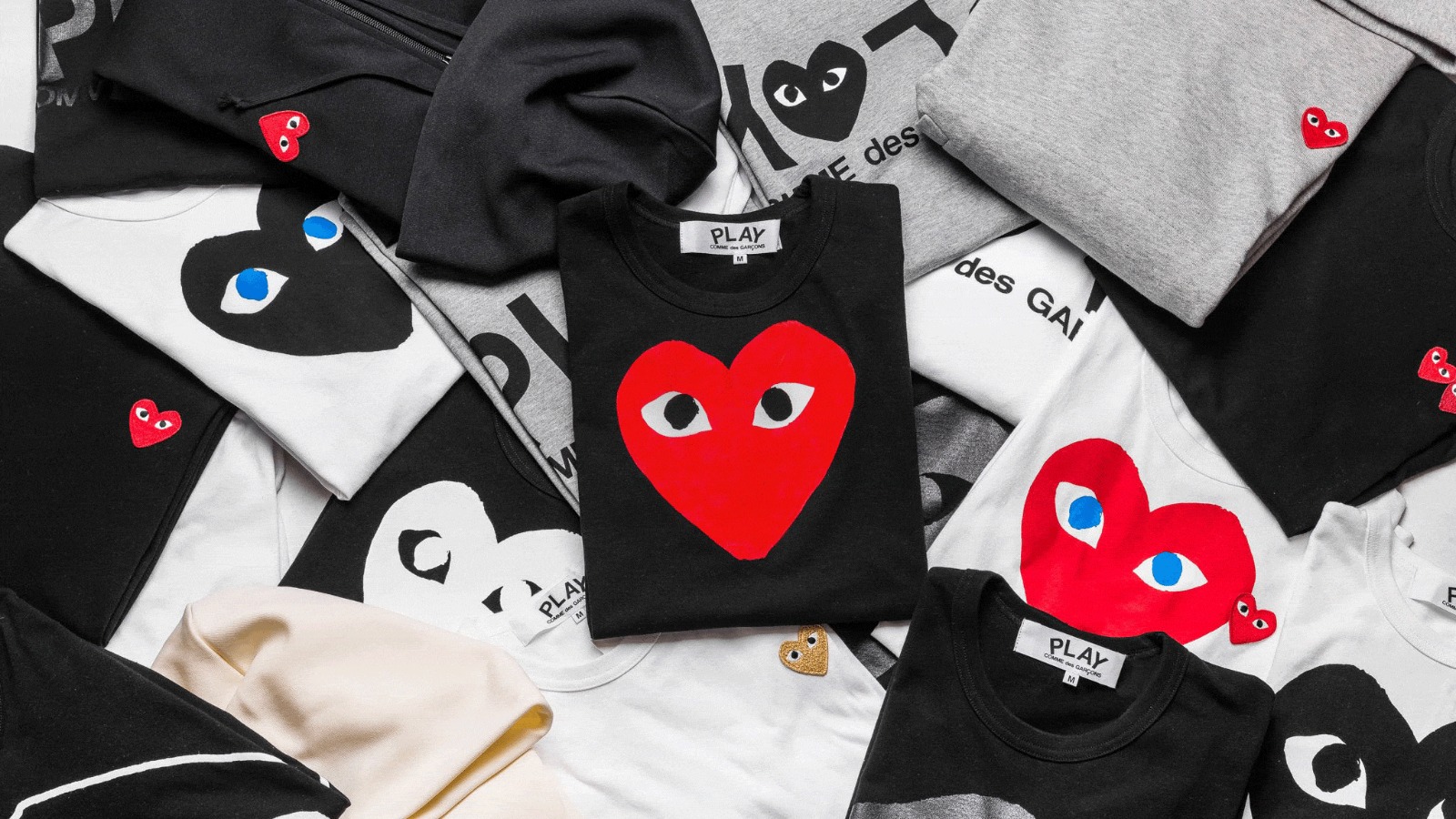
Launched in 2002, CDG Play has become the on-hand face of Comme des Garcons. Proposing the playful purple coronary heart logo designed by Filip Pagowski, CDG Play delivered minimalism and artwork to streetwear. The road’s T-shirts, hoodies, and footwear became critical portions for a generation that valued authenticity over luxurious labels.
This marked a primary shift — Comme des Garcons had moved from experimental couture to a lifestyle brand, without ever diluting its DNA.
The Power of Collaboration: CDG’s Creative Network
CDG’s innovative community, one of the most effective elements of Comme des Garcons, is its fearless collaboration method. Rei Kawakubo has long seen partnerships as creative exchanges instead of industrial moves.
Nike x Comme des Garcons
The CDG x Nike collaborations revolutionized sneaker culture. With minimalist tones, transparent substances, and deconstructed detailing, Kawakubo converted athletic footwear into wearable artwork. Every pair — from the CDG Air Force 1 to the CDG Dunk Low — merges excessive style and streetwear in the best stability.
Converse x Comme des Garcons Play
The Converse x CDG Play sneakers continue to be timeless icons. Their clean design and signature coronary heart emblem made them a worldwide staple, uniting lovers of both classic fashion and contemporary edge.
Artistic Collaborations
Beyond sneakers, Comme de Garcons has collaborated with brands and artists the world over, influencing how designers view creative freedom. Each collaboration reflects Kawakubo’s philosophy: layout without boundary lines.
The Comme des Garcons Aesthetic: Minimalism Meets Expression
The essence of CDG apparel lies in its precise balance of minimalism and complexity. At the same time as early collections were rooted in black and white, present-day Comme de Garcons designs explore formidable colours, sculptural bureaucracy, and conceptual themes.
Each CDG piece looks like a query — what is the style? What defines splendor? Why can we wear what we wear?
These designs are not meant to suit neatly into tendencies. They’re designed to start conversations. From established coats to summary dresses, CDG apparel is fashion for thinkers, no longer fans.
CDG and the Rise of Global Streetwear
As fashion advanced through the 2000s, Comme des Garcon clearly became part of the streetwear revolution. The brand’s authenticity and artistry resonated with a technology raised on creativity, individuality, and social media.
CDG Play has become a staple in regular street fashion — easy to put on, instantly recognizable, and packed with meaning. In the meantime, the more experimental traces persevered to encourage designers internationally.
This duality — among artwork and accessibility — is what made Comme des Garcons the pulse of cutting-edge style.
Cultural Influence: Beyond the Runway
The effect of Comme des Garçons extends some distance beyond clothing. It has formed artwork, song, design, and even retail. Kawakubo’s conceptual vision helped create Dover Street Market, a curated area wherein style meets set up art. Every vicinity displays the spirit of CDG — converting, surprising, and boundary-breaking.
From Tokyo’s Harajuku streets to the innovative circles of Paris and London, CDG Clothing has become a cultural image. It represents freedom, mind, and emotional depth — characteristics regularly missing from mainstream fashion.
The Modern Legacy of Rei Kawakubo
Even after 5 a long time, Rei Kawakubo continues to venture fashion’s expectations. Her collections for Comme des Garcons Homme Plus and Comme des Garçons Girl explore summary subject matters — from “Breaking the Silhouette” to “The Future of Black.”
Her refusal to comply with tendencies continues to des relevant in a world captivated with novelty. Kawakubo designs for emotion, no longer applause — and that authenticity is what defines her enduring achievement.
Why CDG Clothing Redefines Modern Fashion
Comme des Garçons redefined current style by doing the other of what absolutely everyone else did. Whilst most designers catered to purchaser demand, Kawakubo acted by instinct. Whilst others sought beauty, she sought meaning.
Through decades of fearless layout, CDG clothing proved that fashion may be both intellectual and inclusive, each avant-garde and wearable. Its evolution from art-house label to worldwide icon mirrors the converting spirit of fashion itself — various, dynamic, and ad infinitum creative.
In an international push with the aid of trends, Comme des Garcons stays undying. It doesn’t chase subculture — it shapes it.
Conclusion: The Revolution That Never Ends
The historical Comme des Garcons revolution is greater than style history — it’s an ongoing movement. From the 1970 avant-garde runways to today’s international streetwear, CDG continues to encourage generations of designers and dreamers.
Rei Kawakubo’s vision reminds us that style isn’t always about becoming in, but approximately standing aside. CDG Clothing isn’t made to please; it’s made to initiate concept, emotion, and confidence.
That’s why Comme des Garcons will for all time redefine current fashion — because true creativity never goes out of style.