

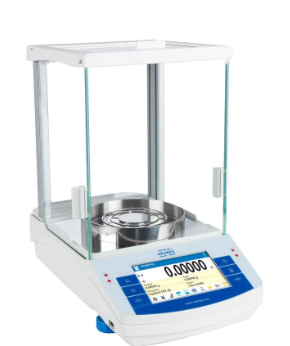
Analytical Balances as the Foundation of Laboratory Accuracy
Analytical Balances are the true foundation of any laboratory environment. At the beginning of any experiment or quality assurance process, the accuracy of weight measurement determines the integrity of the final results. Laboratories in pharmaceuticals, food safety, chemical research, and environmental testing rely on these balances every day. The ability to measure mass at levels as fine as four decimal places provides scientists with reliable data that can withstand scrutiny and regulatory requirements. This is why working with an official dealer of Ohaus, A&D, and Sartorius is more than a purchase; it is a strategic investment in performance and compliance.
Why Analytical Balances Are More Than Just Scales
The analytical balance is not simply a weighing device; it is a precision instrument engineered for reliability. Unlike mechanical balances of the past, today’s models integrate digital calibration, touch-screen interfaces, and built-in data storage. This allows laboratories to reduce human error while ensuring repeatable results across large sample sets. An analytical balance is often the first step in developing pharmaceutical compounds, testing raw materials, or certifying chemical mixtures. For industries where a fraction of a gram makes a difference, precision balances ensure products meet safety and regulatory standards.
How Moisture Balances Support Industry Workflows
Moisture Balances are equally critical in sectors like food manufacturing and environmental research. Moisture content directly impacts product quality, shelf life, and compliance. A single percentage point of moisture variation in food ingredients can lead to spoilage or regulatory rejection. Laboratories equipped with moisture balances can rapidly determine water content using infrared drying techniques. This provides quick, consistent, and accurate results without lengthy oven testing. By working with an official dealer of Sartorius or Ohaus, laboratories gain access to the latest models designed for efficiency and accuracy.
The Role of Micro Balances and Semi-Micro Balances in Advanced Research
For high-end research applications, Micro Balances and Semi-Micro Balances provide readability down to micrograms. These instruments are essential in fields such as nanotechnology, advanced material sciences, and biotechnology. When the difference between success and failure lies within a few micrograms, only balances from trusted manufacturers like A&D and Sartorius can deliver results with confidence. Choosing an official dealer ensures access to factory calibration, warranty support, and replacement parts, which safeguards long-term investment.
Production Balances and Mechanical Balances in Industrial Applications
While analytical and micro balances dominate the laboratory space, Production Balances and Mechanical Balances remain indispensable in industrial workflows. Production facilities rely on these balances to measure bulk materials, verify packaging weights, and ensure consistency in large-scale operations. Mechanical balances, though less advanced, remain reliable in environments where digital systems may fail due to power limitations or harsh conditions. Partnering with an official dealer guarantees that even industrial-scale balances meet international standards for precision and reliability.
Why Density Balances Are Becoming Increasingly Important
Density Balances are gaining prominence in quality control and materials research. By determining the density of solids, liquids, or powders, laboratories can assess purity, detect inconsistencies, and support product development. Industries such as plastics, chemicals, and pharmaceuticals integrate density balances to verify product formulations. For example, a slight density variation in a polymer batch can affect the performance of an entire production line. This is why companies seek trusted names like Sartorius or Ohaus through authorized dealers to ensure reliable density testing capabilities.
The Critical Role of Official Dealer Support from Ohaus A&D and Sartorius
Buying Analytical Balances directly from an official dealer of Ohaus, A&D, or Sartorius provides unmatched advantages. Beyond supplying the instrument, dealers provide technical training, calibration services, and ongoing support. This level of service ensures instruments maintain accuracy throughout their lifecycle. Laboratories often underestimate the long-term value of reliable dealer support, only to face expensive downtime when instruments fail. By choosing a dealer-backed product, laboratories gain both peace of mind and operational efficiency.
Why Analytical Balances from Data Support Company Are a Safer Investment
In today’s competitive environment, laboratories and industries cannot afford unreliable equipment. A faulty balance can waste time, compromise results, and even damage an organization’s reputation. Analytical balances from Data Support Company are safeguarded against these risks because they come directly from trusted manufacturers with full warranty coverage.
Unlike unverified sellers, Data Support Company does not simply deliver a box with equipment. They provide instruments that are carefully checked, supported by training, and backed by servicing options. This level of reliability transforms the purchase from a risky transaction into a secure investment. Over time, this reduces maintenance costs, prevents downtime, and keeps laboratories running smoothly.
Building Trust Through Service and Support
Trust is not earned at the point of sale but through continued partnership. Data Support Company distinguishes itself by delivering consistent after-sales support. From installation and calibration to servicing and technical assistance, they remain connected with their clients long after delivery.
Analytical balances from Data Support Company are more than precision devices because they are supported by teams who understand the needs of scientists, engineers, and quality managers. When issues arise, clients do not need to search for independent technicians. Instead, they can rely on certified support backed by manufacturers like Ohaus, A&D, and Sartorius. This direct link between manufacturer and user ensures that every balance remains accurate throughout its lifetime.
How Analytical Balances Influence Compliance and Global Standards
Regulated industries such as pharmaceuticals and food manufacturing must adhere to strict guidelines from organizations like the FDA and ISO. Analytical Balances help laboratories demonstrate compliance with these standards. For example, in pharmaceutical development, even a minor deviation in formulation weight can result in non-compliance and costly recalls. Official dealers of Sartorius, Ohaus, and A&D offer balances pre-certified to meet these international standards, reducing compliance risks and ensuring laboratories pass audits confidently.
Future Trends in Analytical and Precision Weighing Technology
The future of Analytical Balances and Micro Balances lies in digital integration and automation. Modern balances now connect seamlessly with laboratory information management systems (LIMS), enabling data tracking, wireless transfer, and integration with artificial intelligence tools for predictive analysis. Moisture balances are becoming faster and more energy-efficient, while production balances are incorporating IoT capabilities for real-time monitoring in industrial settings. These innovations are available first through official dealers, giving laboratories early access to the tools that define the next era of scientific research.
Frequently Asked Questions
What makes Analytical Balances different from regular scales?
Analytical balances offer readability up to four decimal places, making them far more accurate than regular scales. They are designed for laboratories where even the smallest weight variation matters.
Why should I buy from an official dealer of Ohaus A&D and Sartorius?
Official dealers provide warranty support, calibration services, and access to genuine spare parts. This ensures your investment remains reliable over many years.
How do Moisture Balances improve food industry quality?
Moisture balances quickly measure water content in ingredients, helping manufacturers maintain product consistency and comply with safety standards.
Are Micro Balances and Semi-Micro Balances necessary for all labs?
Not all labs need them, but research facilities in nanotechnology, advanced chemistry, and biotechnology rely on them for microgram-level accuracy.
What industries use Density Balances the most?
Density balances are common in plastics, chemicals, and pharmaceutical industries where understanding material composition and purity is critical.
Conclusion Why Analytical Balances Remain the Core of Laboratory Progress
Analytical Balances Moisture Balances Precision Balances Ultra Micro Balances Semi-Micro Balances Production Balances Mechanical Balances and Density Balances together represent the backbone of laboratory and industrial accuracy. From pharmaceutical breakthroughs to industrial-scale manufacturing, these instruments safeguard quality, compliance, and innovation. Choosing an official dealer of Ohaus, A&D, or Sartorius ensures that every balance performs with precision and reliability over the long term. In a world where accuracy defines success, investing in trusted balances from an authorized source is not only a necessity but also a guarantee of sustainable progress.